
Identify a Pest by Its Signs, Room by Room
Droppings behind the fridge, black spots on the mattress, a small pile of sawdust under a beam, buzzing inside a wall? Every pest leaves signs of its own. We gathered 44 of them, from the kitchen to the attic and from the yard to the garage, for 9 pest families. Pick a room, click a marker: the card shows the sign in a photo, explains what it means, how to confirm it and what to do next.



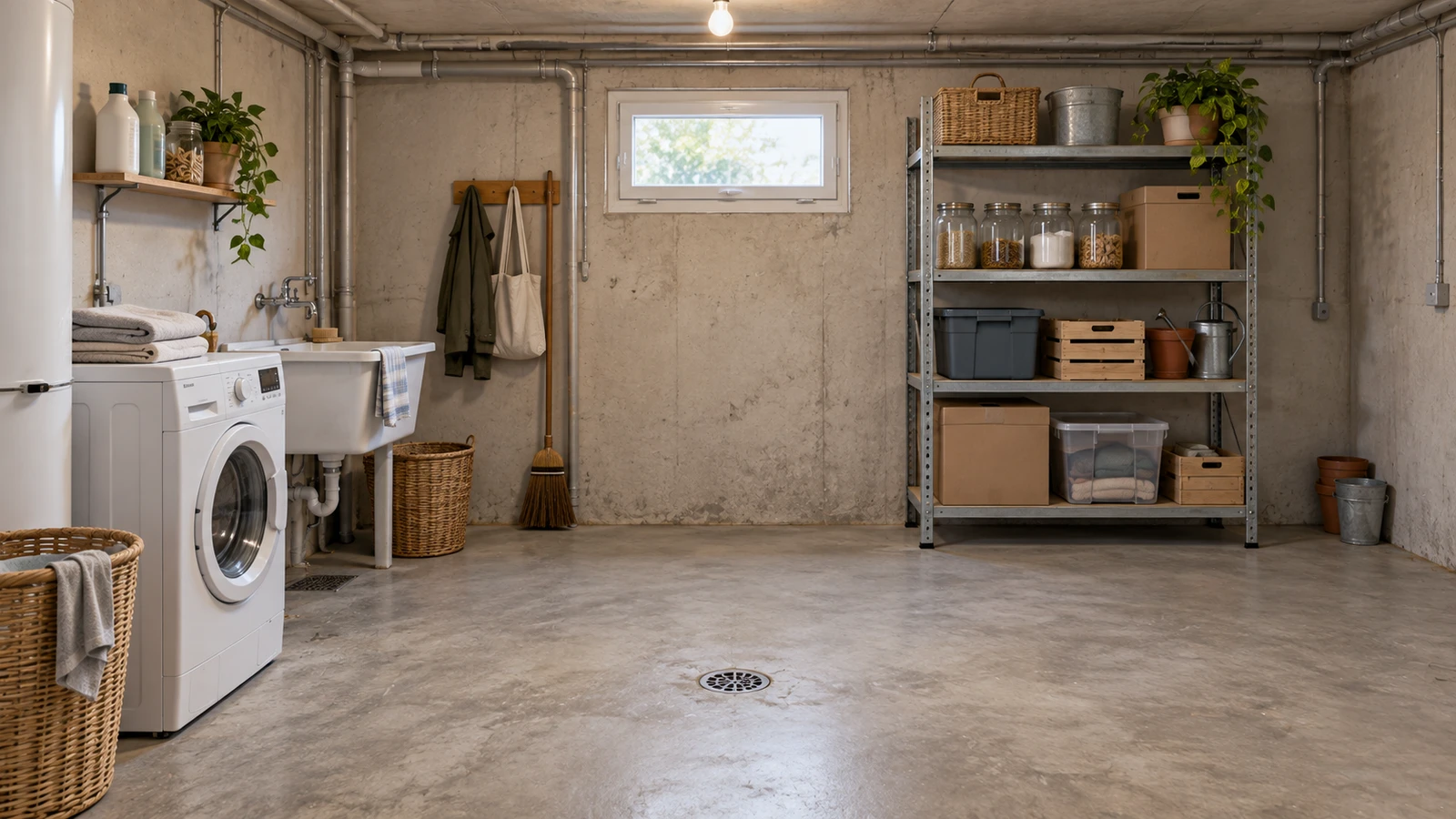



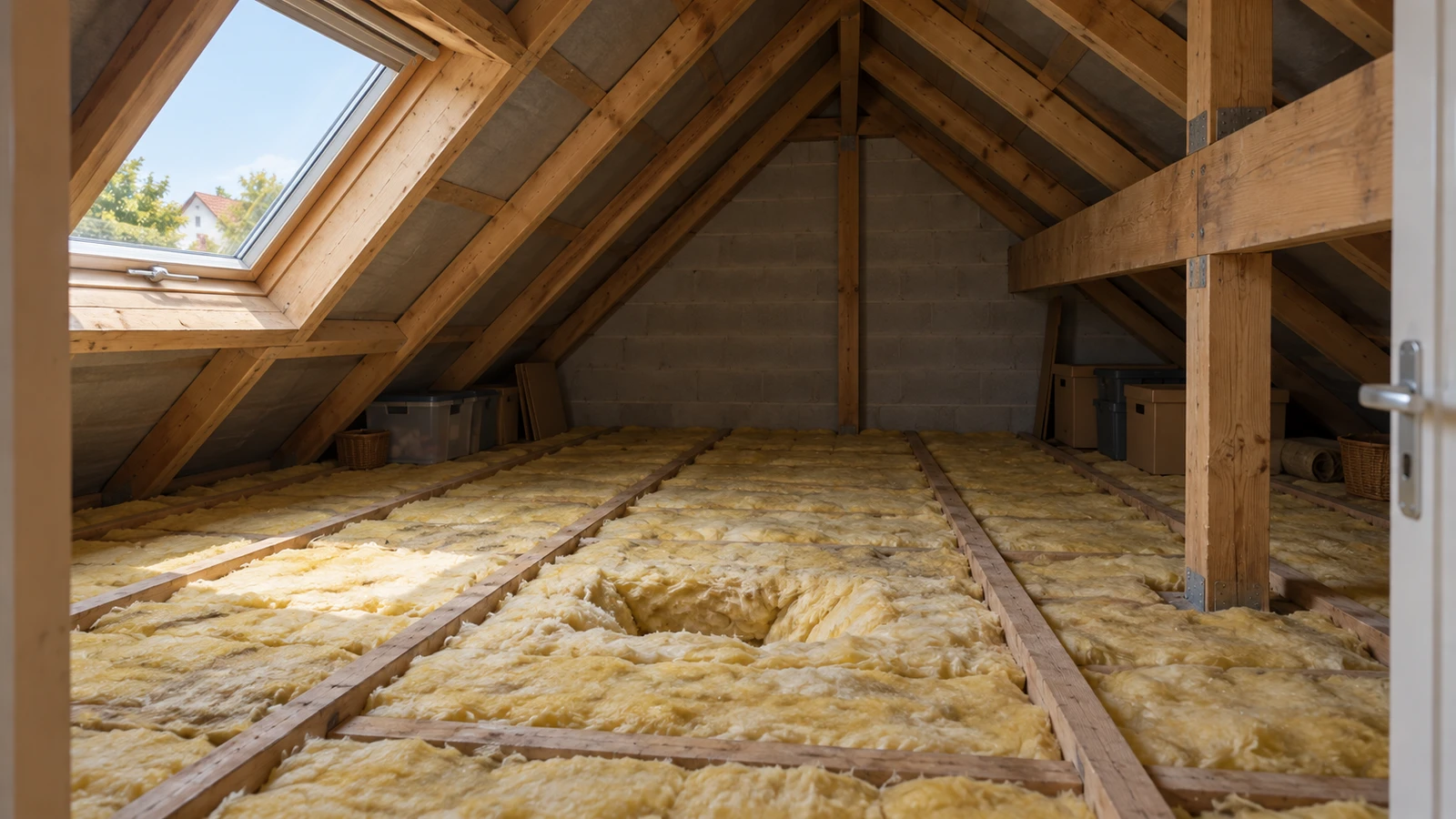



↔ Swipe the image to see the whole room. Click a marker to open the sign’s card.
Cockroaches
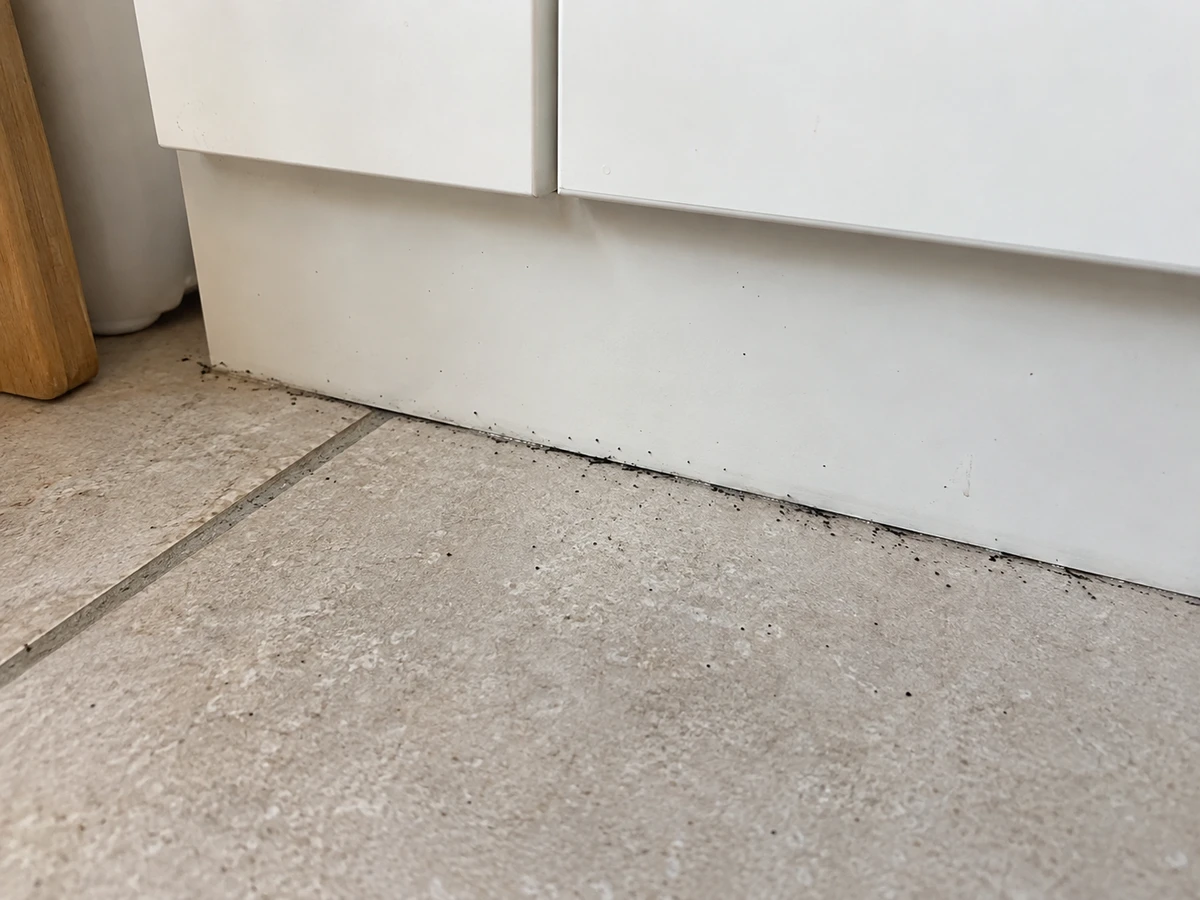
Black “ground pepper” streaks along a cabinet edge
👀 What you see
Tiny black specks, like ground pepper, lined up in ink-like smears along a cabinet edge or the toe-kick under the kitchen cabinets. Fresh droppings are glossy; old ones are matte and dry.
🧭 What it means
These are cockroach droppings: a few scattered specks mark an occasional travel route, an ink-like smear a runway used every night, a concentrated peppered patch a daytime resting spot less than 3 feet from the harborage. Mouse droppings are distinctly larger (about 1/8 to 1/4 inch) and rice-shaped.
Chart: compare the droppings
Indicative chart based on our cockroach and mice & rats guides.
✅ The proof: how to confirm
Run a damp fingertip over them: a fresh dropping is glossy and smears. Photograph the spot, clean it and look again in a week — if it comes back, the infestation is live.
🧩 What to do next
- 1 Identify the species: small light-brown roach with two dark stripes behind the head = German (kitchen/bathroom); large shiny black = Oriental (basements, drains).
- 2 Place sticky monitor traps to find the harborage — behind the fridge, under the sink, inside cabinet hinges and around motors.
- 3 Apply pea/lentil-sized gel drops in those hidden spots. Never spray: spray scatters the colony and breeds resistance.
- 4 Add an IGR (insect growth regulator) so surviving nymphs cannot mature — this breaks the cycle.
- 5 Clean with white vinegar or a neutral cleaner during treatment. Bleach repels roaches away from the bait and makes it fail.
- 6 Replenish gel as it is eaten; expect 2–3 weeks. In an apartment, push for a coordinated building-wide treatment.
🛒 Products from our guides
-
Rechargeable LED inspection flashlight
Slim enough to slide behind a refrigerator, bright enough to raise a shadow off a dropping in raking light.
View on Amazon → -
Cockroach monitoring glue traps
Nothing toxic: numbered and dated, they show where roaches travel and whether the count is falling.
View on Amazon → -
Cockroach gel bait, fine-tip syringe
Cascade effect: a roach that eats the gel contaminates the ones still hiding — something a spray can’t do.
View on Amazon →
As an Amazon Associate we earn from qualifying purchases, at no extra cost to you.
Cockroaches
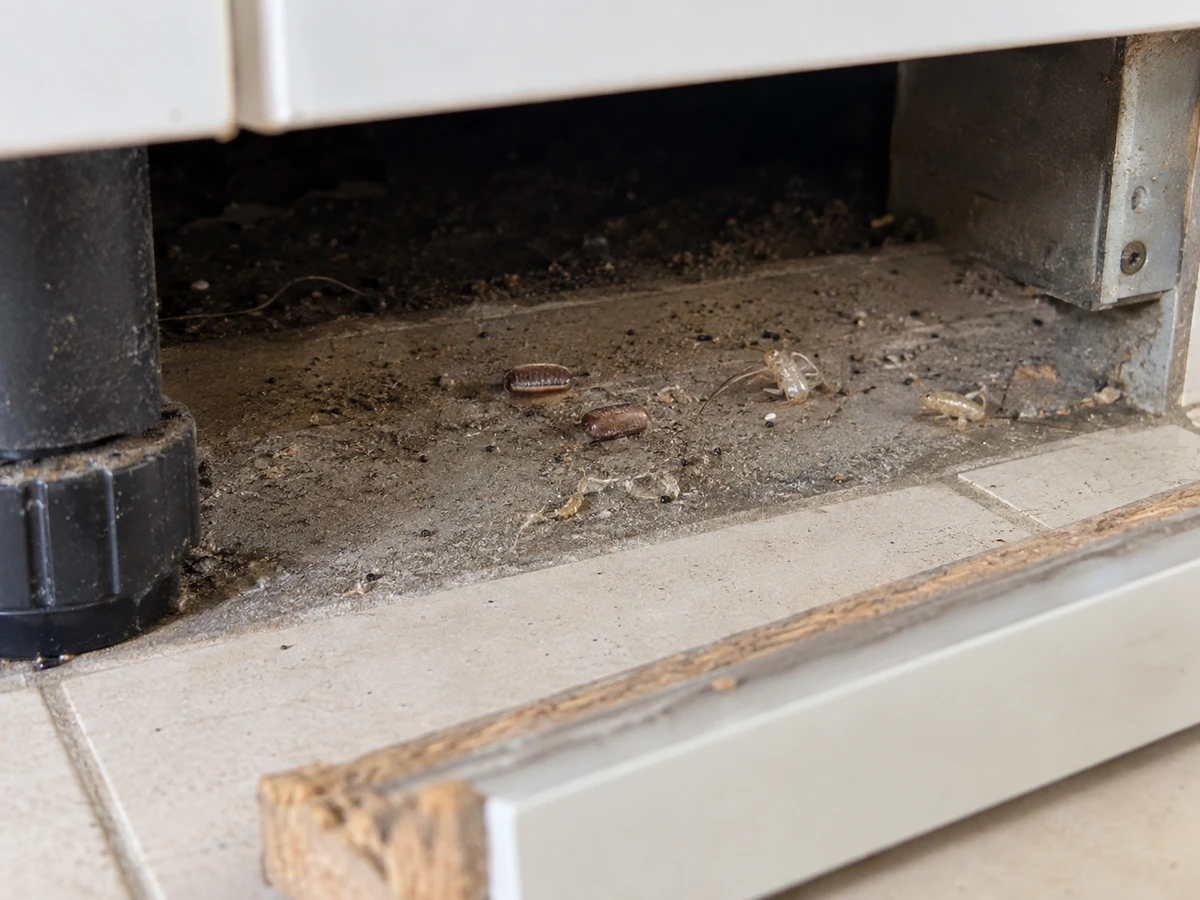
Ridged brown capsules and see-through shed skins behind the toe-kick
👀 What you see
Behind the kick board under the base cabinets, in a hollow channel about 4 inches high: ridged brown egg cases about 1/4 to 5/16 in (6–8 mm) long, empty or full, translucent brittle shed skins, and droppings. A musty, faintly sweet smell when you open it up.
🧭 What it means
Egg cases mean active breeding at this exact spot: you are at the harborage. Shed skins mean nymphs are growing up on site; the sweet smell is the concentrated aggregation pheromone of a large harborage.
✅ The proof: how to confirm
Do the night pass between about 1 and 3 a.m.: come in quietly, stand still in the dark for ten seconds, then hit the switch — the way everything runs points at the harborage.
⚠️ Caution
Don’t spray or vacuum the harborage: the survivors scatter and start two or three new groups elsewhere.
🧩 What to do next
- 1 Identify the species: small light-brown roach with two dark stripes behind the head = German (kitchen/bathroom); large shiny black = Oriental (basements, drains).
- 2 Place sticky monitor traps to find the harborage — behind the fridge, under the sink, inside cabinet hinges and around motors.
- 3 Apply pea/lentil-sized gel drops in those hidden spots. Never spray: spray scatters the colony and breeds resistance.
- 4 Add an IGR (insect growth regulator) so surviving nymphs cannot mature — this breaks the cycle.
- 5 Clean with white vinegar or a neutral cleaner during treatment. Bleach repels roaches away from the bait and makes it fail.
- 6 Replenish gel as it is eaten; expect 2–3 weeks. In an apartment, push for a coordinated building-wide treatment.
🛒 Products from our guides
-
Cockroach gel bait, fine-tip syringe
The fine tip puts a dot deep in a hinge cup or against a pipe collar without dismantling anything.
View on Amazon → -
Insect growth regulator (IGR) for cockroaches
Egg cases present, long-standing colony: a growth regulator reaches the generation the bait can’t.
View on Amazon → -
Cockroach monitoring glue traps
Nothing toxic: they show where roaches travel and whether the treatment is working.
View on Amazon →
As an Amazon Associate we earn from qualifying purchases, at no extra cost to you.
Cockroaches
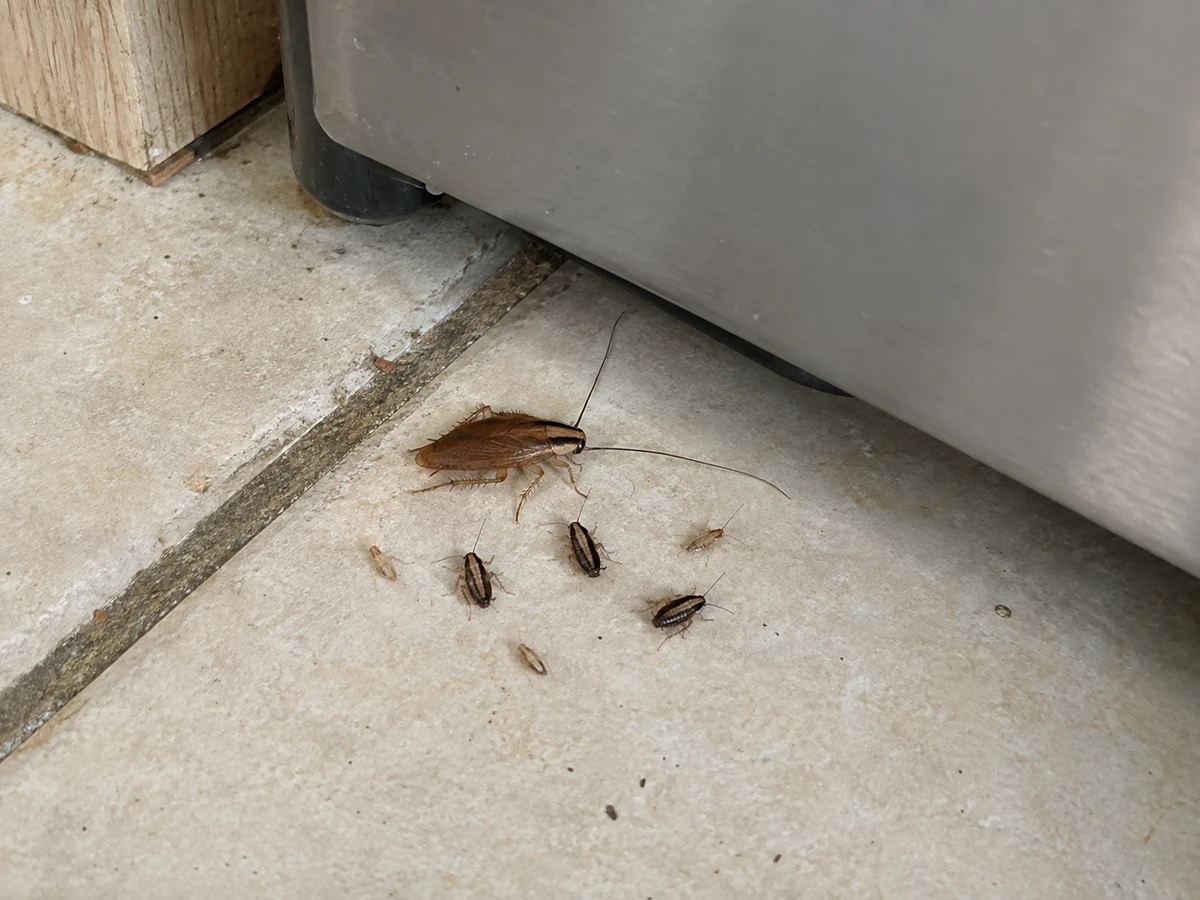
See-through baby roaches, or a roach out in broad daylight
👀 What you see
Small, translucent cockroaches about 1/8 inch long, mixed with roaches of different sizes near the sink or fridge — or a brown roach darting under the dishwasher in the middle of the day.
🧭 What it means
Baby cockroaches prove the colony is breeding in your home; a roach out in daylight means the hiding spots are overcrowded (hundreds in the walls). One cockroach seen at night usually means 10 to 50 more in hiding.
✅ The proof: how to confirm
Set 3 sticky traps (under the sink, behind the fridge, in the bathroom) and count after 48 hours: 0–1, possible isolated case; 2–5, early infestation; more than 5, established colony.
⚠️ Caution
Don’t crush a female carrying an egg case, and skip the spray: it scatters the colony without reaching it.
🧩 What to do next
- 1 Identify the species: small light-brown roach with two dark stripes behind the head = German (kitchen/bathroom); large shiny black = Oriental (basements, drains).
- 2 Place sticky monitor traps to find the harborage — behind the fridge, under the sink, inside cabinet hinges and around motors.
- 3 Apply pea/lentil-sized gel drops in those hidden spots. Never spray: spray scatters the colony and breeds resistance.
- 4 Add an IGR (insect growth regulator) so surviving nymphs cannot mature — this breaks the cycle.
- 5 Clean with white vinegar or a neutral cleaner during treatment. Bleach repels roaches away from the bait and makes it fail.
- 6 Replenish gel as it is eaten; expect 2–3 weeks. In an apartment, push for a coordinated building-wide treatment.
🛒 Products from our guides
-
Cockroach monitoring glue traps
Diagnosis first, then monitoring: how many roaches in 48 hours, then whether the treatment is working.
View on Amazon → -
Advion Cockroach Gel Bait (Syngenta)
Indoxacarb gel with a cascade effect: a forager carries it back and contaminates the harborage.
View on Amazon → -
Maxforce FC Magnum Cockroach Bait Gel (Bayer)
Larger 33 g syringe with a fipronil mode of action, for infestations spread over several rooms.
View on Amazon →
As an Amazon Associate we earn from qualifying purchases, at no extra cost to you.
Ants
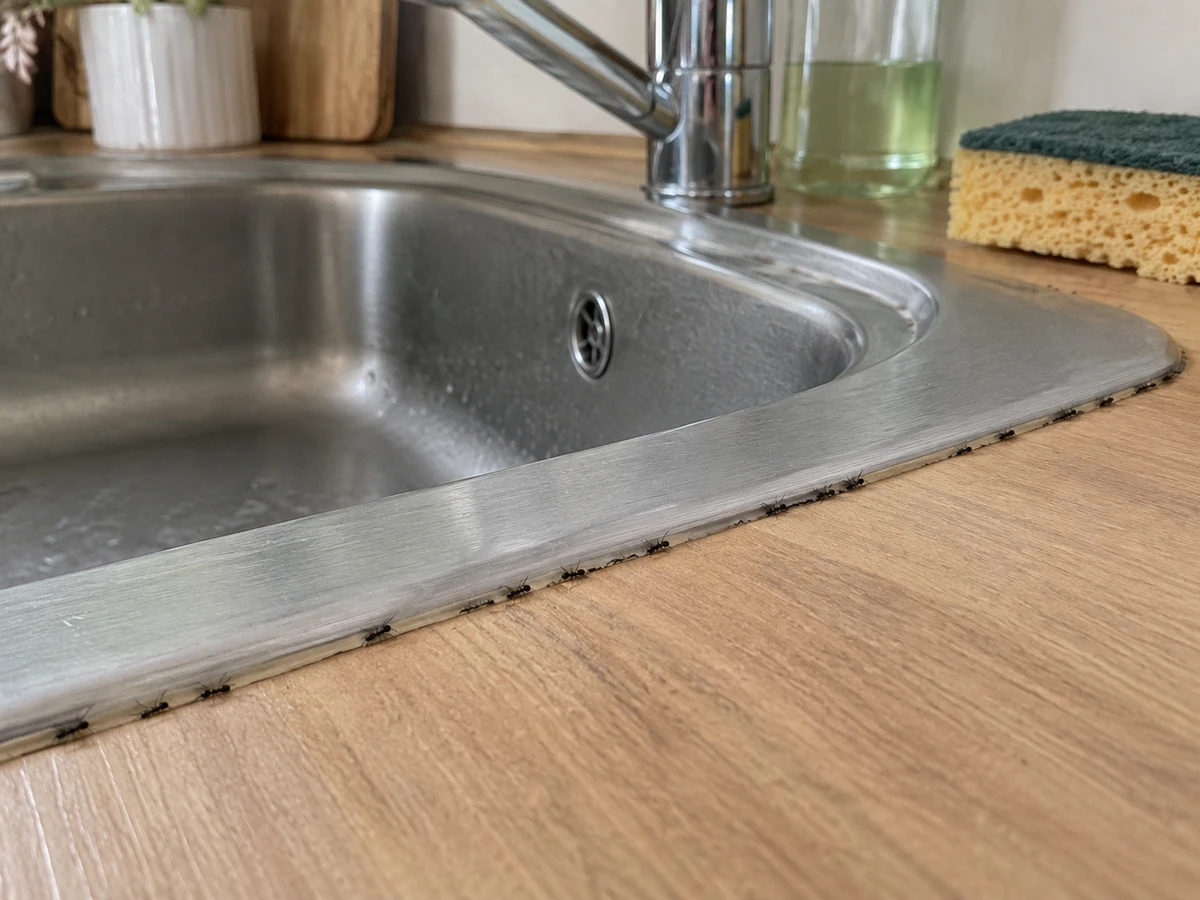
A single-file line of ants along the edge of the sink
👀 What you see
A line of small ants following exactly the same edge of the sink or countertop, to the millimeter, and back in the same spot the day after you clean.
🧭 What it means
They follow a pheromone trail that soaks into grout, baseboards and painted wood and resists soapy water: an active trail can persist up to 3 to 4 weeks. Cleaning doesn’t touch the colony.
✅ The proof: how to confirm
If a new trail forms within 24 to 72 hours of treatment, the queen is alive and the colony is just taking another route.
⚠️ Caution
Never spray a line of workers: only a bait gel reaches the queen.
🧩 What to do next
- 1 Identify the species first: tiny reddish ants living inside walls = pharaoh; black foragers coming from outdoors = garden ants; large black ants with coarse sawdust = carpenter ants. The method depends on it.
- 2 Do not spray. Contact spray kills visible workers but never the queen, and with pharaoh ants it can split the colony (budding) and make things worse.
- 3 Wipe active trails with undiluted white vinegar to erase the pheromone highway, then place lentil-sized bait-gel drops directly on those trails, every 4–6 inches.
- 4 Leave the gel undisturbed and let workers carry it back to the nest. Replenish the drops as they are eaten (a good appetite means it is working).
- 5 For an accessible outdoor nest, puff deltamethrin dust into the openings; for carpenter ants, also find and fix the moisture source feeding them.
- 6 Once activity stops, seal entry cracks and pipe gaps with silicone caulk to stop the next generation following the same route.
🛒 Products from our guides
-
Advion Ant Gel (Syngenta)
Slow-acting: workers carry the bait back to the queen, so the whole colony is targeted.
View on Amazon → -
Maxforce Quantum (Bayer)
Liquid texture that tiny ants, such as pharaoh ants, take when they ignore a thick gel.
View on Amazon → -
Cleaning vinegar (gallon)
Temporarily erases the trail and opens a window of disorientation to place the bait gel.
View on Amazon →
As an Amazon Associate we earn from qualifying purchases, at no extra cost to you.
Flies & gnats
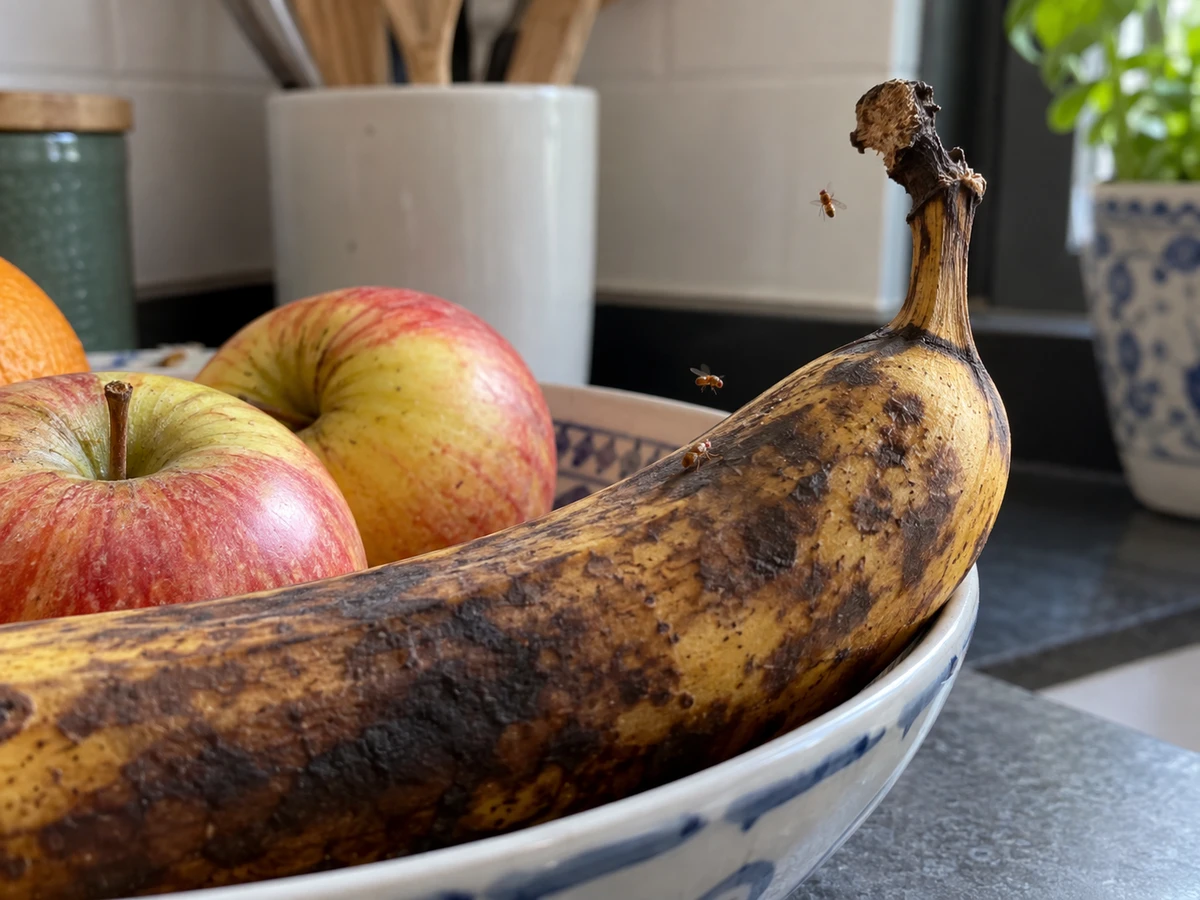
A small cloud of tan, red-eyed flies over the fruit bowl
👀 What you see
Small flies with a tan-brown body and bright red eyes flying briskly around the fruit bowl, a browning banana or the compost bin under the sink.
🧭 What it means
These are fruit flies, drawn to fermenting sugars. Egg to adult takes 8 days at 77°F: a new wave can hatch from a piece of fruit or a drain a week later.
✅ The proof: how to confirm
A glass of apple cider vinegar with a drop of dish soap, set 12 to 20 inches from the fruit bowl, catches the bulk of them in 24 to 48 hours; if it stays empty, they aren’t fruit flies.
🧩 What to do next
- 1 Identify the fly: small brown by the fruit bowl = fruit fly; metallic green/blue = blow fly; gray and striped on food = house fly; checkerboard pattern in the attic in autumn = cluster fly.
- 2 A sudden swarm of blow flies means a hidden carcass (mouse, bird) in a wall or attic — find and remove it first; the flies leave in 3–5 days.
- 3 For fruit flies: remove ripe fruit and coffee grounds, clean the drain biofilm, and set an apple-cider-vinegar + dish-soap trap.
- 4 For house flies: bag and wash out the trash, screen windows with mesh under 1/16 inch, and add a UV unit or a fly ribbon.
- 5 For barns and large spaces: spread cyromazine larvicide on the breeding matter (manure/bedding) and place attractant bait on resting walls.
- 6 In commercial kitchens, use glue-board units only above food prep (no electrocution) and keep a capture log for inspections.
🛒 Products from our guides
-
Terro Fruit Fly Trap
Ready to use and discreet by the fruit bowl, with no recipe to mix.
View on Amazon → -
Decorative apple-shaped fruit fly trap
No noticeable smell: it works for a month near the bowl.
View on Amazon → -
Enzymatic drain cleaner gel
If they keep coming back despite traps, the larvae are often developing in the drain biofilm.
View on Amazon →
As an Amazon Associate we earn from qualifying purchases, at no extra cost to you.
Mice & rats
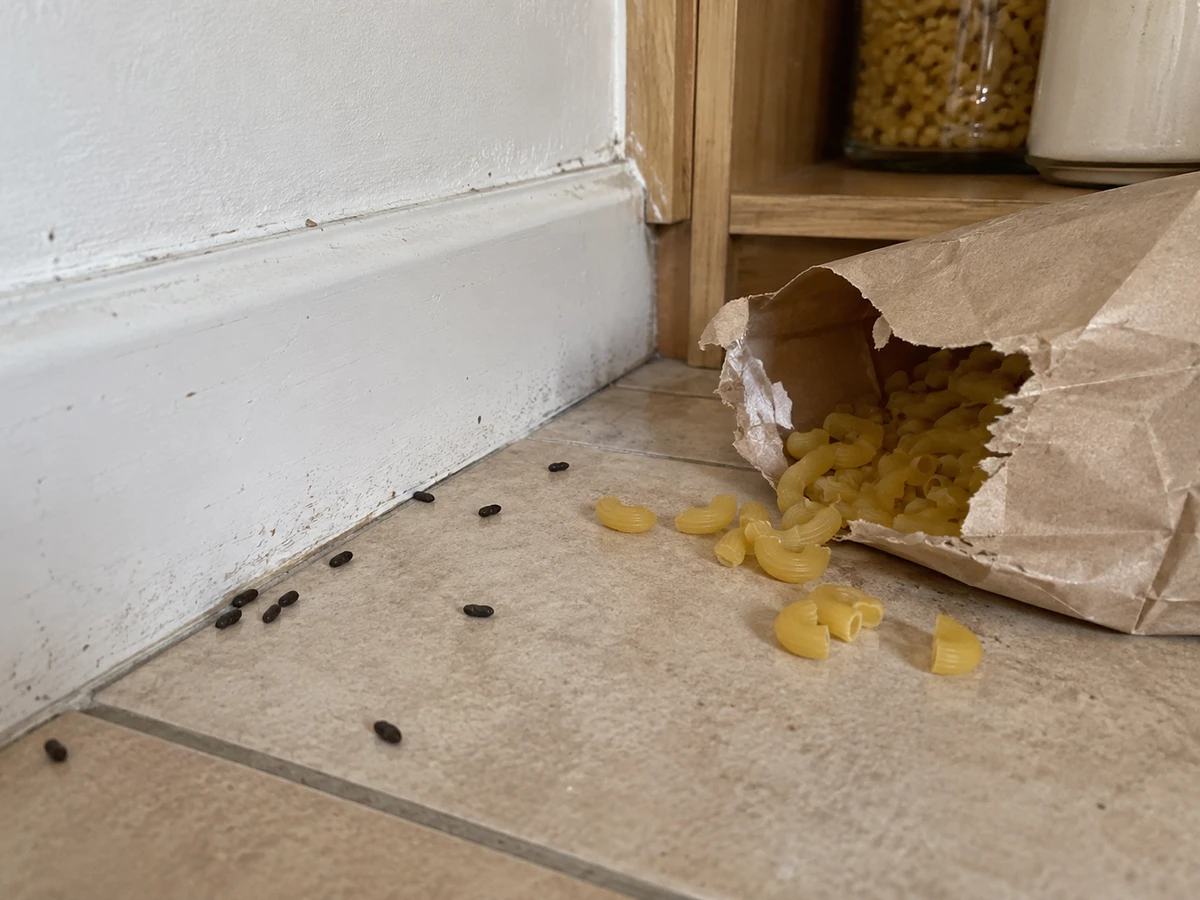
Rice-shaped droppings along the baseboard
👀 What you see
Black droppings 1/8 to 1/4 inch long, pointed at both ends, scattered along the baseboard or in the pantry; a ripped-open box of pasta, a sharp urine smell behind the fridge.
🧭 What it means
The house mouse’s signature (50 to 80 droppings a day). Rat droppings are much bigger (1/2 to 3/4 inch, blunt ends, grouped); cockroach droppings look like ground pepper.
✅ The proof: how to confirm
Sprinkle a little flour along the wall at night: in the morning, a print of about 3/8 inch means a mouse, about 3/4 inch a rat.
⚠️ Caution
Never vacuum mouse droppings (hantavirus): wet them first with diluted bleach (1:10) or a disinfectant and let it sit 10 minutes.
🧩 What to do next
- 1 Mouse or rat? Rice-grain droppings pointed at both ends and scattered = mouse; olive-pit droppings grouped in one spot = rat. Sprinkle flour overnight to read footprints (~⅜ in = mouse, ~¾ in = rat).
- 2 Seal entry points FIRST with steel wool packed into holes and held with caulk — if a ballpoint pen fits, a mouse fits. Never use expanding foam (they chew through it).
- 3 Set snap or electric traps along the walls, baited with peanut butter (not cheese). Use rat-sized traps for rats — a mouse trap will not stop one.
- 4 For heavy infestations, place rodenticide only inside a locked, tamper-resistant bait station — never loose pellets.
- 5 Never vacuum droppings (Hantavirus risk): wet them with diluted bleach (1:10), wear gloves and an N95, bag, then disinfect surfaces.
- 6 Avoid glue traps (cruel and ineffective) and store all food in glass or metal containers.
🛒 Products from our guides
-
Reusable mouse snap traps
A strong, clean-triggering snap trap: the inexpensive start for an early infestation, washable and reusable.
View on Amazon → -
Victor electronic mouse trap
No-touch, bloodless kill: hygienic in a kitchen and easier for the squeamish.
View on Amazon → -
Steel wool for rodent-proofing
The one material mice can’t gnaw through: it closes entry points for good.
View on Amazon →
As an Amazon Associate we earn from qualifying purchases, at no extra cost to you.
Household insects
Silky threads in the bag of flour
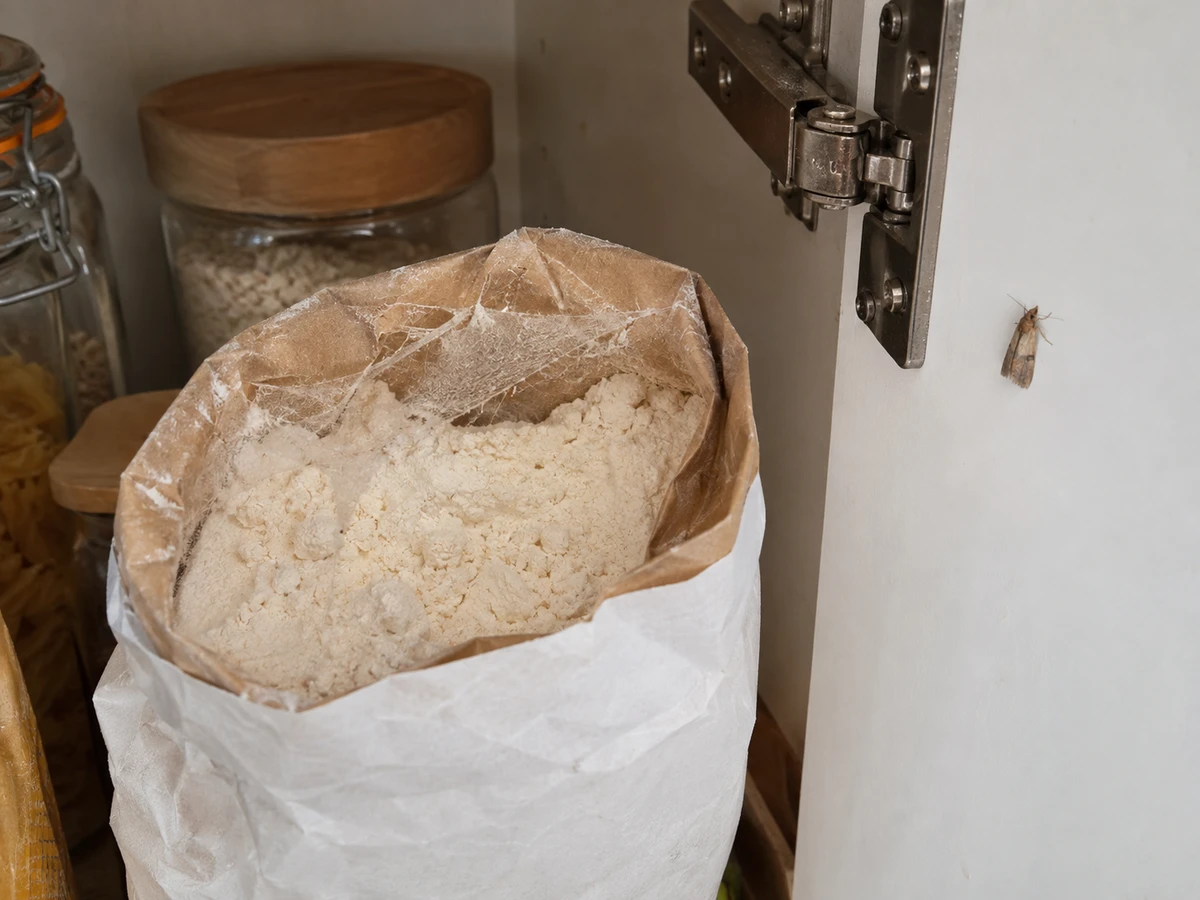
👀 What you see
Small beige moths in the kitchen, and silky threads and clumped flour inside a bag of flour or rice in the pantry.
🧭 What it means
Pantry moths: an infested package came into the pantry, almost always from the store. The food is lost, but there is no toxic risk.
✅ The proof: how to confirm
Go through the whole pantry (rice, flour, dried fruit, pet food, spices): threads in several packages mean it’s time to act; a pheromone trap measures the infestation.
⚠️ Caution
Tossing only the visibly infested bag isn’t enough: one forgotten package restarts the cycle in three weeks.
🛒 Products from our guides
-
Pantry moth pheromone traps
They catch the males: they measure the infestation and bring it down, but don’t replace going through the pantry.
View on Amazon → -
Airtight food storage containers
After the sort, what’s clean goes into sealed containers: an infested package can no longer reach the others.
View on Amazon → -
Bright LED flashlight
To check every package down to the bottom for silky threads and clumped flour.
View on Amazon →
As an Amazon Associate we earn from qualifying purchases, at no extra cost to you.
Ants
Ants coming out of the bathtub caulk
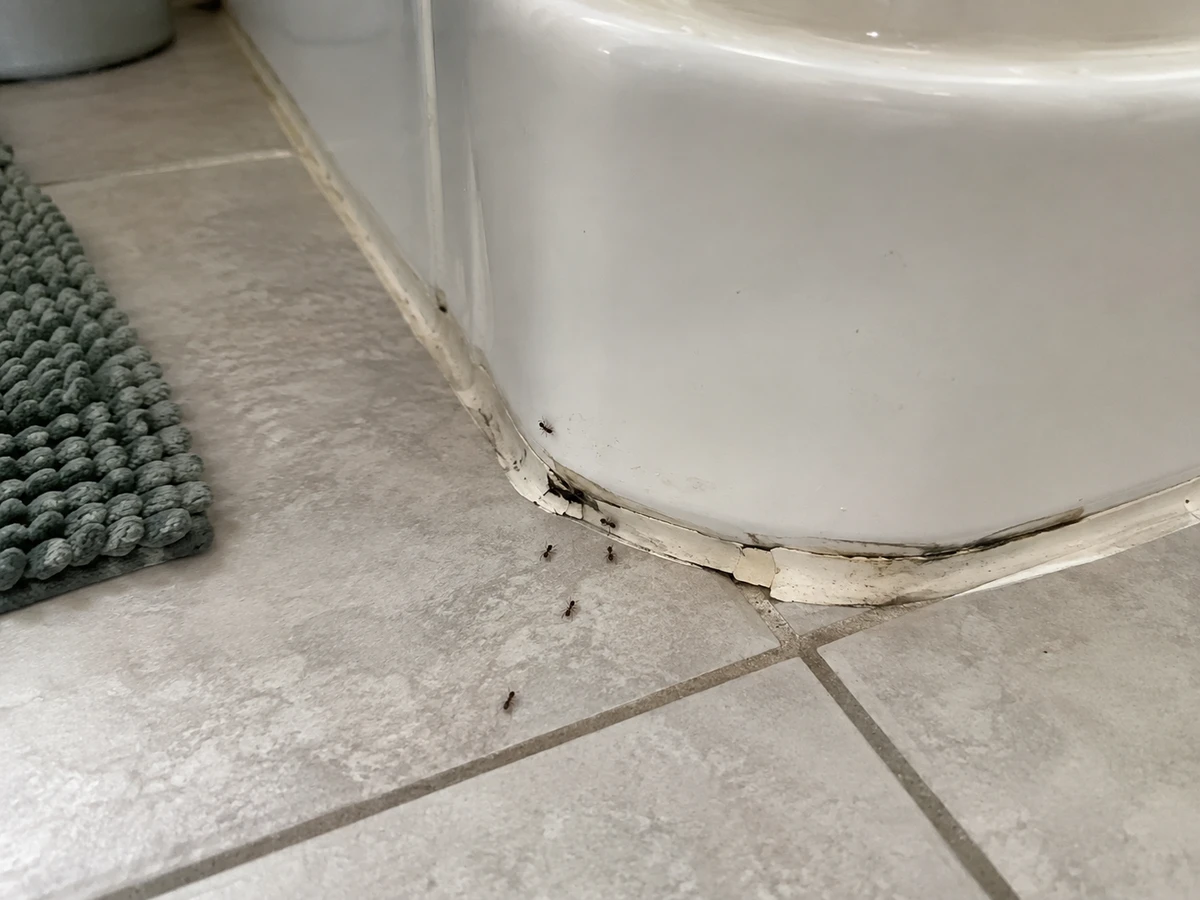
👀 What you see
Ants always coming out of the same spot in a loose silicone caulk bead at the base of the tub or shower pan, with a bubble, a blackened corner or mold.
🧭 What it means
A caulk bead isn’t a nest but a damp corridor to water: the colony is elsewhere (wall, slab, outdoors). On a floor grout line, on the other hand, small piles of fine dust or sand next to the joint point to a possible nest under the tile.
✅ The proof: how to confirm
Scratch the joint with a fingernail and look for piles of fine sand: floor grout that crumbles points to a nest under the tile, a simple loose caulk bead to a passage.
⚠️ Caution
Don’t reseal the joint while ants are still coming through: they’ll pop out a foot (30 cm) away or inside the wall.
🧩 What to do next
- 1 Identify the species first: tiny reddish ants living inside walls = pharaoh; black foragers coming from outdoors = garden ants; large black ants with coarse sawdust = carpenter ants. The method depends on it.
- 2 Do not spray. Contact spray kills visible workers but never the queen, and with pharaoh ants it can split the colony (budding) and make things worse.
- 3 Wipe active trails with undiluted white vinegar to erase the pheromone highway, then place lentil-sized bait-gel drops directly on those trails, every 4–6 inches.
- 4 Leave the gel undisturbed and let workers carry it back to the nest. Replenish the drops as they are eaten (a good appetite means it is working).
- 5 For an accessible outdoor nest, puff deltamethrin dust into the openings; for carpenter ants, also find and fix the moisture source feeding them.
- 6 Once activity stops, seal entry cracks and pipe gaps with silicone caulk to stop the next generation following the same route.
🛒 Products from our guides
-
Ant gel bait in a syringe
The only format you can place in micro-drops in the hollow of a joint, or on a vertical surface, without it running.
View on Amazon → -
Closed ant bait stations
Same active ingredient, with the bait out of reach of children and pets in high-traffic areas.
View on Amazon → -
Mold-resistant bathroom silicone caulk
To redo the loose bead — only after 10 to 15 days without a single ant.
View on Amazon →
As an Amazon Associate we earn from qualifying purchases, at no extra cost to you.
Flies & gnats
Small fuzzy flies with heart-shaped wings resting by the sink
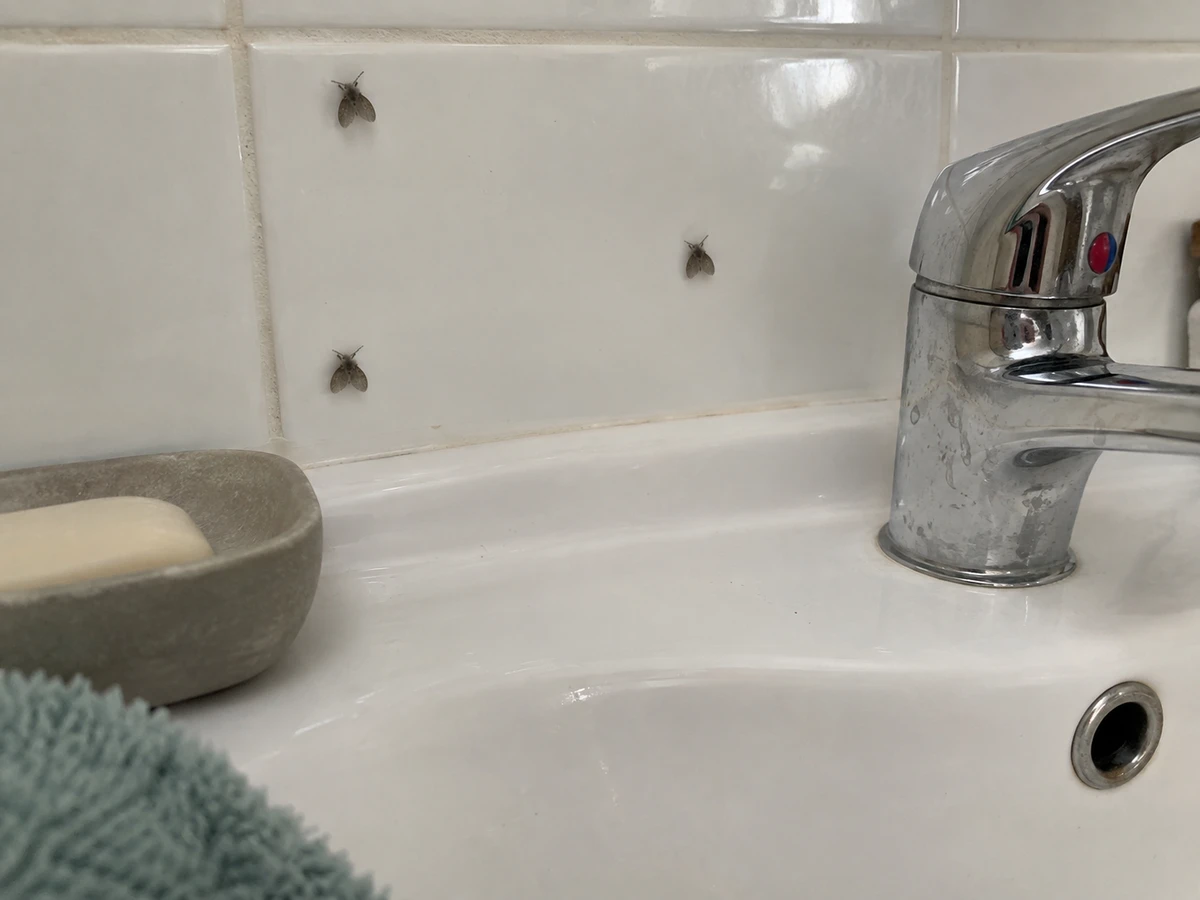
👀 What you see
Small gray-black flies, stocky and fuzzy, with rounded heart-shaped wings folded like a roof, sitting still on the wall near the sink or shower; they barely fly.
🧭 What it means
These are drain flies (moth flies): their larvae live in the greasy biofilm lining the pipe, the trap or the overflow — even in a spotless bathroom. The fruit fly is tan-brown with red eyes and circles ripe fruit.
✅ The proof: how to confirm
Tape test: at night, stretch clear tape sticky side down across each drain without sealing it; in the morning, the most-loaded tape marks the breeding site (and 3 nights in a row with no catch means you’ve won).
⚠️ Caution
Bleach isn’t enough: it runs through too fast to lift the biofilm where the larvae live.
🧩 What to do next
- 1 Identify the fly: small brown by the fruit bowl = fruit fly; metallic green/blue = blow fly; gray and striped on food = house fly; checkerboard pattern in the attic in autumn = cluster fly.
- 2 A sudden swarm of blow flies means a hidden carcass (mouse, bird) in a wall or attic — find and remove it first; the flies leave in 3–5 days.
- 3 For fruit flies: remove ripe fruit and coffee grounds, clean the drain biofilm, and set an apple-cider-vinegar + dish-soap trap.
- 4 For house flies: bag and wash out the trash, screen windows with mesh under 1/16 inch, and add a UV unit or a fly ribbon.
- 5 For barns and large spaces: spread cyromazine larvicide on the breeding matter (manure/bedding) and place attractant bait on resting walls.
- 6 In commercial kitchens, use glue-board units only above food prep (no electrocution) and keep a capture log for inspections.
🛒 Products from our guides
-
Flexible drain cleaning brush
The centerpiece: the only move that physically scrapes the biofilm off the pipe walls.
View on Amazon → -
Thick, clinging drain gel
Clings to vertical walls and dissolves the leftover biofilm instead of running straight down the trap.
View on Amazon → -
Enzyme drain treatment
Poured at night, it digests the organic matter the larvae feed on and keeps them from coming back.
View on Amazon →
As an Amazon Associate we earn from qualifying purchases, at no extra cost to you.
Household insects
A silvery-gray insect darting toward the shower caulk
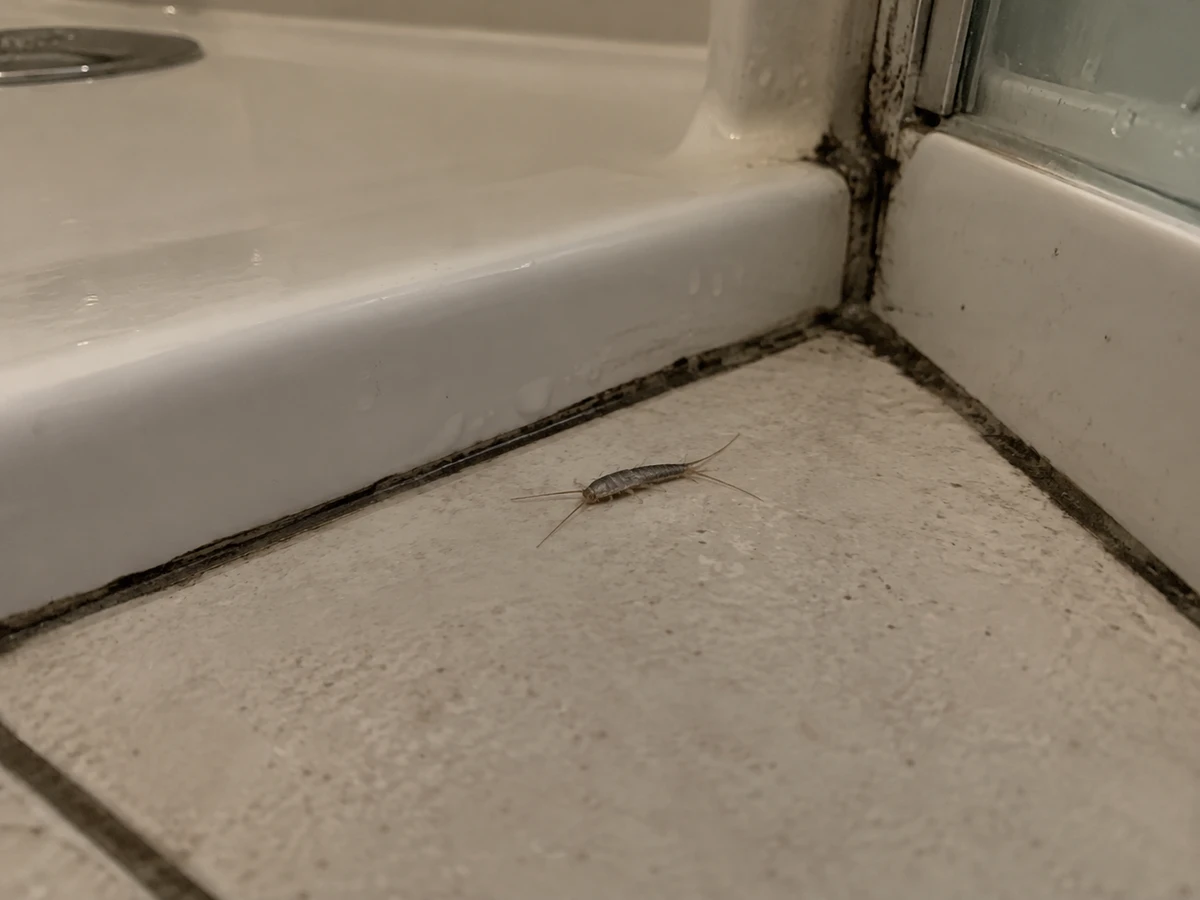
👀 What you see
An insect about 3/8 in (1 cm) long, tapered, silvery-gray and scaly-looking, wingless, with three tail filaments, wriggling toward the blackened shower caulk when you turn on the light at night.
🧭 What it means
A silverfish (Lepisma saccharina): it signals moisture and cellulose (wallpaper paste, cardboard). It doesn’t bite and transmits nothing; seeing one only at night after a shower is normal.
✅ The proof: how to confirm
A hygrometer settles it in one night (above 65% humidity, it thrives); sticky traps set for a week along the baseboards and under the vanity measure the population.
🛒 Products from our guides
-
Indoor hygrometer
Gives you the humidity reading before you buy anything, in one night.
View on Amazon → -
Monitoring sticky traps
Measuring tools: they show where the population concentrates and how big it is.
View on Amazon → -
Small-room dehumidifier
Goes straight at the humidity that keeps them there.
View on Amazon →
As an Amazon Associate we earn from qualifying purchases, at no extra cost to you.
Cockroaches
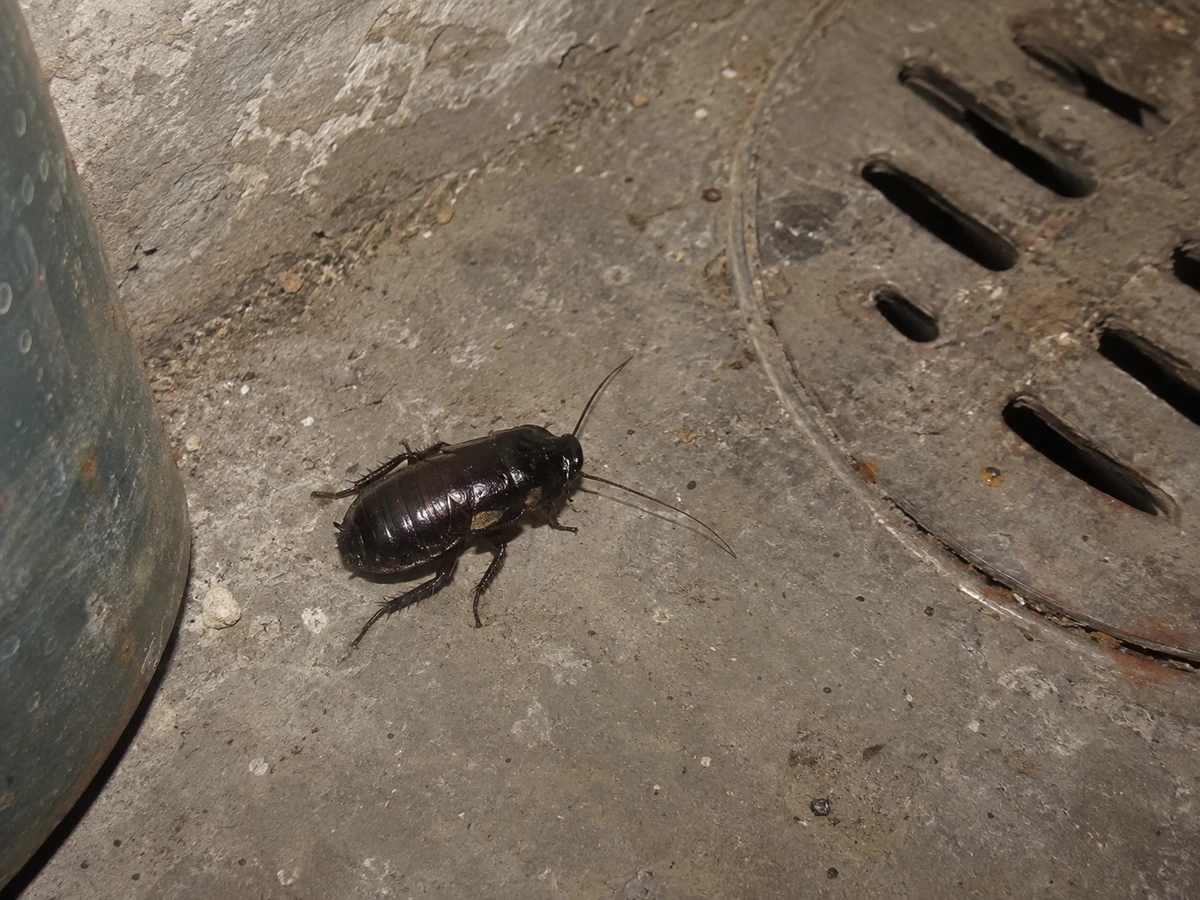
A big, glossy black roach near the floor drain
👀 What you see
A roach about 1 to 1¼ inches long, glossy near-black to very dark brown and heavy-bodied, crawling slowly across the floor near a floor drain that has dried out — or stranded at the bottom of a bucket, a tub or a utility sink.
🧭 What it means
This is the oriental cockroach — the “waterbug” — drawn by water and cool shelter, coming in from outdoors or the sewer side. The German cockroach of the kitchen is about 1/2 inch, light tan, with two dark stripes behind the head, and it climbs walls.
✅ The proof: how to confirm
Behavior beats color: an oriental cockroach stays on the floor and can’t climb a smooth vertical surface; numbered glue boards read on a fixed schedule measure the population.
⚠️ Caution
No bug bomb in a basement: foggers don’t reach the cracks, the air doesn’t turn over, and there is often a gas water heater or furnace with an ignition source in the corner.
🧩 What to do next
- 1 Identify the species: small light-brown roach with two dark stripes behind the head = German (kitchen/bathroom); large shiny black = Oriental (basements, drains).
- 2 Place sticky monitor traps to find the harborage — behind the fridge, under the sink, inside cabinet hinges and around motors.
- 3 Apply pea/lentil-sized gel drops in those hidden spots. Never spray: spray scatters the colony and breeds resistance.
- 4 Add an IGR (insect growth regulator) so surviving nymphs cannot mature — this breaks the cycle.
- 5 Clean with white vinegar or a neutral cleaner during treatment. Bleach repels roaches away from the bait and makes it fail.
- 6 Replenish gel as it is eaten; expect 2–3 weeks. In an apartment, push for a coordinated building-wide treatment.
🛒 Products from our guides
-
Stainless steel wool gap filler
Packed around a pipe penetration and caulked over, it closes a route that expanding foam alone leaves open.
View on Amazon → -
Cockroach monitoring glue traps
The referee: numbered and read on a fixed schedule, they tell you whether the count is dropping.
View on Amazon → -
Basement dehumidifier with continuous drain
Gets humidity under 50%: this species goes far longer without food than without water.
View on Amazon →
As an Amazon Associate we earn from qualifying purchases, at no extra cost to you.
Flies & gnats
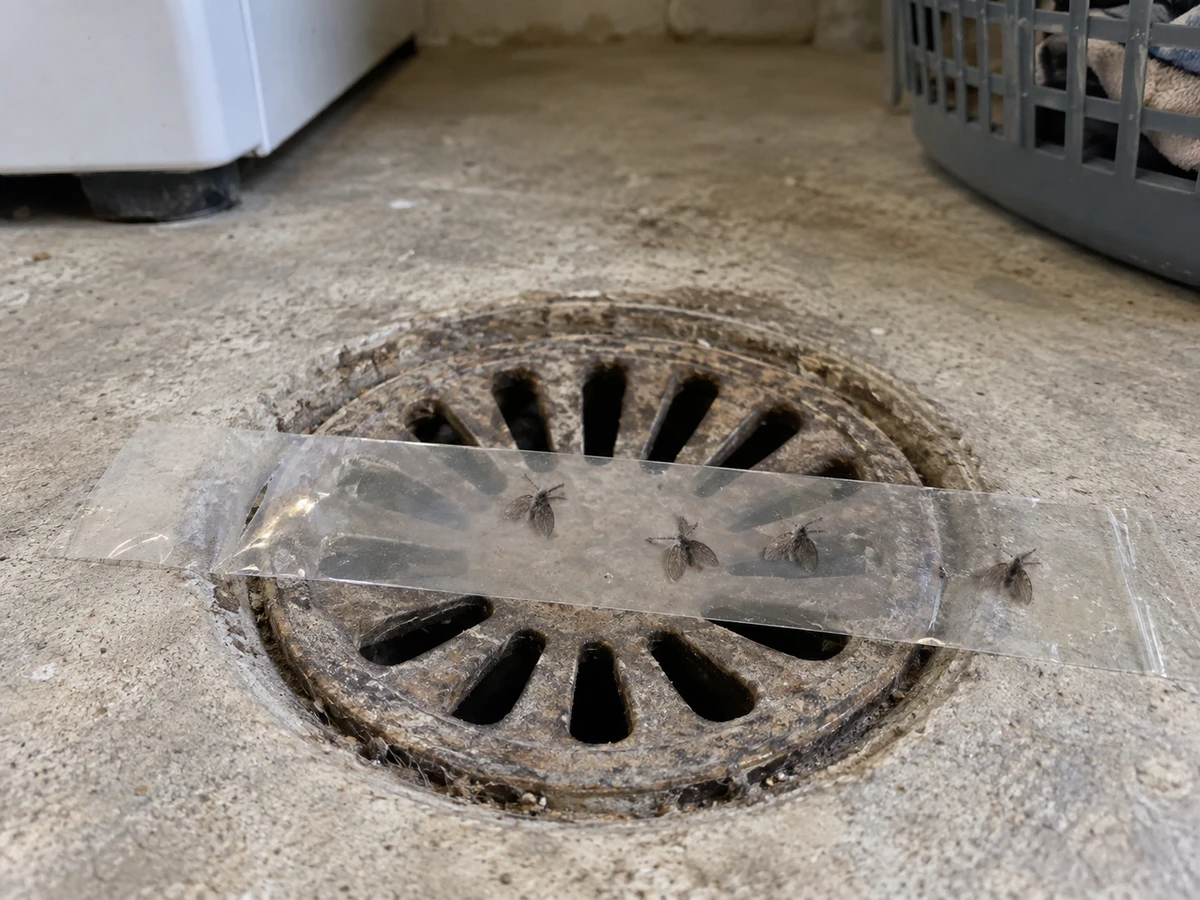
A dry floor drain with flies coming up out of it
👀 What you see
A basement or laundry-room floor drain nobody ever uses, its water evaporated, with small flies stuck to the tape laid across it.
🧭 What it means
Without its water seal, the trap is an open line: sewer flies stroll right up — often the real breeding site when scrubbing the sink changes nothing. The same dry trap also lets oriental cockroaches in.
✅ The proof: how to confirm
Run the tape test on every drain the same night: the most-loaded tape is the breeding site. A glass of water poured into the floor drain every week restores the seal.
🧩 What to do next
- 1 Identify the fly: small brown by the fruit bowl = fruit fly; metallic green/blue = blow fly; gray and striped on food = house fly; checkerboard pattern in the attic in autumn = cluster fly.
- 2 A sudden swarm of blow flies means a hidden carcass (mouse, bird) in a wall or attic — find and remove it first; the flies leave in 3–5 days.
- 3 For fruit flies: remove ripe fruit and coffee grounds, clean the drain biofilm, and set an apple-cider-vinegar + dish-soap trap.
- 4 For house flies: bag and wash out the trash, screen windows with mesh under 1/16 inch, and add a UV unit or a fly ribbon.
- 5 For barns and large spaces: spread cyromazine larvicide on the breeding matter (manure/bedding) and place attractant bait on resting walls.
- 6 In commercial kitchens, use glue-board units only above food prep (no electrocution) and keep a capture log for inspections.
🛒 Products from our guides
-
Floor drain trap seal insert
A waterless trap seal keeps the seal in place for good on a drain nobody uses.
View on Amazon → -
Silicone drain cover
Set in place at night, it keeps adults from climbing up to lay and emerge.
View on Amazon → -
Enzyme drain treatment
Digests the organic sludge in the trap overnight.
View on Amazon →
As an Amazon Associate we earn from qualifying purchases, at no extra cost to you.
Mice & rats
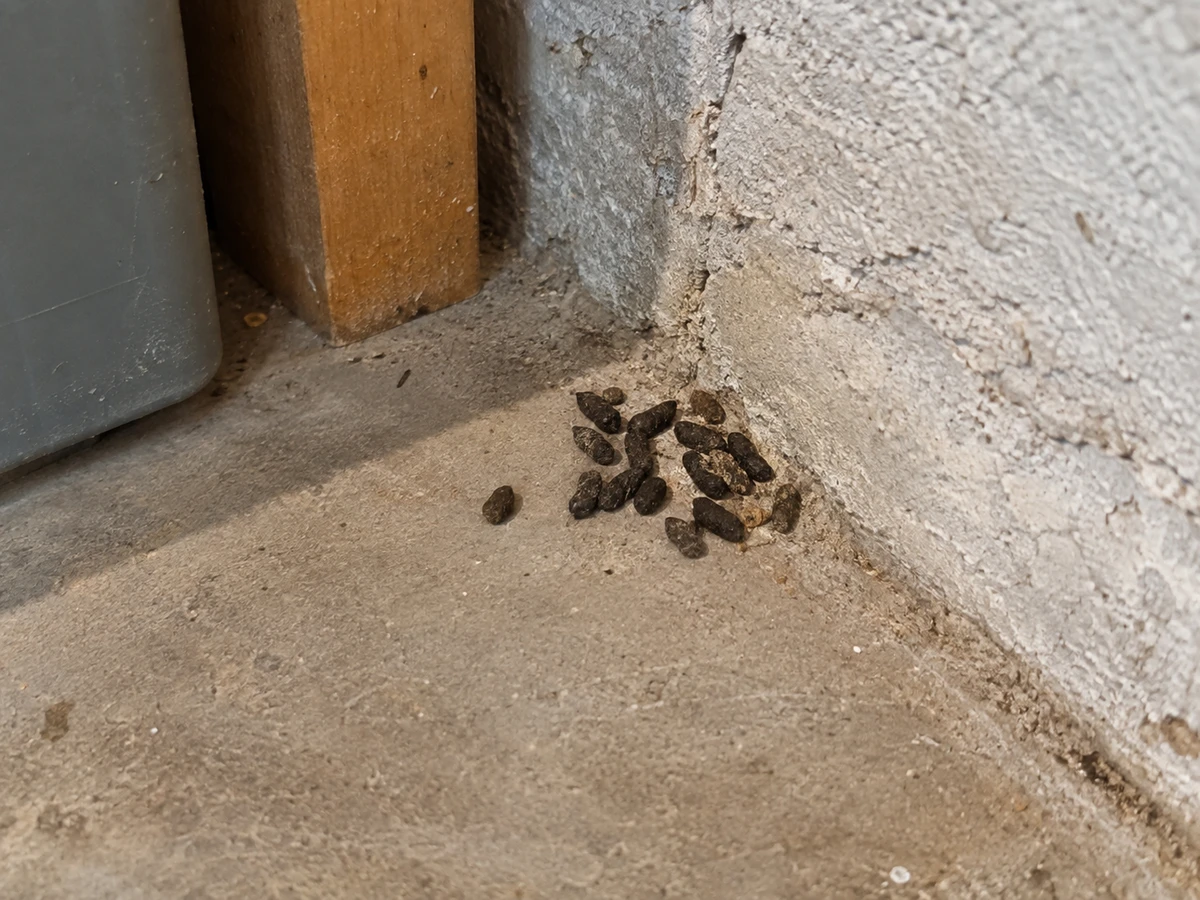
Olive-pit droppings piled up in one corner
👀 What you see
Droppings 1/2 to 3/4 inch long with blunt ends, grouped in “latrines” always in the same spot; heavy running noises and powerful gnawing (wood, plaster).
🧭 What it means
It’s a rat: a mouse trap won’t hold it. Its urine can transmit leptospirosis.
✅ The proof: how to confirm
The flour test: a print of about 3/4 inch confirms a rat.
⚠️ Caution
Poison only inside a tamper-resistant bait station (a danger to dogs, cats and children); never vacuum the droppings.
🧩 What to do next
- 1 Mouse or rat? Rice-grain droppings pointed at both ends and scattered = mouse; olive-pit droppings grouped in one spot = rat. Sprinkle flour overnight to read footprints (~⅜ in = mouse, ~¾ in = rat).
- 2 Seal entry points FIRST with steel wool packed into holes and held with caulk — if a ballpoint pen fits, a mouse fits. Never use expanding foam (they chew through it).
- 3 Set snap or electric traps along the walls, baited with peanut butter (not cheese). Use rat-sized traps for rats — a mouse trap will not stop one.
- 4 For heavy infestations, place rodenticide only inside a locked, tamper-resistant bait station — never loose pellets.
- 5 Never vacuum droppings (Hantavirus risk): wet them with diluted bleach (1:10), wear gloves and an N95, bag, then disinfect surfaces.
- 6 Avoid glue traps (cruel and ineffective) and store all food in glass or metal containers.
🛒 Products from our guides
-
Heavy-duty rat snap trap
A much more powerful spring, sized for rats that a mouse trap can’t hold.
View on Amazon → -
Tamper-resistant rodent bait station
A locked box that keeps the bait away from children and pets.
View on Amazon → -
Steel wool for rodent-proofing
The one material rodents can’t gnaw through: it seals the gaps once you’ve found them.
View on Amazon →
As an Amazon Associate we earn from qualifying purchases, at no extra cost to you.
Cockroaches
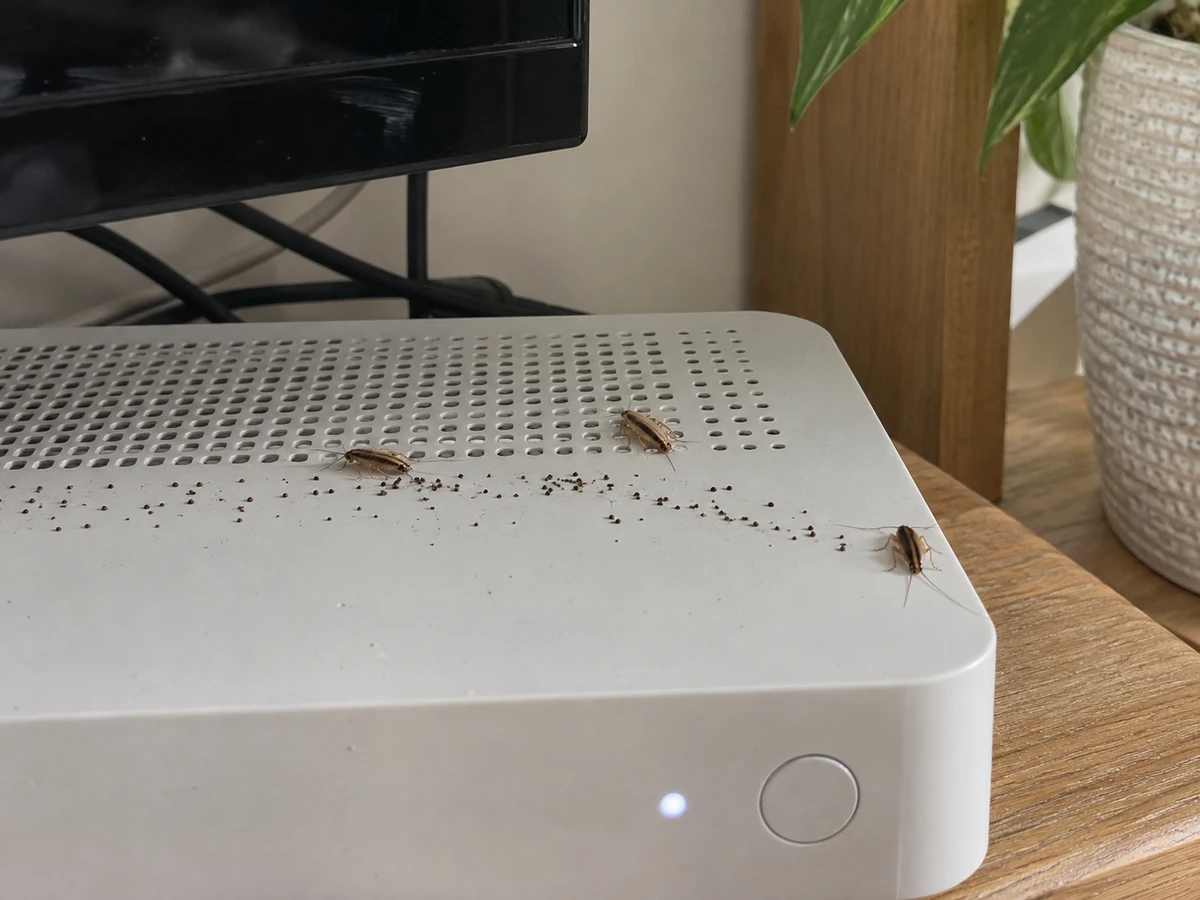
Droppings and roaches around the warm cable box
👀 What you see
Black specks and cockroaches around a device that stays warm all the time — cable box, router, game console, a computer power brick — sometimes several yards from the kitchen.
🧭 What it means
Warmth plus food plus a tight space: a whole harborage can settle into a cable box, especially if a bag of cookies lives on the coffee table.
✅ The proof: how to confirm
Set one numbered glue board per room for 72 hours: if the catch concentrates on one spot and includes nymphs and shed skins, the harborage is in your home.
🧩 What to do next
- 1 Identify the species: small light-brown roach with two dark stripes behind the head = German (kitchen/bathroom); large shiny black = Oriental (basements, drains).
- 2 Place sticky monitor traps to find the harborage — behind the fridge, under the sink, inside cabinet hinges and around motors.
- 3 Apply pea/lentil-sized gel drops in those hidden spots. Never spray: spray scatters the colony and breeds resistance.
- 4 Add an IGR (insect growth regulator) so surviving nymphs cannot mature — this breaks the cycle.
- 5 Clean with white vinegar or a neutral cleaner during treatment. Bleach repels roaches away from the bait and makes it fail.
- 6 Replenish gel as it is eaten; expect 2–3 weeks. In an apartment, push for a coordinated building-wide treatment.
🛒 Products from our guides
-
Cockroach monitoring glue traps
Nothing toxic: they locate a harborage you can’t reach and tell adults from nymphs.
View on Amazon → -
Rechargeable LED inspection flashlight
Slim and bright: it slides behind the TV stand and raises fresh droppings in raking light.
View on Amazon → -
Child-resistant cockroach bait stations
Closed bait stations: safe near sensitive areas, with no gel to handle.
View on Amazon →
As an Amazon Associate we earn from qualifying purchases, at no extra cost to you.
Wasps & hornets
A damp stain and buzzing inside the wall
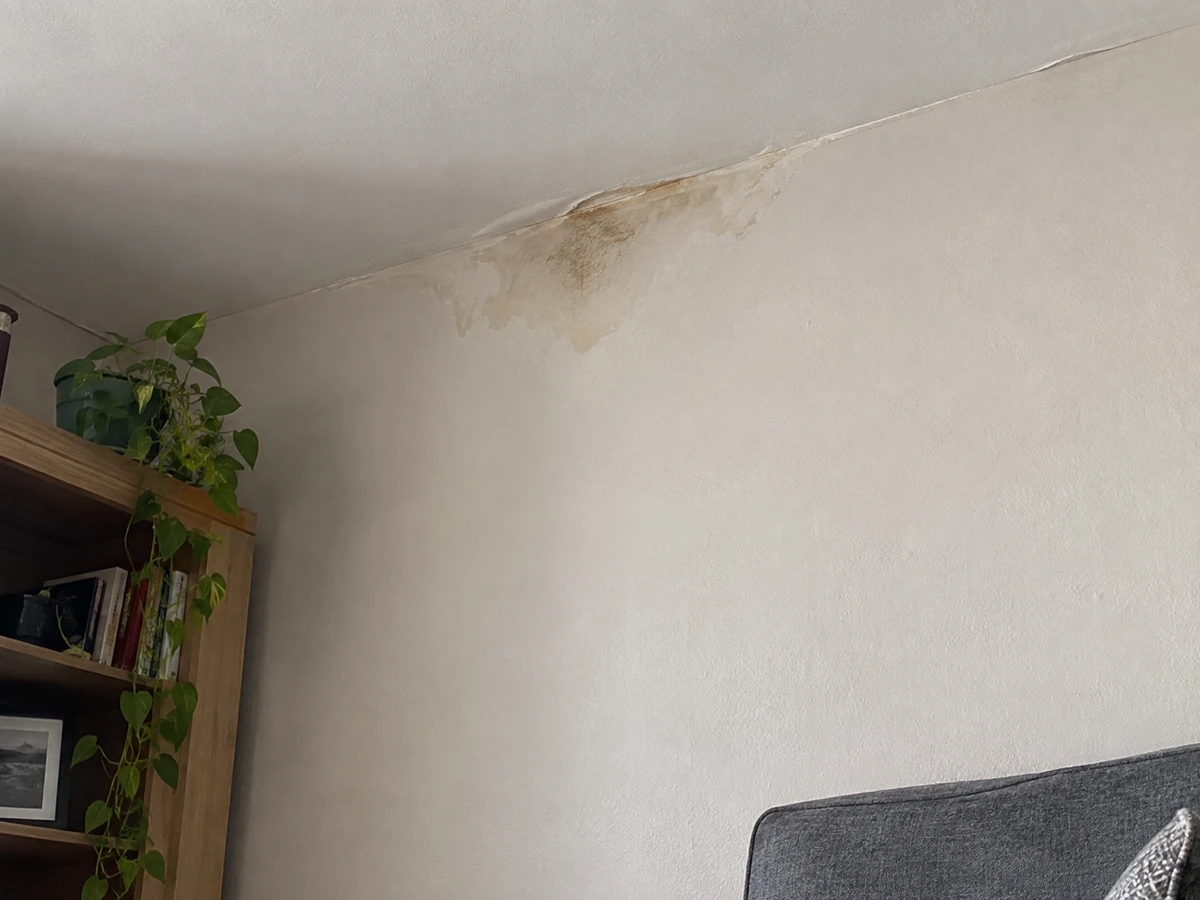
👀 What you see
A moisture stain appearing on a drywall partition a few weeks after the wasps showed up, and buzzing you can hear through the wall.
🧭 What it means
The nest chews the drywall paper; wasp excrement and sugars produce stains within 4 to 6 weeks, and the panel can weaken in 2 to 3 months. Poured concrete, solid brick or CMU block have almost nothing to fear.
✅ The proof: how to confirm
Find the entry hole outside and its in-and-out traffic: that’s what confirms the nest, and it’s where the nest gets treated.
⚠️ Caution
If you can hear the nest buzzing through the wall from inside, hand it to a professional; don’t plug anything before treatment. If you still take on an accessible nest, follow our guide’s protocol: powder rather than spray, at night or early morning when the wasps are in the nest, fully protected.
🧩 What to do next
- 1 Identify first: yellow-and-black, thin-waisted = wasp; rust/brick colored = European hornet (mostly harmless, leave it); black with yellow leg tips = Asian-type/giant hornet → report to authorities and do NOT DIY. Never kill fuzzy bees.
- 2 Decide DIY vs pro: treat it yourself only if the nest is small, low (no ladder), it is a wasp, and you are not allergic. Otherwise call a professional.
- 3 Suit up fully — beekeeping suit, veil and gloves, with wrists and ankles taped — and use a red-light headlamp (wasps cannot see red).
- 4 Treat at night (10–11 PM) when all wasps are back and sluggish: empty a 20-ft spray or foam into the nest entrance, then retreat along a clear, obstacle-free path.
- 5 For a nest inside a wall cavity, puff insecticide dust into the hole — NEVER seal the opening while the colony is alive, or they will push inside the house.
- 6 Wait 48 hours before removing or sealing. Reduce patio pressure with a selective trap placed about 30 feet from where you sit.
🛒 Products from our guides
-
Insecticide powder for wall nests
Powder beats spray for a wall nest: the wasps carry it back into the heart of the nest.
View on Amazon → -
Powder duster with telescoping wand
A fine tip and telescoping wand get the powder into the entry hole without getting close to the nest.
View on Amazon → -
Beekeeper suit with veil
Sting protection for working at the nest entrance; it goes on before you get within 15 feet.
View on Amazon →
As an Amazon Associate we earn from qualifying purchases, at no extra cost to you.
Flies & gnats
Black gnats lifting off the plant pot when you water
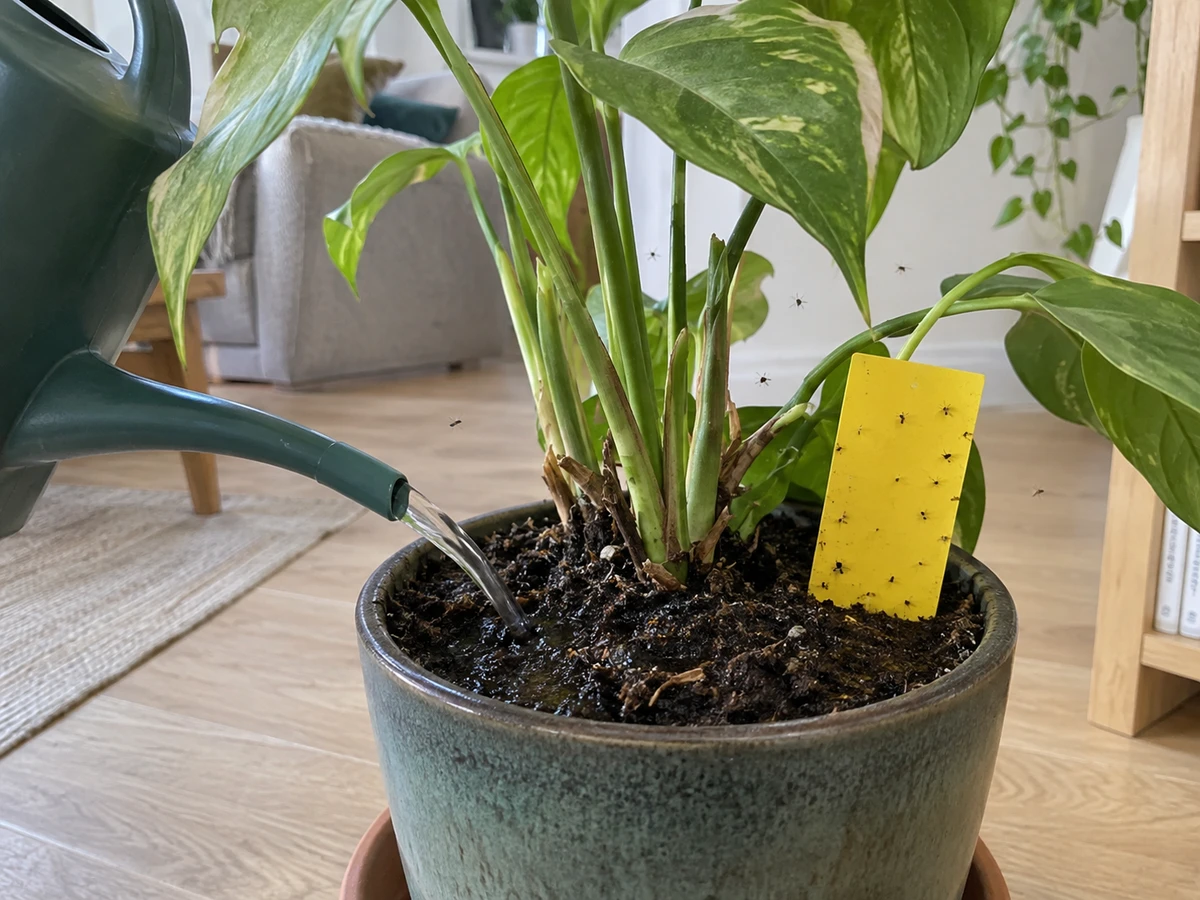
👀 What you see
Tiny, slender black gnats, like miniature mosquitoes, flying weakly in a zigzag just above the soil of a houseplant; in the damp soil, translucent larvae with black heads.
🧭 What it means
These are fungus gnats: their larvae live in damp potting mix and eat roots and fungi. They almost always arrive with a bag of potting mix or a new plant; the vinegar trap barely works on them.
✅ The proof: how to confirm
The one-second test: the insect lifts off the pot when you water → fungus gnat; it hovers around the fruit bowl → fruit fly.
🧩 What to do next
- 1 Identify the fly: small brown by the fruit bowl = fruit fly; metallic green/blue = blow fly; gray and striped on food = house fly; checkerboard pattern in the attic in autumn = cluster fly.
- 2 A sudden swarm of blow flies means a hidden carcass (mouse, bird) in a wall or attic — find and remove it first; the flies leave in 3–5 days.
- 3 For fruit flies: remove ripe fruit and coffee grounds, clean the drain biofilm, and set an apple-cider-vinegar + dish-soap trap.
- 4 For house flies: bag and wash out the trash, screen windows with mesh under 1/16 inch, and add a UV unit or a fly ribbon.
- 5 For barns and large spaces: spread cyromazine larvicide on the breeding matter (manure/bedding) and place attractant bait on resting walls.
- 6 In commercial kitchens, use glue-board units only above food prep (no electrocution) and keep a capture log for inspections.
🛒 Products from our guides
-
Yellow sticky traps for houseplants
Bright yellow draws the adults: stuck in the soil, they catch them and stop egg-laying.
View on Amazon → -
Summit Mosquito Bits (BTI)
Targets only fungus gnat and mosquito larvae; harmless to kids, pets and plants.
View on Amazon → -
Gnat barrier top-dressing
A 1/2 to 1 inch mineral layer on the soil stops females from laying and blocks emerging adults.
View on Amazon →
As an Amazon Associate we earn from qualifying purchases, at no extra cost to you.
Bed bugs
Black dots in the couch seams
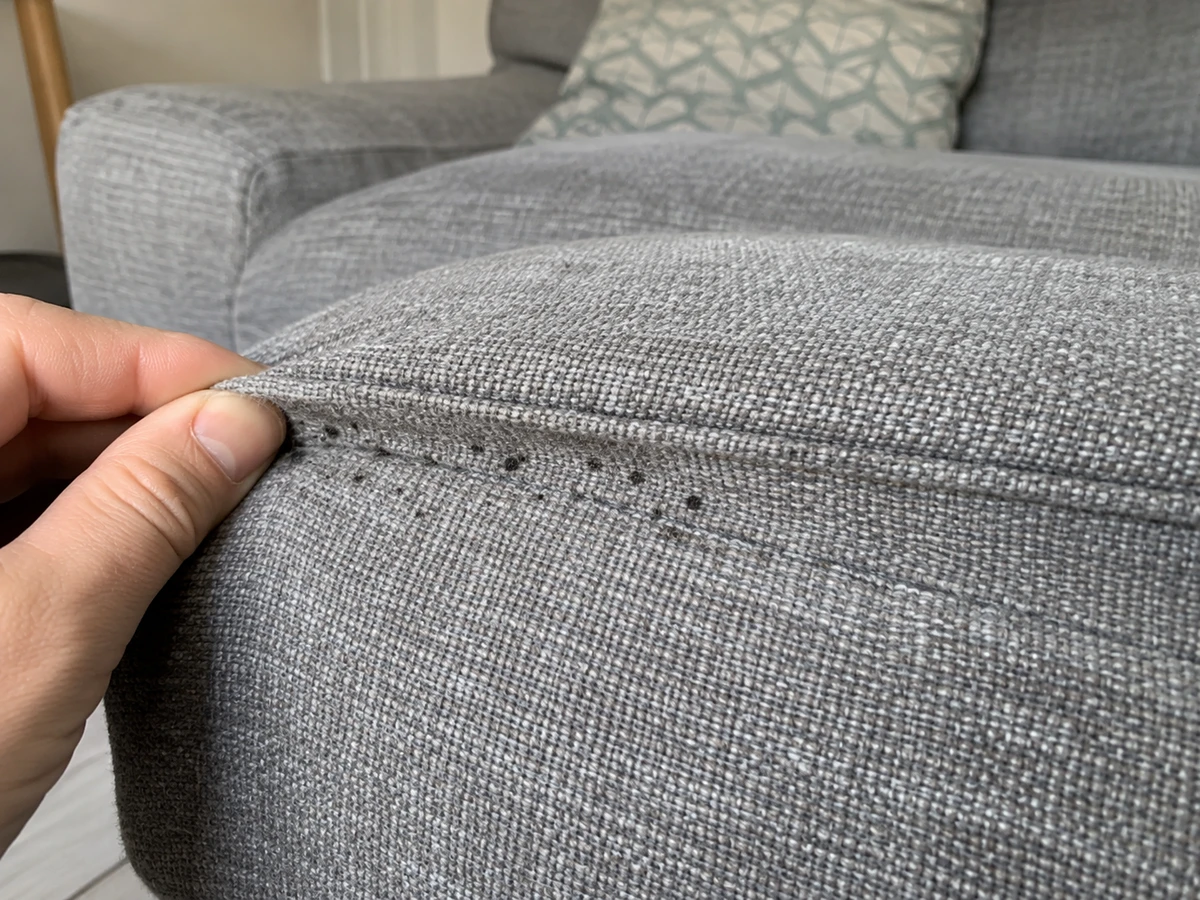
👀 What you see
The same small black fecal spots in the couch seams, curtain hems or clothes piled on the floor.
🧭 What it means
In a long-standing infestation, bed bugs colonize the whole room, not just the bed — and sleeping on the couch to escape the bed brings them there.
✅ The proof: how to confirm
Put interceptors under all four couch legs and read them along with the ones under the bed.
🧩 What to do next
- 1 Confirm it is bed bugs: apple-seed-sized brown insects, tiny black fecal dots on the mattress that smear red, blood spots on sheets, or translucent shed skins. Bites lined up in 3–4 do not confirm it alone.
- 2 Do not throw out the mattress and do not sleep on the sofa or elsewhere — both spread the infestation through the home or building.
- 3 Mechanical pass: vacuum mattress seams, box spring and baseboards; wash bedding at 140°F + 30 minutes in the dryer; freeze delicate items 4 days at -4°F.
- 4 Thermal pass: steam every inch of the mattress, box spring, baseboards and outlet covers — dry steam is the only step that kills eggs.
- 5 Barrier pass: dust a thin layer of diatomaceous earth along baseboards and under the bed legs (wear an N95 mask while applying).
- 6 Encase the mattress and box spring in a certified cover and set an interceptor under each bed leg to monitor.
- 7 Repeat the steam pass after ~2 weeks (eggs hatch in 10–15 days). Consider the room clear after 6 weeks with no bites and no new signs.
🛒 Products from our guides
-
Two-moat bed bug interceptors, set of 8
Four legs for the bed, four for the couch; a light base makes the morning count a glance with a flashlight.
View on Amazon → -
Dry steam cleaner
Nozzle in contact, seam by seam: heat works with no residue, on the zones your log points to.
View on Amazon → -
Diatomaceous earth and bulb duster
A thin film along baseboards and into cracks, when your catches point at the room rather than the bed.
View on Amazon →
As an Amazon Associate we earn from qualifying purchases, at no extra cost to you.
Household insects
A big spider crossing the living room on a September evening
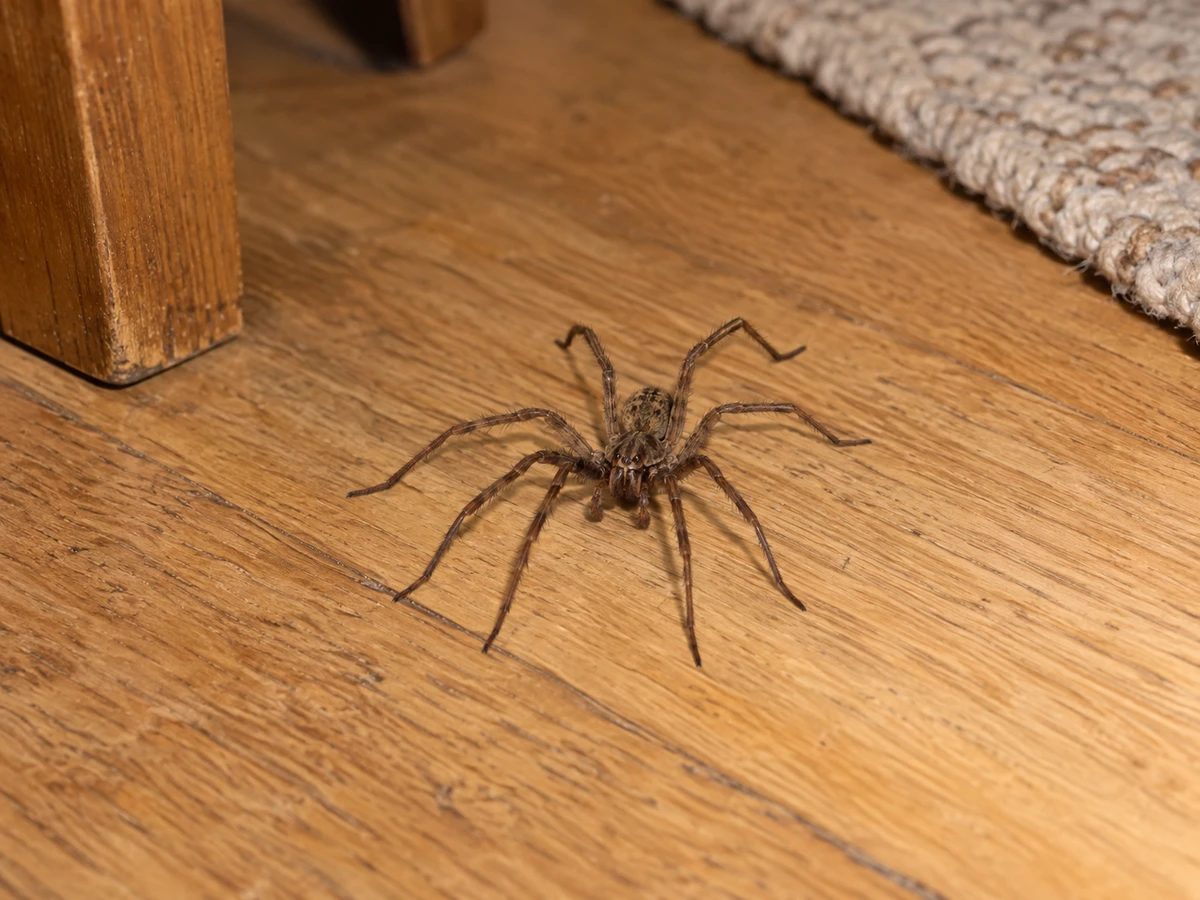
👀 What you see
A house spider (funnel weaver) with a body 3/8 to 3/4 in (1–2 cm) long and long, hairy legs, dashing across the room in bursts in the evening, between mid-September and late October, with no web.
🧭 What it means
It’s an adult male looking for a female: it already lived in the garage, basement, crawl space or attic, and it will die within a few weeks. No harm done: it doesn’t bite and it eats your gnats.
✅ The proof: how to confirm
Count them: one big house spider a week in October is normal; five a day in the same room point to an established population nearby (basement, crawl space, wall cavity).
🛒 Products from our guides
-
Brush door sweep
Mechanical first: keeping them out is what matters most.
View on Amazon → -
Indoor spider repellent spray
Only during the peak, on thresholds, baseboards and frames: two applications over six weeks.
View on Amazon → -
Diatomaceous earth with duster
Odorless and solvent-free, in a thin line along baseboards and behind furniture: it doesn’t repel, it makes the route costly.
View on Amazon →
As an Amazon Associate we earn from qualifying purchases, at no extra cost to you.
Household insects
Book pages with chewed edges on the shelf

👀 What you see
Paper with chewed edges and a surface grazed in irregular patches, and a silvery insect that is larger and duller, sometimes seen during the day outside the bathroom and laundry room.
🧭 What it means
Likely the gray silverfish (Ctenolepisma longicaudatum): it tolerates the ordinary humidity of a heated home, lives several years and roams every room — dehumidifying won’t fix it.
✅ The proof: how to confirm
Three signals: found outside the bathroom (bookshelf, bedroom, hallway), visible by day, clear damage to paper.
🛒 Products from our guides
-
Monitoring sticky traps
They show where the population concentrates and whether it’s dropping, week after week.
View on Amazon → -
Indoor hygrometer
The first purchase for the diagnosis: the humidity reading takes one night.
View on Amazon → -
Food-grade diatomaceous earth
Solvent- and odor-free, it acts on the insects that cross it as long as it stays dry: for dry, enclosed spaces.
View on Amazon →
As an Amazon Associate we earn from qualifying purchases, at no extra cost to you.
Household insects
Bites on your ankles in the morning, with no pets at home
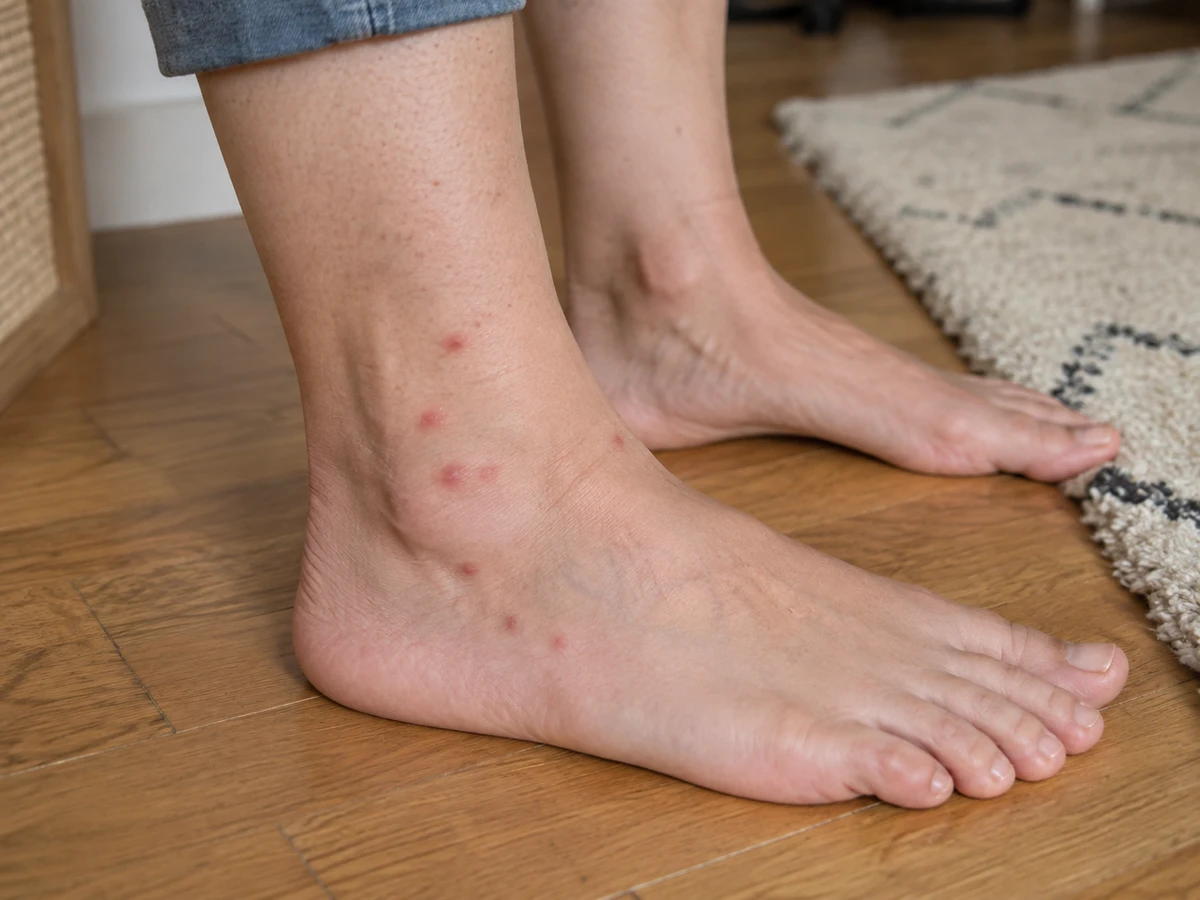
👀 What you see
Bites on your ankles when you wake up in a home with no cat or dog, often shortly after moving in; fleas hide in fabrics, baseboards and the gaps between floorboards.
🧭 What it means
Flea cocoons stay dormant for months and hatch with the warmth and vibrations of new occupants: a previous tenant with a pet, cats in the yard, a wild animal living under the deck.
✅ The proof: how to confirm
The home carries the infestation: treatment has to cover a full three-week cycle to reach the larvae coming out of the cocoons.
⚠️ Caution
The one household-insect family to treat quickly and completely, without waiting. With a cat, avoid pyrethroids (permethrin, deltamethrin), which are toxic to it.
🛒 Products from our guides
-
Harris food-grade diatomaceous earth
Works mechanically on crawling insects, fleas included; a far safer alternative to pyrethroids around a cat.
View on Amazon → -
Bulb duster for powders
Lays the diatomaceous earth in a fine film in floorboard gaps and along baseboards, where fleas hide.
View on Amazon → -
Home flea treatment
The home carries the infestation: fabrics, baseboards and floors over a full three-week cycle; with a cat, rule out pyrethroids.
View on Amazon →
As an Amazon Associate we earn from qualifying purchases, at no extra cost to you.
Ants
A windowsill black with winged ants
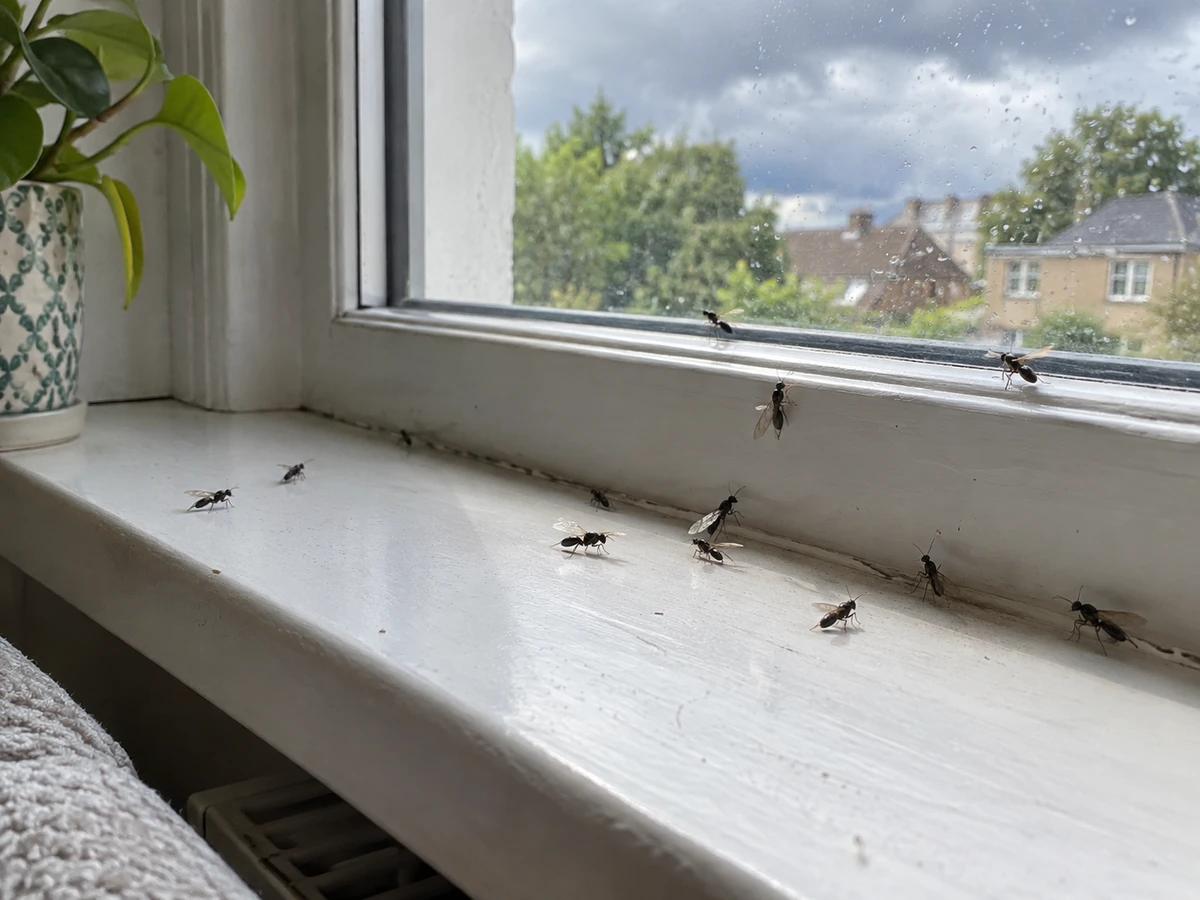
👀 What you see
A swarm of winged ants on the windowsill, heading for the light, often on a hot, muggy July afternoon after a storm.
🧭 What it means
It’s a swarm: it lasts a few hours to two or three days, and these ants don’t sting. On the other hand, large black winged ants (5/16 in / 8 mm and up) coming out of a floorboard crack, a door frame or an interior wall point to carpenter ants.
✅ The proof: how to confirm
Look closely: elbowed (L-shaped) antennae, a narrow pinched waist and two pairs of unequal wings = ant; straight antennae, a uniform body and four identical wings = termite.
⚠️ Caution
If you suspect termites, don’t apply insecticide: catch a few in a jar and have a licensed pest control operator make the diagnosis.
🧩 What to do next
- 1 Identify the species first: tiny reddish ants living inside walls = pharaoh; black foragers coming from outdoors = garden ants; large black ants with coarse sawdust = carpenter ants. The method depends on it.
- 2 Do not spray. Contact spray kills visible workers but never the queen, and with pharaoh ants it can split the colony (budding) and make things worse.
- 3 Wipe active trails with undiluted white vinegar to erase the pheromone highway, then place lentil-sized bait-gel drops directly on those trails, every 4–6 inches.
- 4 Leave the gel undisturbed and let workers carry it back to the nest. Replenish the drops as they are eaten (a good appetite means it is working).
- 5 For an accessible outdoor nest, puff deltamethrin dust into the openings; for carpenter ants, also find and fix the moisture source feeding them.
- 6 Once activity stops, seal entry cracks and pipe gaps with silicone caulk to stop the next generation following the same route.
🛒 Products from our guides
-
Magnetic window screen
Swarmers come in through windows, drawn by the light: closing the openings keeps the swarm out.
View on Amazon → -
Flying insect spray
An emergency contact knockdown on the swarm in one room.
View on Amazon → -
Advion Ant Gel (Syngenta)
If the swarm comes from your home, now is the time to treat the colony.
View on Amazon →
As an Amazon Associate we earn from qualifying purchases, at no extra cost to you.
Mosquitoes
A buzz at 3 a.m. and a single bump in the morning
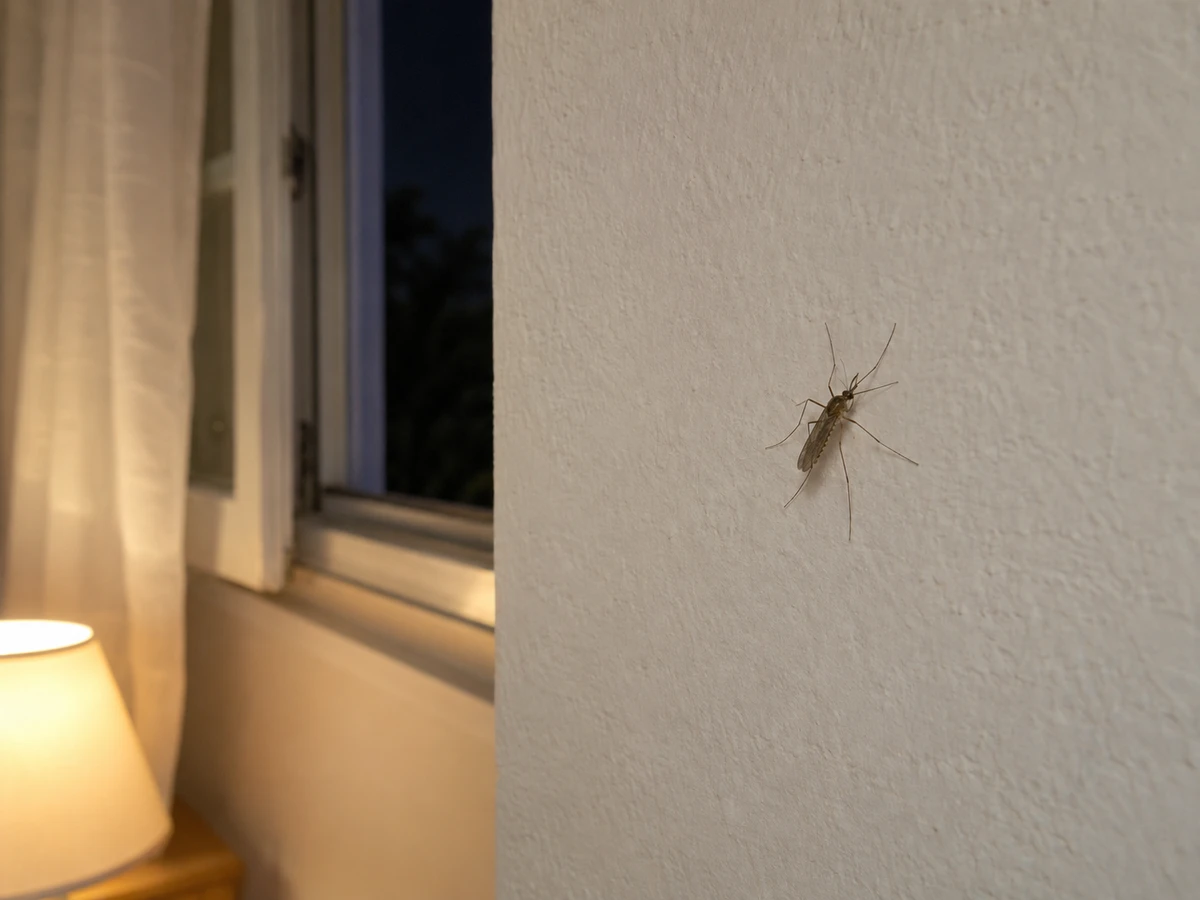
👀 What you see
A dull brown mosquito with a high-pitched whine in the bedroom at night, window open; in the morning, a single red bump that swells fast and itches.
🧭 What it means
The common house mosquito (Culex), a night biter that came in through the window. A single bump, not in a line, that fades within 24–48 hours sets it apart from bed bug bites lined up in a row.
✅ The proof: how to confirm
Single bump + buzzing heard at night = mosquito; bumps lined up in groups of 3–4 point to bed bugs.
⚠️ Caution
No plug-in insecticide diffuser in the room of a baby under 6 months: use a crib mosquito net instead.
🧩 What to do next
- 1 Identify: black with white stripes biting during the day = tiger mosquito (Aedes); dull brown buzzing at night = common mosquito (Culex).
- 2 Kill larvae at the source: empty saucers, buckets and tires weekly, clean gutters, and cover or BTI-treat rain barrels and ponds.
- 3 Protect skin with an EPA/WHO-validated repellent (Picaridin, DEET, IR3535 or OLE/PMD). Skip bracelets, ultrasound and UV lamps — proven ineffective.
- 4 For babies, use nets first; apply topical repellent only by age (IR3535 from 2 months) and never on a child’s hands.
- 5 Indoors: screen windows with mesh under 1/16 inch, run a fan, and use a plug-in diffuser at night (unscented, not in a baby’s room).
- 6 Outdoors: a Thermacell or a simple fan aimed at the table keeps the patio usable.
🛒 Products from our guides
-
Magnetic window screen, flexible strip
A no-drill barrier; any standard mesh also blocks the tiger mosquito.
View on Amazon → -
Magnetic window screen, rigid frame
Magnets built into an aluminum frame: more stable, with no strip to warp.
View on Amazon → -
Crib mosquito net
A physical barrier with no insecticide: suited to an infant’s sleep.
View on Amazon →
As an Amazon Associate we earn from qualifying purchases, at no extra cost to you.
Bed bugs
Black dots ground into the mattress seams
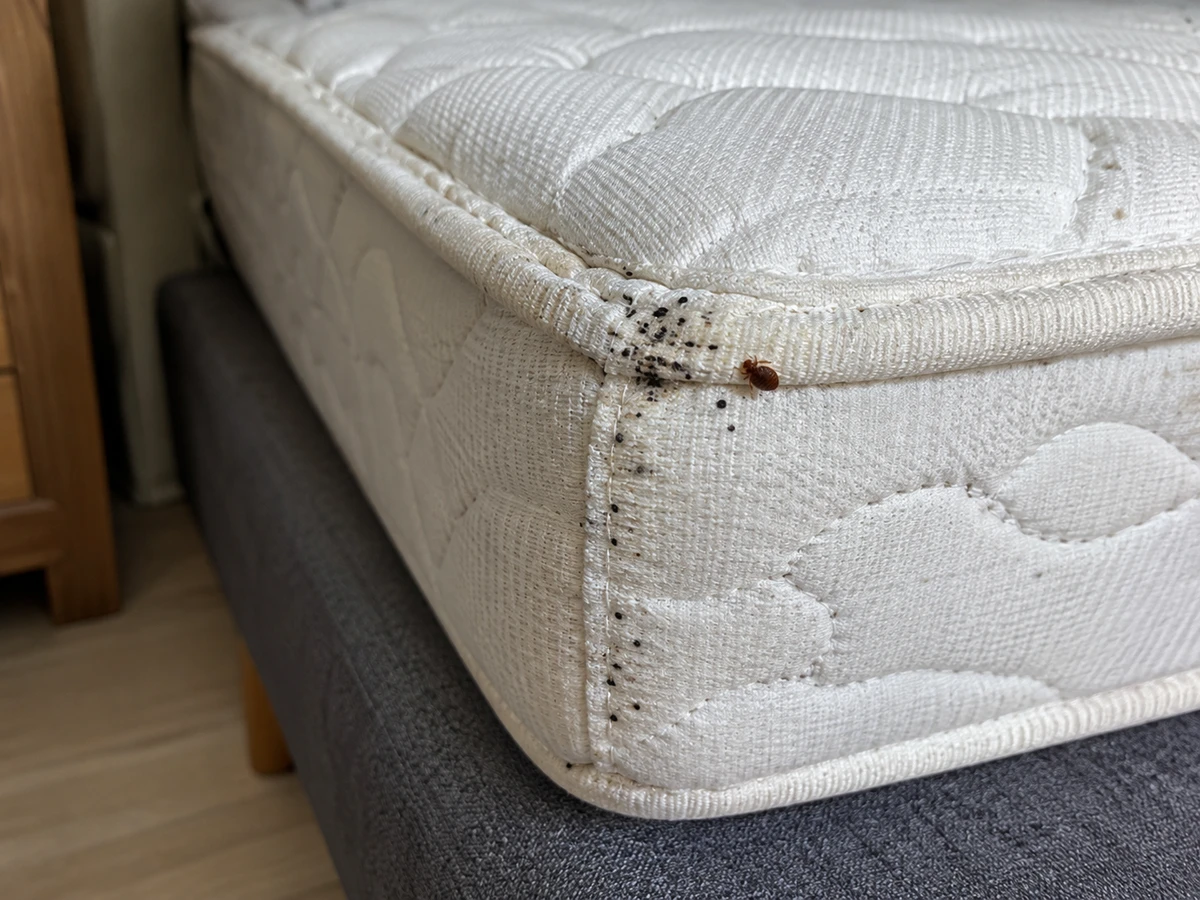
👀 What you see
Small black dots, like felt-tip marker, the size of a pinhead, embedded in the seams and four corners of the mattress, on the box spring or behind the headboard; sometimes the bug itself, flat as a lentil, reddish-brown, about 1/4 inch long.
🧭 What it means
These are bed bug droppings: 70% of bed bugs hide in the bed (seams, box spring slats, headboard, frame joints).
✅ The proof: how to confirm
Dab with a damp cloth: if the dot smears red or brown, that’s proof #1.
⚠️ Caution
Don’t drag the mattress into the hallway: you would spread them through the building.
🧩 What to do next
- 1 Confirm it is bed bugs: apple-seed-sized brown insects, tiny black fecal dots on the mattress that smear red, blood spots on sheets, or translucent shed skins. Bites lined up in 3–4 do not confirm it alone.
- 2 Do not throw out the mattress and do not sleep on the sofa or elsewhere — both spread the infestation through the home or building.
- 3 Mechanical pass: vacuum mattress seams, box spring and baseboards; wash bedding at 140°F + 30 minutes in the dryer; freeze delicate items 4 days at -4°F.
- 4 Thermal pass: steam every inch of the mattress, box spring, baseboards and outlet covers — dry steam is the only step that kills eggs.
- 5 Barrier pass: dust a thin layer of diatomaceous earth along baseboards and under the bed legs (wear an N95 mask while applying).
- 6 Encase the mattress and box spring in a certified cover and set an interceptor under each bed leg to monitor.
- 7 Repeat the steam pass after ~2 weeks (eggs hatch in 10–15 days). Consider the room clear after 6 weeks with no bites and no new signs.
🛒 Products from our guides
-
Dry steam cleaner
Steam at 248°F kills bugs and eggs on contact, with no chemical resistance possible.
View on Amazon → -
Certified zippered mattress encasement
Traps the bugs inside the mattress and makes detection easier while you monitor.
View on Amazon → -
Food-grade diatomaceous earth (non-calcined)
A lasting mineral barrier at crossing points; no resistance possible.
View on Amazon →
As an Amazon Associate we earn from qualifying purchases, at no extra cost to you.
Bed bugs
Bites lined up in threes or fours when you wake up
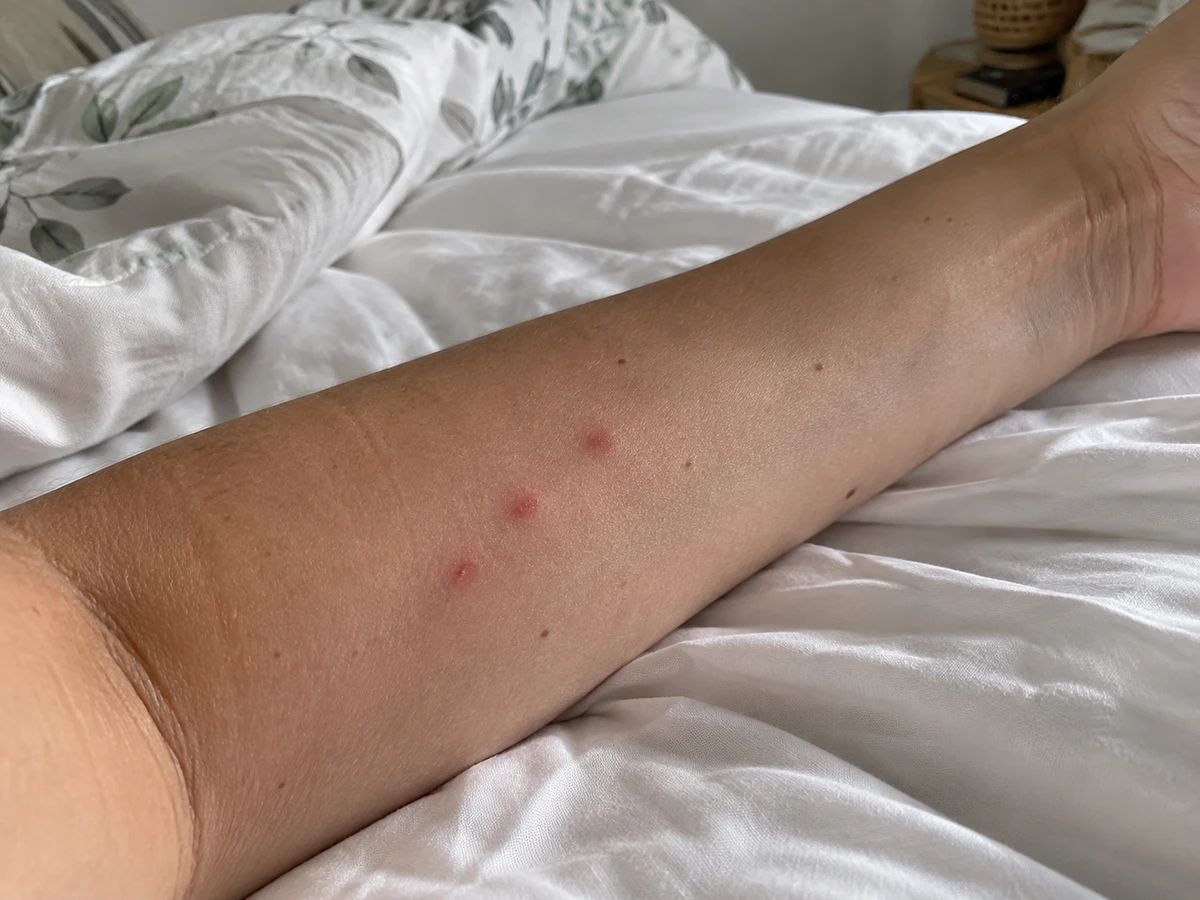
👀 What you see
Three or four bumps in a straight line on exposed skin (arms, shoulders, legs, neck), there when you wake up and intensely itchy for several days.
🧭 What it means
The “breakfast, lunch, dinner” signature of a bed bug feeding as it moves along the skin; a single bump that fades in 24–48 hours points to a mosquito instead. But bites alone prove nothing.
✅ The proof: how to confirm
Put interceptors under the bed legs for fourteen nights, with someone sleeping in the bed every night: a single catch confirms presence.
🧩 What to do next
- 1 Confirm it is bed bugs: apple-seed-sized brown insects, tiny black fecal dots on the mattress that smear red, blood spots on sheets, or translucent shed skins. Bites lined up in 3–4 do not confirm it alone.
- 2 Do not throw out the mattress and do not sleep on the sofa or elsewhere — both spread the infestation through the home or building.
- 3 Mechanical pass: vacuum mattress seams, box spring and baseboards; wash bedding at 140°F + 30 minutes in the dryer; freeze delicate items 4 days at -4°F.
- 4 Thermal pass: steam every inch of the mattress, box spring, baseboards and outlet covers — dry steam is the only step that kills eggs.
- 5 Barrier pass: dust a thin layer of diatomaceous earth along baseboards and under the bed legs (wear an N95 mask while applying).
- 6 Encase the mattress and box spring in a certified cover and set an interceptor under each bed leg to monitor.
- 7 Repeat the steam pass after ~2 weeks (eggs hatch in 10–15 days). Consider the room clear after 6 weeks with no bites and no new signs.
🛒 Products from our guides
-
Two-moat bed bug interceptors, set of 8
Four legs for the bed, four for the couch; a light base makes the morning count a glance with a flashlight.
View on Amazon → -
ClimbUp insect interceptor
The design that established the two-moat format, with a notably slick inner wall.
View on Amazon → -
Tight-beam LED flashlight
A raking beam across the pale floor of the dish makes a nearly translucent new nymph appear at once.
View on Amazon →
As an Amazon Associate we earn from qualifying purchases, at no extra cost to you.
Bed bugs
See-through shed skins and small blood spots on the sheets
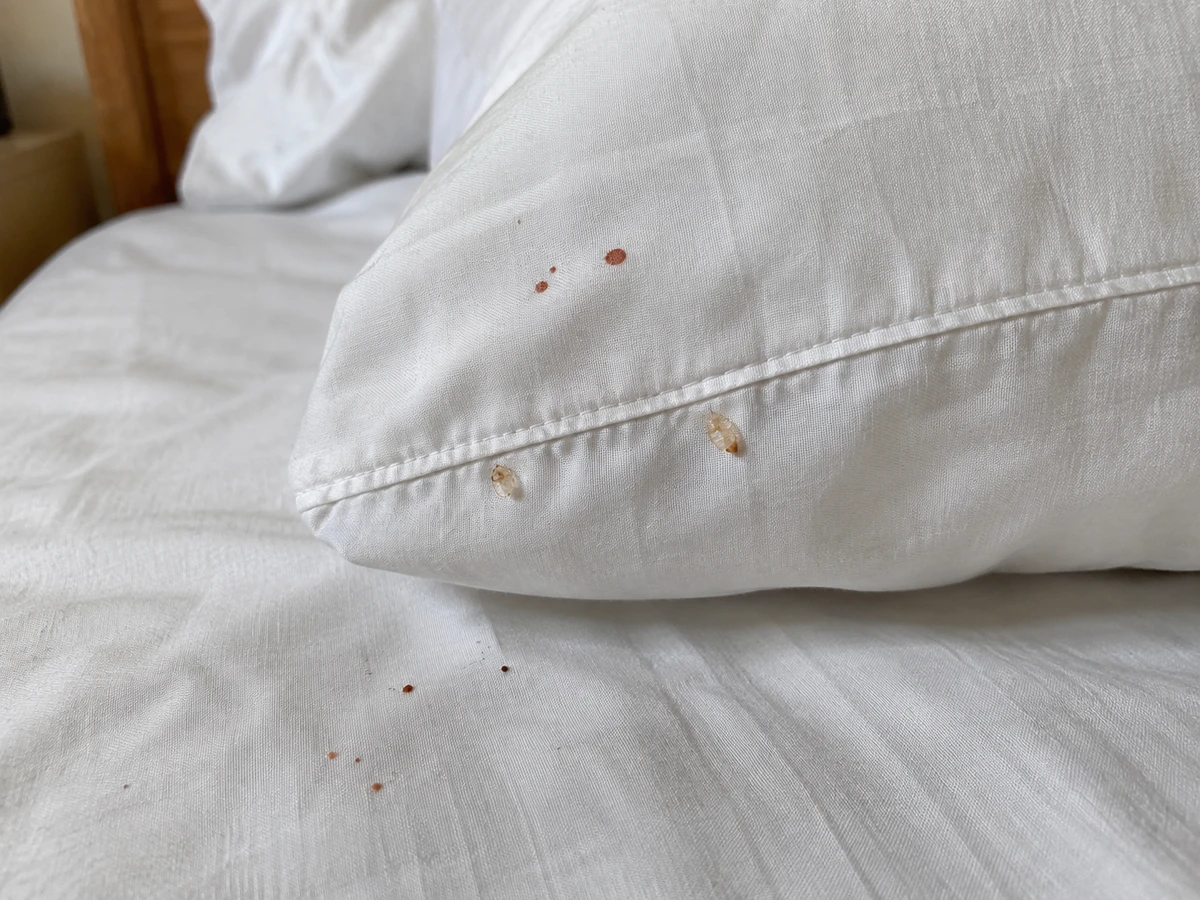
👀 What you see
Small red spots on the sheets or pillowcase, and translucent shed skins near the seams; in a heavy infestation, a “rotten raspberry” or musty coriander smell.
🧭 What it means
A blood spot comes from a fed bug crushed in your sleep; the shed skins (five molts before adulthood) show young bugs growing up on site.
✅ The proof: how to confirm
Lift the four corners of the mattress and check the seams, box spring slats and headboard in raking light: black dots, shed skins or a bug confirm it.
⚠️ Caution
Don’t flee to the couch: the bugs follow you and you infest two rooms instead of one.
🧩 What to do next
- 1 Confirm it is bed bugs: apple-seed-sized brown insects, tiny black fecal dots on the mattress that smear red, blood spots on sheets, or translucent shed skins. Bites lined up in 3–4 do not confirm it alone.
- 2 Do not throw out the mattress and do not sleep on the sofa or elsewhere — both spread the infestation through the home or building.
- 3 Mechanical pass: vacuum mattress seams, box spring and baseboards; wash bedding at 140°F + 30 minutes in the dryer; freeze delicate items 4 days at -4°F.
- 4 Thermal pass: steam every inch of the mattress, box spring, baseboards and outlet covers — dry steam is the only step that kills eggs.
- 5 Barrier pass: dust a thin layer of diatomaceous earth along baseboards and under the bed legs (wear an N95 mask while applying).
- 6 Encase the mattress and box spring in a certified cover and set an interceptor under each bed leg to monitor.
- 7 Repeat the steam pass after ~2 weeks (eggs hatch in 10–15 days). Consider the room clear after 6 weeks with no bites and no new signs.
🛒 Products from our guides
-
Dry steam cleaner
Steam at 248°F kills bugs and eggs on contact, with no chemical resistance possible.
View on Amazon → -
Certified zippered mattress encasement
Traps the bugs inside the mattress and makes detection easier while you monitor.
View on Amazon → -
Residual cypermethrin bed bug spray
Residual action on the box spring, baseboards and headboard, alongside steam — never on the mattress you sleep on.
View on Amazon →
As an Amazon Associate we earn from qualifying purchases, at no extra cost to you.
Bed bugs
A suitcase back from a trip, set down on the bed
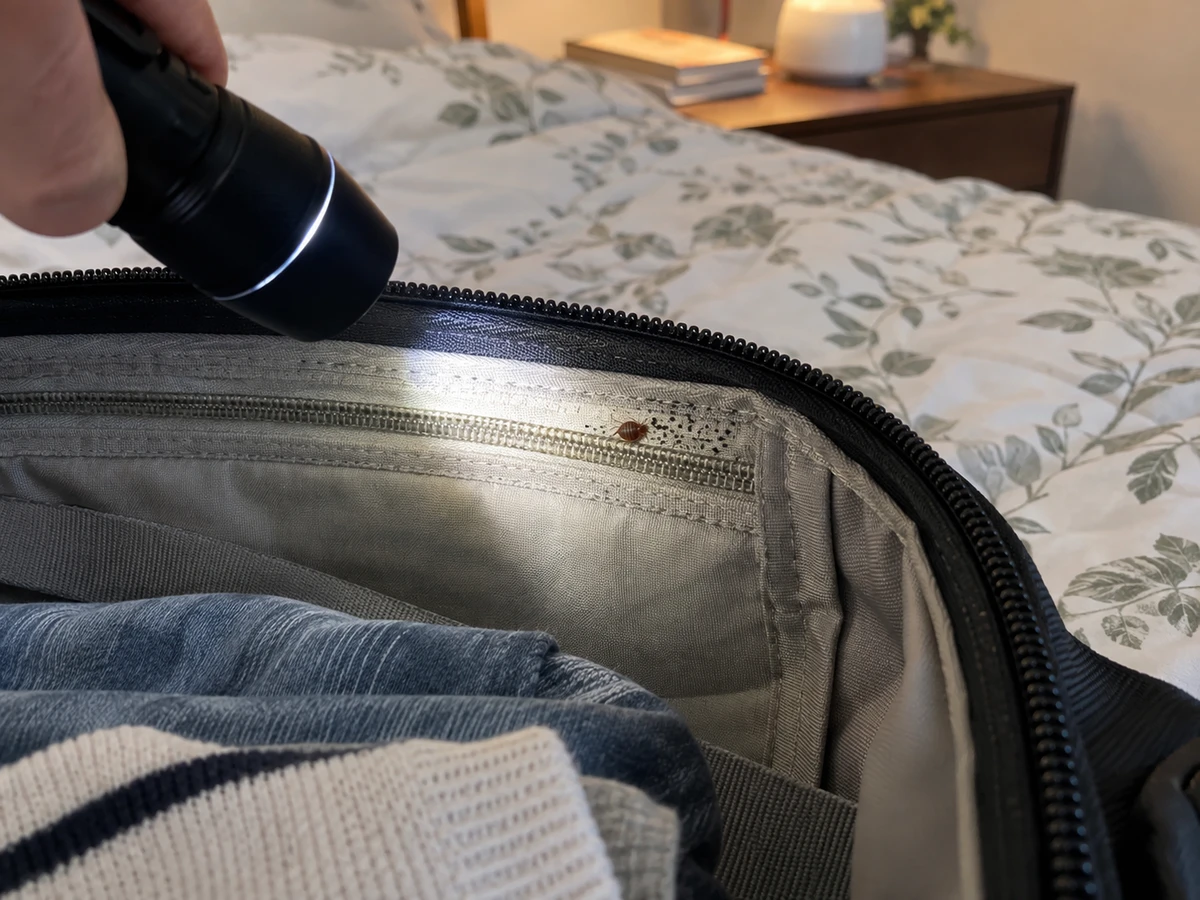
👀 What you see
A suitcase or bag set on the bed when you get home, with seams, zippers and wheels where bed bugs (flat, reddish-brown, about 1/4 inch) or their black spots can hide.
🧭 What it means
Bed bugs travel passively in the seams of what you carry: they ride in what you set down, not on your skin.
✅ The proof: how to confirm
Check the seams, pocket bottoms and wheels with a flashlight at a low raking angle: black spotting, shed skins or a bug.
⚠️ Caution
Never put the suitcase on the bed: everything that was worn goes into a hot dryer before the bag comes upstairs, and the inside of the suitcase gets vacuumed.
🧩 What to do next
- 1 Confirm it is bed bugs: apple-seed-sized brown insects, tiny black fecal dots on the mattress that smear red, blood spots on sheets, or translucent shed skins. Bites lined up in 3–4 do not confirm it alone.
- 2 Do not throw out the mattress and do not sleep on the sofa or elsewhere — both spread the infestation through the home or building.
- 3 Mechanical pass: vacuum mattress seams, box spring and baseboards; wash bedding at 140°F + 30 minutes in the dryer; freeze delicate items 4 days at -4°F.
- 4 Thermal pass: steam every inch of the mattress, box spring, baseboards and outlet covers — dry steam is the only step that kills eggs.
- 5 Barrier pass: dust a thin layer of diatomaceous earth along baseboards and under the bed legs (wear an N95 mask while applying).
- 6 Encase the mattress and box spring in a certified cover and set an interceptor under each bed leg to monitor.
- 7 Repeat the steam pass after ~2 weeks (eggs hatch in 10–15 days). Consider the room clear after 6 weeks with no bites and no new signs.
🛒 Products from our guides
-
Bright LED inspection flashlight
At a raking angle, shed skins and dark fecal spotting jump out of a seam.
View on Amazon → -
Handheld garment steamer
Run slowly along seams and linings, it kills by heat without soaking the fabric.
View on Amazon → -
Permethrin spray for clothing and gear
Applied to a suitcase’s seams before a trip you have doubts about; never on skin, and keep cats away.
View on Amazon →
As an Amazon Associate we earn from qualifying purchases, at no extra cost to you.
Household insects
Small holes in a stored wool sweater
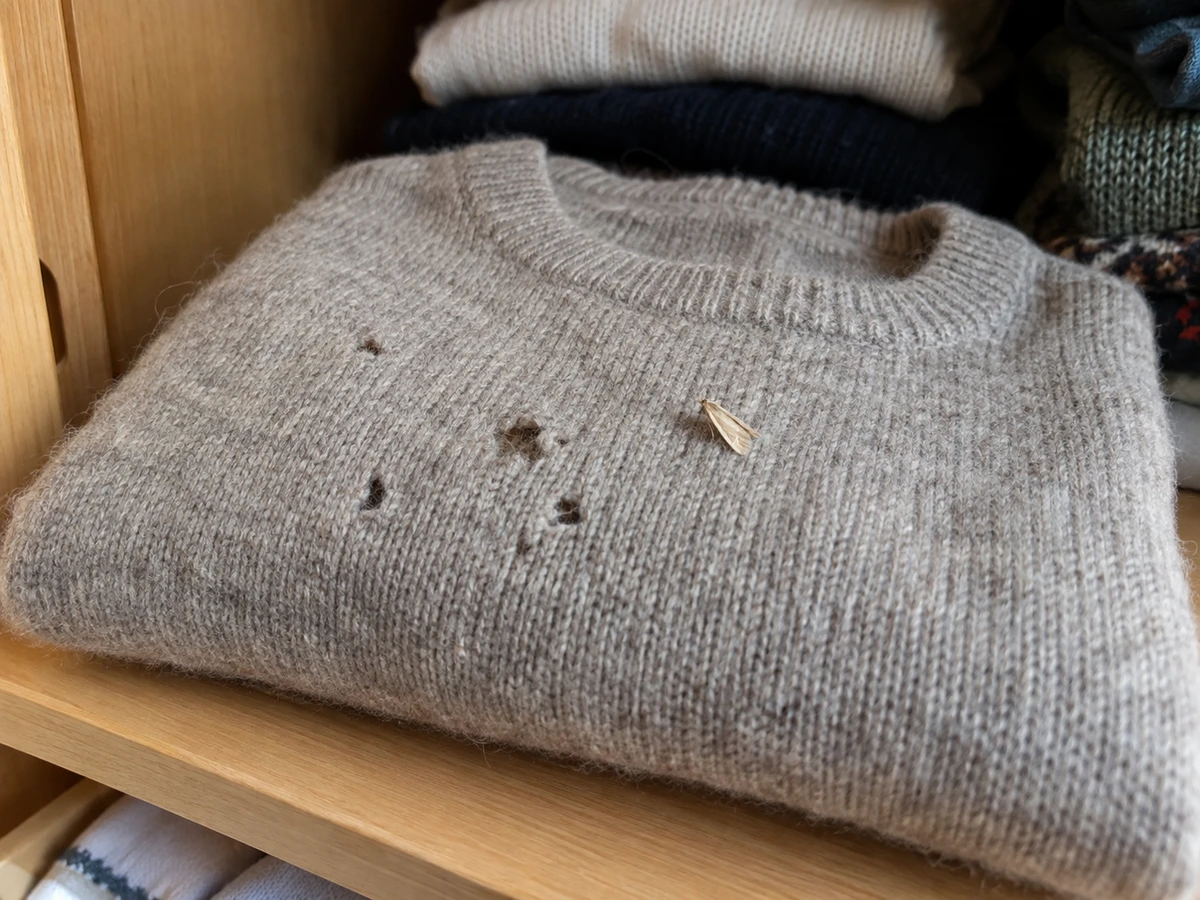
👀 What you see
Small holes in a wool sweater that sat untouched in the closet, and a small, inconspicuous moth that flies poorly.
🧭 What it means
These are clothes moth larvae, which eat keratin (wool, cashmere, silk, felt) and never pure synthetics. They look for a textile that stays still for months.
✅ The proof: how to confirm
Holes in several wool garments justify acting: wash, dry and store them in closed bags.
🛒 Products from our guides
-
Zippered garment storage bags
A washed, dried item stored in a closed bag no longer interests them: that’s the main lever.
View on Amazon → -
Vacuum storage bags for clothes
An airtight version of the closed bag, for washed, dried woolens that will stay stored for months.
View on Amazon → -
Cedar blocks for the closet
Cedar bothers moths without eliminating them: a complement to the bag, never a substitute.
View on Amazon →
As an Amazon Associate we earn from qualifying purchases, at no extra cost to you.
Mice & rats
A gap under the garage door edged with greasy marks
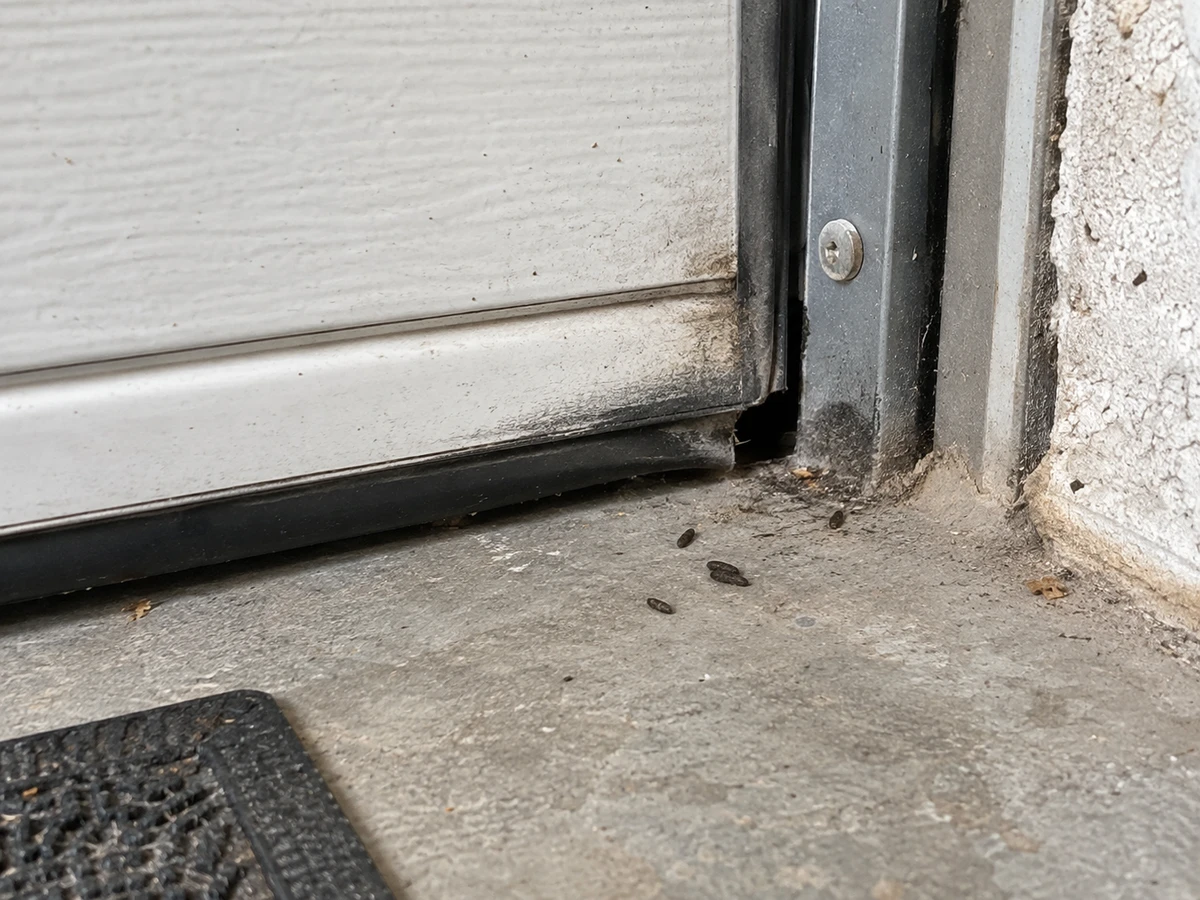
👀 What you see
A 3/8 to 3/4 in (1–2 cm) gap at the corners of the door’s bottom seal, or a small opening whose edge is darkened by greasy smudges, with rice-shaped droppings, fine sawdust or nesting material nearby.
🧭 What it means
A mouse gets through about 1/4 inch (6 mm) — a ballpoint pen — and a rat through about 3/4 inch (20 mm): if the head fits, the body follows. The greasy marks come from the oils in the fur, left by repeated passes.
✅ The proof: how to confirm
Dust flour or talc in front of the opening: footprints and a tail drag the next morning; or stuff it with crumpled paper — moved or gnawed within 48 hours, the passage is active.
⚠️ Caution
Seal while you trap, not before: a mouse shut inside gnaws more and can die in a wall (a smell for weeks).
🧩 What to do next
- 1 Mouse or rat? Rice-grain droppings pointed at both ends and scattered = mouse; olive-pit droppings grouped in one spot = rat. Sprinkle flour overnight to read footprints (~⅜ in = mouse, ~¾ in = rat).
- 2 Seal entry points FIRST with steel wool packed into holes and held with caulk — if a ballpoint pen fits, a mouse fits. Never use expanding foam (they chew through it).
- 3 Set snap or electric traps along the walls, baited with peanut butter (not cheese). Use rat-sized traps for rats — a mouse trap will not stop one.
- 4 For heavy infestations, place rodenticide only inside a locked, tamper-resistant bait station — never loose pellets.
- 5 Never vacuum droppings (Hantavirus risk): wet them with diluted bleach (1:10), wear gloves and an N95, bag, then disinfect surfaces.
- 6 Avoid glue traps (cruel and ineffective) and store all food in glass or metal containers.
🛒 Products from our guides
-
Steel wool for rodent-proofing
Rodents can’t gnaw through it, unlike expanding foam used alone.
View on Amazon → -
Garage door bottom seal
The door’s bottom seal is the number one entry point.
View on Amazon → -
1/4-inch hardware cloth
Closes vents and gaps without blocking airflow.
View on Amazon →
As an Amazon Associate we earn from qualifying purchases, at no extra cost to you.
Mice & rats
Bits of foam under the car and chewed wires
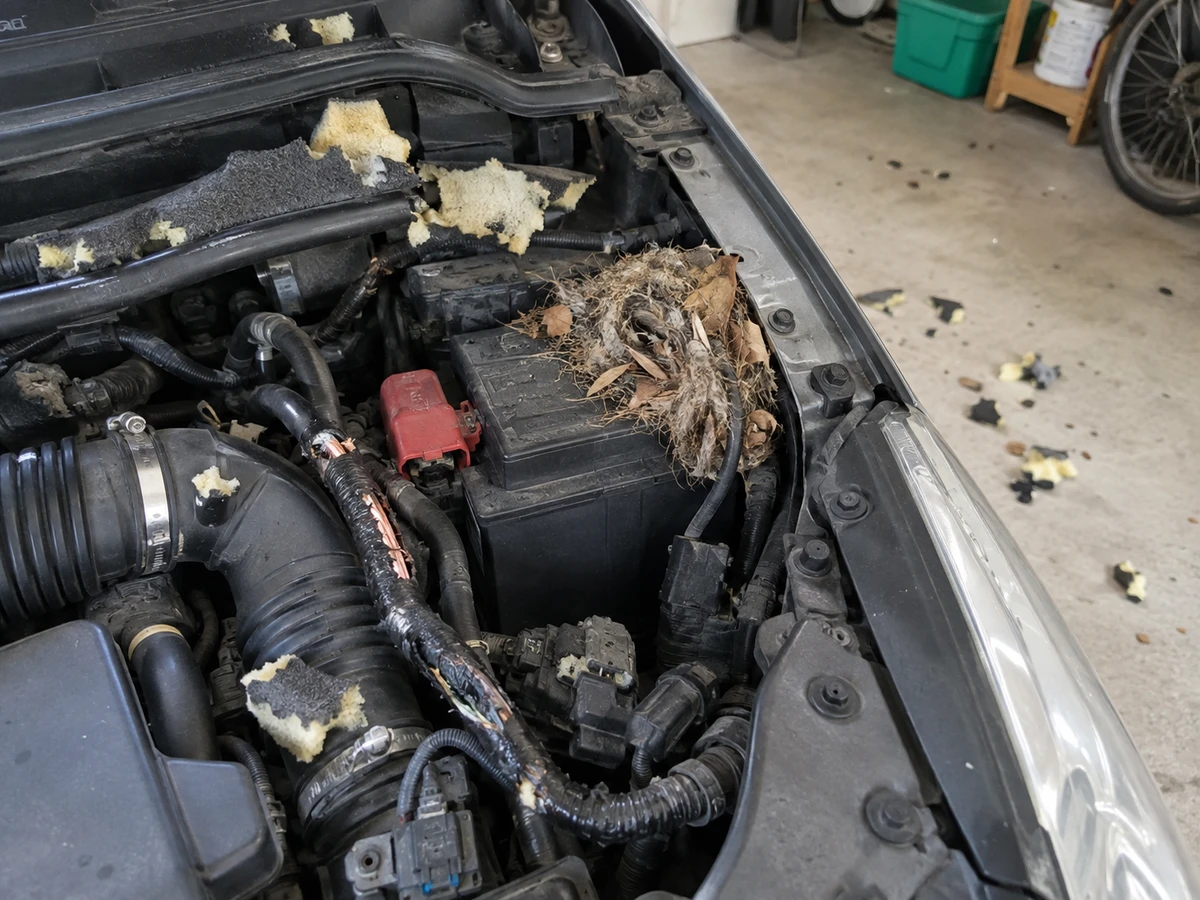
👀 What you see
Bits of foam on the floor under the car, shredded under-hood insulation, a nest of fibers and leaves against the battery; on the dashboard, multiple warning lights and a car that won’t start after a night in the garage.
🧭 What it means
Soy-based wire insulation draws rodents. Mouse: rice-grain droppings, low harnesses chewed; rat: olive-pit droppings, clustered, hoses and thick cables; squirrel (the top US culprit, with rats): acorn shells and stashed food, damage up high, active by day.
✅ The proof: how to confirm
Identify the culprit from the droppings and signs around the car before choosing your protection.
🧩 What to do next
- 1 Mouse or rat? Rice-grain droppings pointed at both ends and scattered = mouse; olive-pit droppings grouped in one spot = rat. Sprinkle flour overnight to read footprints (~⅜ in = mouse, ~¾ in = rat).
- 2 Seal entry points FIRST with steel wool packed into holes and held with caulk — if a ballpoint pen fits, a mouse fits. Never use expanding foam (they chew through it).
- 3 Set snap or electric traps along the walls, baited with peanut butter (not cheese). Use rat-sized traps for rats — a mouse trap will not stop one.
- 4 For heavy infestations, place rodenticide only inside a locked, tamper-resistant bait station — never loose pellets.
- 5 Never vacuum droppings (Hantavirus risk): wet them with diluted bleach (1:10), wear gloves and an N95, bag, then disinfect surfaces.
- 6 Avoid glue traps (cruel and ineffective) and store all food in glass or metal containers.
🛒 Products from our guides
-
Peppermint rodent repellent pouches
A supplement in the engine bay and cabin: the smell bothers rodents but fades in 3 to 5 days, so refresh weekly.
View on Amazon → -
Capsaicin rodent repellent tape
Wrapped around the most exposed harnesses.
View on Amazon → -
Steel wool for rodent-proofing
To seal the garage’s entry holes.
View on Amazon →
As an Amazon Associate we earn from qualifying purchases, at no extra cost to you.
Household insects
Sheet webs and egg sacs in the garage corner
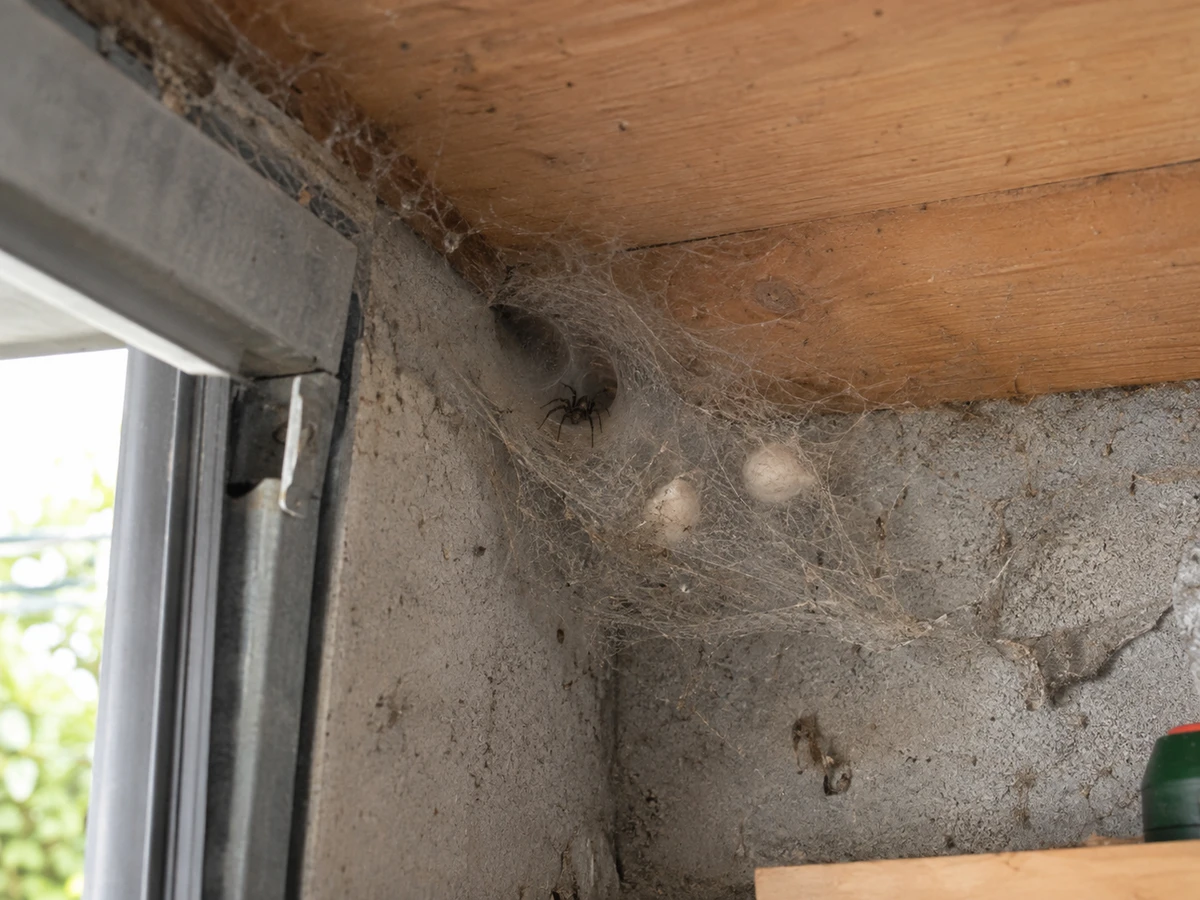
👀 What you see
A sheet web in a spot nobody disturbs — a garage corner, behind the washing machine, under the stairs — and egg sacs in the high corners or under window ledges.
🧭 What it means
These are the females that stayed put, laying their fall egg sacs; each sac holds several dozen eggs.
✅ The proof: how to confirm
Check the high corners and behind low furniture in November: every egg sac you vacuum up means dozens fewer young spiders in spring.
🛒 Products from our guides
-
Long crevice tool for your vacuum
A slim nozzle to pull webs and egg sacs out of corners: removing them is the only thing that lowers next year’s population.
View on Amazon → -
Spider glue traps
Set along the walls, they give a measure: if they fill up, the population is real; if they stay empty, there was nothing to treat.
View on Amazon → -
Concentrated spider repellent
On the bottom 8 inches (20 cm) of wall and the floor joint, once at the start of fall, rather than repeated spraying mid-room.
View on Amazon →
As an Amazon Associate we earn from qualifying purchases, at no extra cost to you.
Ants
A small pile of pale sawdust under the skylight
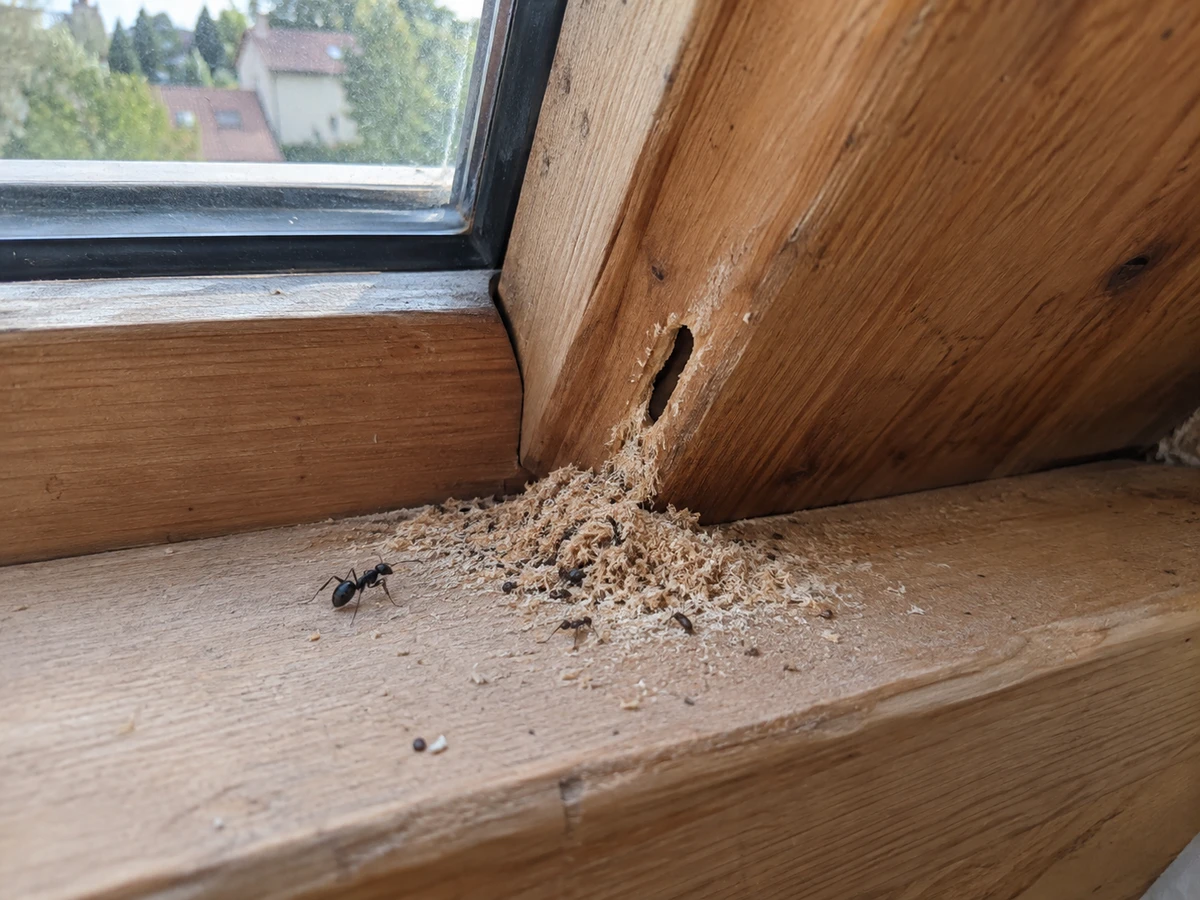
👀 What you see
A small pile of clean sawdust — light wood fibers with a few dark fragments — on the skylight sill or under a rafter, near a clean opening about 1/4 inch (7 mm) wide; large black ants 1/4 to nearly 3/4 inch long at night, sometimes a dry scratching in the wall.
🧭 What it means
The carpenter ant signature: coarse sawdust and smooth galleries in damp wood it excavates without eating. Termites leave mud tubes and soft, honeycombed wood instead.
✅ The proof: how to confirm
Photograph, sweep and check back 24–48 hours later: fresh sawdust in the same spot means active excavation; then tap with a rubber mallet (hollow sound) and test with a screwdriver.
⚠️ Caution
A load-bearing member, hollow-sounding wood over more than about 5 feet, or any doubt about termites: call a professional.
🧩 What to do next
- 1 Identify the species first: tiny reddish ants living inside walls = pharaoh; black foragers coming from outdoors = garden ants; large black ants with coarse sawdust = carpenter ants. The method depends on it.
- 2 Do not spray. Contact spray kills visible workers but never the queen, and with pharaoh ants it can split the colony (budding) and make things worse.
- 3 Wipe active trails with undiluted white vinegar to erase the pheromone highway, then place lentil-sized bait-gel drops directly on those trails, every 4–6 inches.
- 4 Leave the gel undisturbed and let workers carry it back to the nest. Replenish the drops as they are eaten (a good appetite means it is working).
- 5 For an accessible outdoor nest, puff deltamethrin dust into the openings; for carpenter ants, also find and fix the moisture source feeding them.
- 6 Once activity stops, seal entry cracks and pipe gaps with silicone caulk to stop the next generation following the same route.
🛒 Products from our guides
-
Advion Ant Gel (Syngenta)
Micro-drops on trails and gallery edges: the slow action lets workers carry it to the queen.
View on Amazon → -
Delta Dust (deltamethrin)
Blown into accessible galleries, where gel alone isn’t enough.
View on Amazon → -
Wood moisture meter
Carpenter ants pick damp wood: measuring moisture (target below 19%) finds the real cause.
View on Amazon →
As an Amazon Associate we earn from qualifying purchases, at no extra cost to you.
Mice & rats
Tunnels in the attic insulation
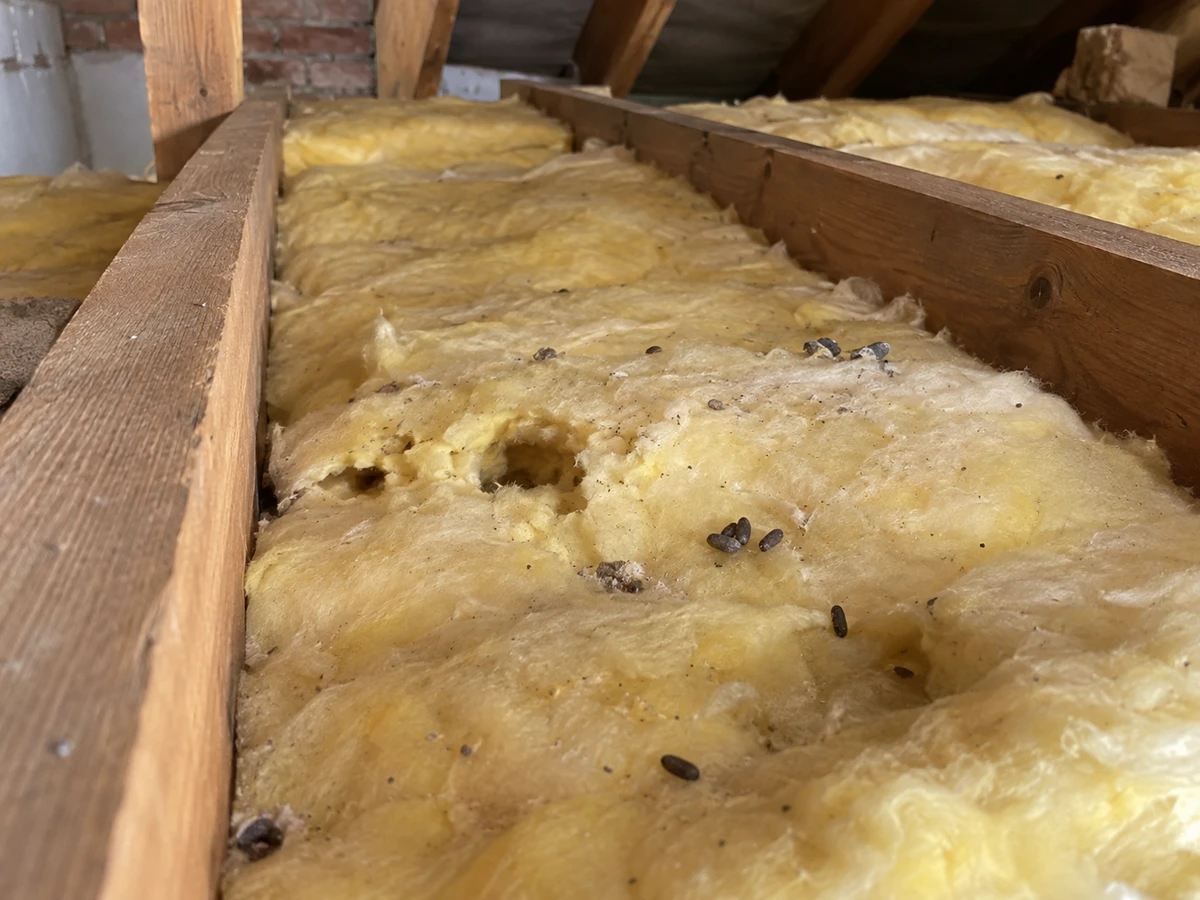
👀 What you see
Attic insulation riddled with tunnels, with light scampering and fine scratching above the ceiling at night.
🧭 What it means
Mice love attic insulation for their nests. A very loud noise, like an animal running, points instead to a squirrel or other wildlife.
✅ The proof: how to confirm
Sift flour across the runway: a print of about 3/8 inch means a mouse, about 3/4 inch a rat.
⚠️ Caution
Mice also climb up gutters, cables and branches: inspect the high entry points, which are often overlooked.
🧩 What to do next
- 1 Mouse or rat? Rice-grain droppings pointed at both ends and scattered = mouse; olive-pit droppings grouped in one spot = rat. Sprinkle flour overnight to read footprints (~⅜ in = mouse, ~¾ in = rat).
- 2 Seal entry points FIRST with steel wool packed into holes and held with caulk — if a ballpoint pen fits, a mouse fits. Never use expanding foam (they chew through it).
- 3 Set snap or electric traps along the walls, baited with peanut butter (not cheese). Use rat-sized traps for rats — a mouse trap will not stop one.
- 4 For heavy infestations, place rodenticide only inside a locked, tamper-resistant bait station — never loose pellets.
- 5 Never vacuum droppings (Hantavirus risk): wet them with diluted bleach (1:10), wear gloves and an N95, bag, then disinfect surfaces.
- 6 Avoid glue traps (cruel and ineffective) and store all food in glass or metal containers.
🛒 Products from our guides
-
Reusable mouse snap traps
Set in the attic, baited with peanut butter, flush against the runways.
View on Amazon → -
Tamper-resistant rodent bait station
For an inaccessible attic with a heavy infestation: a locked box keeps the bait from children and pets.
View on Amazon → -
Steel wool for rodent-proofing
The one material mice can’t gnaw through: it seals the high entry points once you’ve found them.
View on Amazon →
As an Amazon Associate we earn from qualifying purchases, at no extra cost to you.
Wasps & hornets
Wasps around the dishes and drinks on the table

👀 What you see
Wasps circling the serving dishes, glasses and plates during a meal outdoors.
🧭 What it means
A food cover only protects the dishes sitting out: you need a full system (covers, selective traps 25–30 feet away, a fan over the table, clean trash cans). Lone wasps around the table call for an attractant trap, not a spray.
✅ The proof: how to confirm
Tell a few scattered wasps apart from a steady stream going in and out of one spot: the stream signals a nest.
🧩 What to do next
- 1 Identify first: yellow-and-black, thin-waisted = wasp; rust/brick colored = European hornet (mostly harmless, leave it); black with yellow leg tips = Asian-type/giant hornet → report to authorities and do NOT DIY. Never kill fuzzy bees.
- 2 Decide DIY vs pro: treat it yourself only if the nest is small, low (no ladder), it is a wasp, and you are not allergic. Otherwise call a professional.
- 3 Suit up fully — beekeeping suit, veil and gloves, with wrists and ankles taped — and use a red-light headlamp (wasps cannot see red).
- 4 Treat at night (10–11 PM) when all wasps are back and sluggish: empty a 20-ft spray or foam into the nest entrance, then retreat along a clear, obstacle-free path.
- 5 For a nest inside a wall cavity, puff insecticide dust into the hole — NEVER seal the opening while the colony is alive, or they will push inside the house.
- 6 Wait 48 hours before removing or sealing. Reduce patio pressure with a selective trap placed about 30 feet from where you sit.
🛒 Products from our guides
-
Fine-mesh pop-up food covers (6-pack)
A fine 1 to 2 mm (about 1/16 inch) mesh blocks all common yellow jackets and hornets.
View on Amazon → -
Selective wasp and hornet trap
Cuts the pressure from lone wasps without going near a nest.
View on Amazon → -
Bite Away heat pen
Heat neutralizes the heat-sensitive venom of a sting, with no medication.
View on Amazon →
As an Amazon Associate we earn from qualifying purchases, at no extra cost to you.
Flies & gnats
Flies around the trash can and the grill leftovers
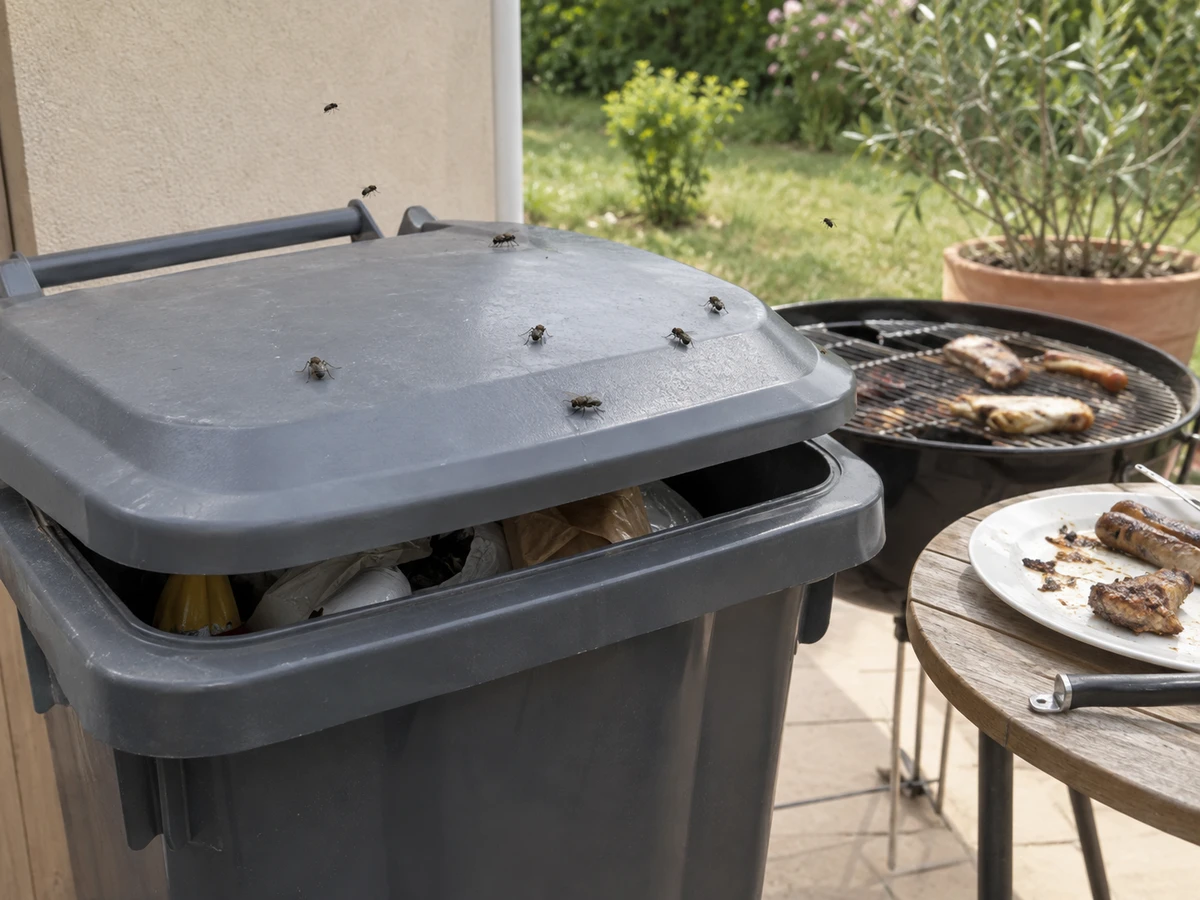
👀 What you see
House flies in numbers on the patio, circling the trash can, the compost and the grill leftovers before landing on the table.
🧭 What it means
A trash can, a compost bin that’s too wet or pet waste producing larvae nonstop keeps the problem going: no trap makes up for an active source a few yards away.
✅ The proof: how to confirm
Once the sources are fixed and the baits well placed, flies drop within 24 to 72 hours; nothing after 4 days = wrong placement or a breeding site still active.
⚠️ Caution
Fly bait granules never in open access: closed station, up high, out of reach of children, dogs, cats and chickens, 15 to 30 feet from the dining area.
🧩 What to do next
- 1 Identify the fly: small brown by the fruit bowl = fruit fly; metallic green/blue = blow fly; gray and striped on food = house fly; checkerboard pattern in the attic in autumn = cluster fly.
- 2 A sudden swarm of blow flies means a hidden carcass (mouse, bird) in a wall or attic — find and remove it first; the flies leave in 3–5 days.
- 3 For fruit flies: remove ripe fruit and coffee grounds, clean the drain biofilm, and set an apple-cider-vinegar + dish-soap trap.
- 4 For house flies: bag and wash out the trash, screen windows with mesh under 1/16 inch, and add a UV unit or a fly ribbon.
- 5 For barns and large spaces: spread cyromazine larvicide on the breeding matter (manure/bedding) and place attractant bait on resting walls.
- 6 In commercial kitchens, use glue-board units only above food prep (no electrocution) and keep a capture log for inspections.
🛒 Products from our guides
-
Hanging fly trap bag
Draws flies away from the table; hang it 15 to 30 feet out, between the source and the meal.
View on Amazon → -
QuickBayt Fly Bait (Bayer)
Granular bait for heavy pressure; in a closed station, out of reach, near trash enclosures.
View on Amazon → -
Pest-proof outdoor trash can with lid
Start with the source: a trash can without a lid 10 feet from the table defeats every trap.
View on Amazon →
As an Amazon Associate we earn from qualifying purchases, at no extra cost to you.
Mosquitoes
Standing water in the plant saucers
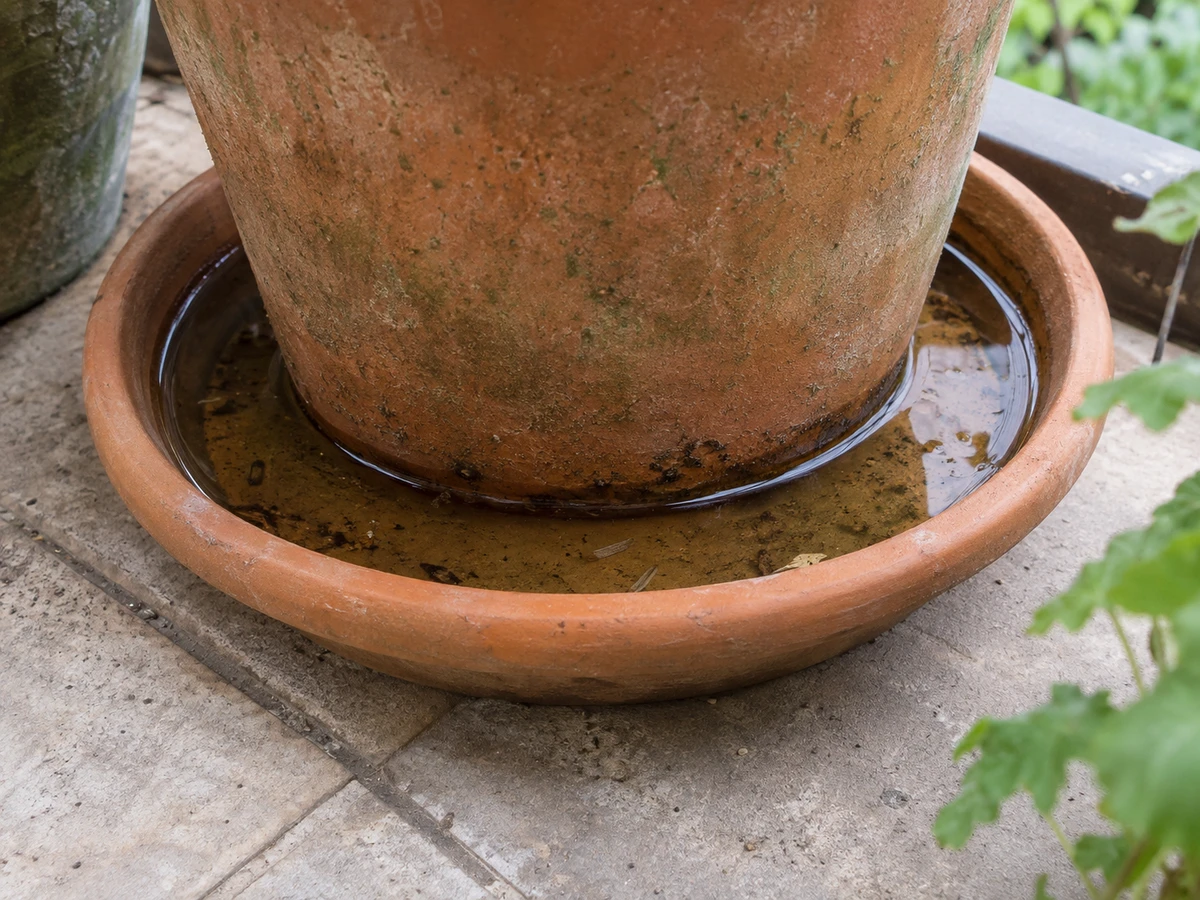
👀 What you see
Plant saucers, outdoor toys or a clogged gutter holding a little standing water.
🧭 What it means
A single forgotten saucer can produce 200 mosquitoes in a week.
✅ The proof: how to confirm
Empty or fill every small container; for saucers, coarse sand keeps water for the plant with no open surface for egg-laying.
🧩 What to do next
- 1 Identify: black with white stripes biting during the day = tiger mosquito (Aedes); dull brown buzzing at night = common mosquito (Culex).
- 2 Kill larvae at the source: empty saucers, buckets and tires weekly, clean gutters, and cover or BTI-treat rain barrels and ponds.
- 3 Protect skin with an EPA/WHO-validated repellent (Picaridin, DEET, IR3535 or OLE/PMD). Skip bracelets, ultrasound and UV lamps — proven ineffective.
- 4 For babies, use nets first; apply topical repellent only by age (IR3535 from 2 months) and never on a child’s hands.
- 5 Indoors: screen windows with mesh under 1/16 inch, run a fan, and use a plug-in diffuser at night (unscented, not in a baby’s room).
- 6 Outdoors: a Thermacell or a simple fan aimed at the table keeps the patio usable.
🛒 Products from our guides
-
Coarse horticultural sand
A saucer filled with coarse sand keeps water for the plant with no open surface to lay eggs on.
View on Amazon → -
Summit Mosquito Bits (BTI granules)
For small volumes (saucers, gutters, containers), BTI granules act within 24 hours.
View on Amazon → -
Thermacell Portable Repeller
For the patio: a protection zone of about 200 sq ft around the table, with nothing on your skin.
View on Amazon →
As an Amazon Associate we earn from qualifying purchases, at no extra cost to you.
Mosquitoes
A small black mosquito with white stripes biting your ankles by day
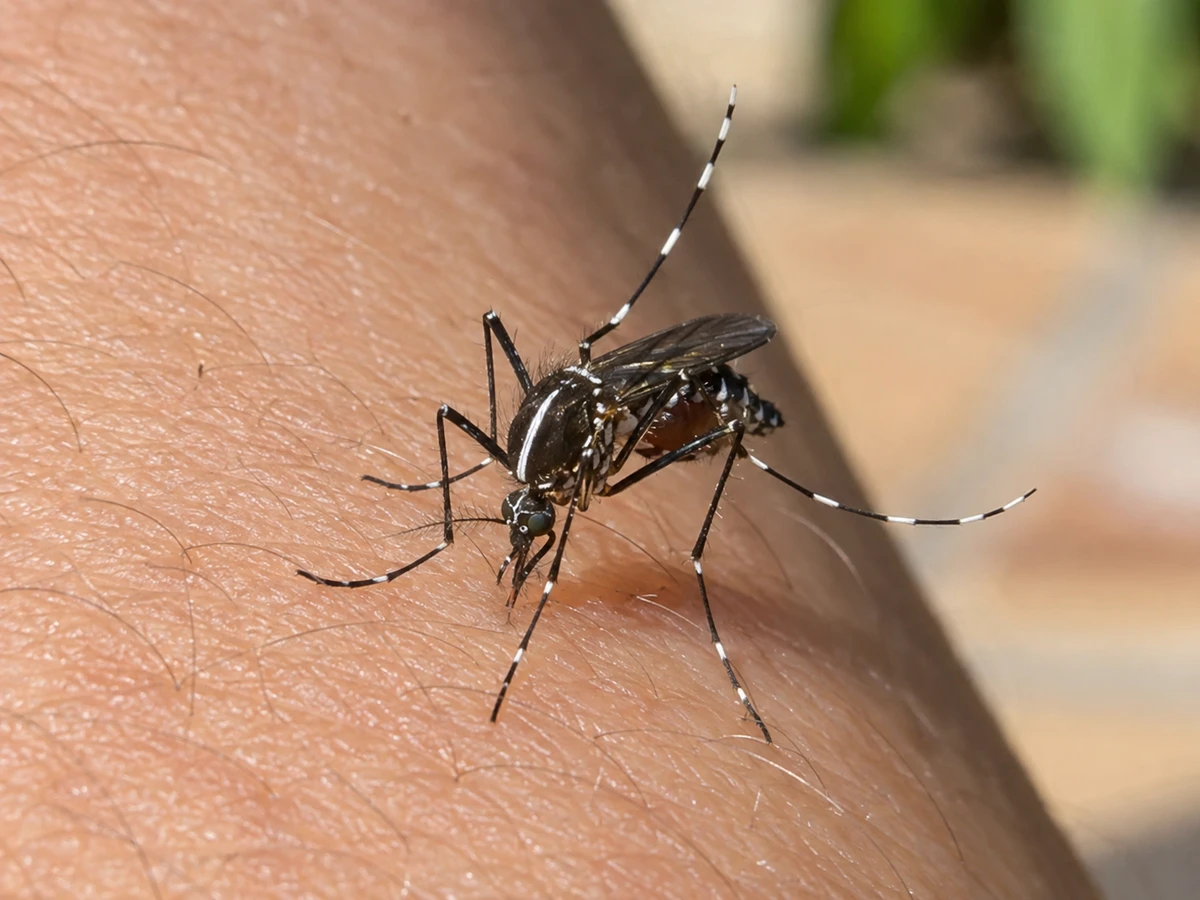
👀 What you see
A very small mosquito, black with sharp white stripes on its legs and body, silent, flying low and going after ankles and legs in the morning or early evening.
🧭 What it means
It’s the tiger mosquito (Aedes albopictus), a daytime biter and a vector of dengue, chikungunya and Zika, now established in 38+ US states; its bite hurts more. The common mosquito (Culex) is brown, noisy and bites at night.
✅ The proof: how to confirm
Black + white stripes + active by day: report it to your local health department or log it on iNaturalist.
🧩 What to do next
- 1 Identify: black with white stripes biting during the day = tiger mosquito (Aedes); dull brown buzzing at night = common mosquito (Culex).
- 2 Kill larvae at the source: empty saucers, buckets and tires weekly, clean gutters, and cover or BTI-treat rain barrels and ponds.
- 3 Protect skin with an EPA/WHO-validated repellent (Picaridin, DEET, IR3535 or OLE/PMD). Skip bracelets, ultrasound and UV lamps — proven ineffective.
- 4 For babies, use nets first; apply topical repellent only by age (IR3535 from 2 months) and never on a child’s hands.
- 5 Indoors: screen windows with mesh under 1/16 inch, run a fan, and use a plug-in diffuser at night (unscented, not in a baby’s room).
- 6 Outdoors: a Thermacell or a simple fan aimed at the table keeps the patio usable.
🛒 Products from our guides
-
Natrapel Picaridin 20% repellent
A picaridin skin repellent, the pick for skin protection against the tiger mosquito.
View on Amazon → -
Thermacell Portable Repeller
A protection zone around the table, with nothing on your skin.
View on Amazon → -
Bite Away heat pen
Soothes a bite with heat, no medication — useful once you’ve been bitten.
View on Amazon →
As an Amazon Associate we earn from qualifying purchases, at no extra cost to you.
Ants
A little volcano of fine soil in the lawn
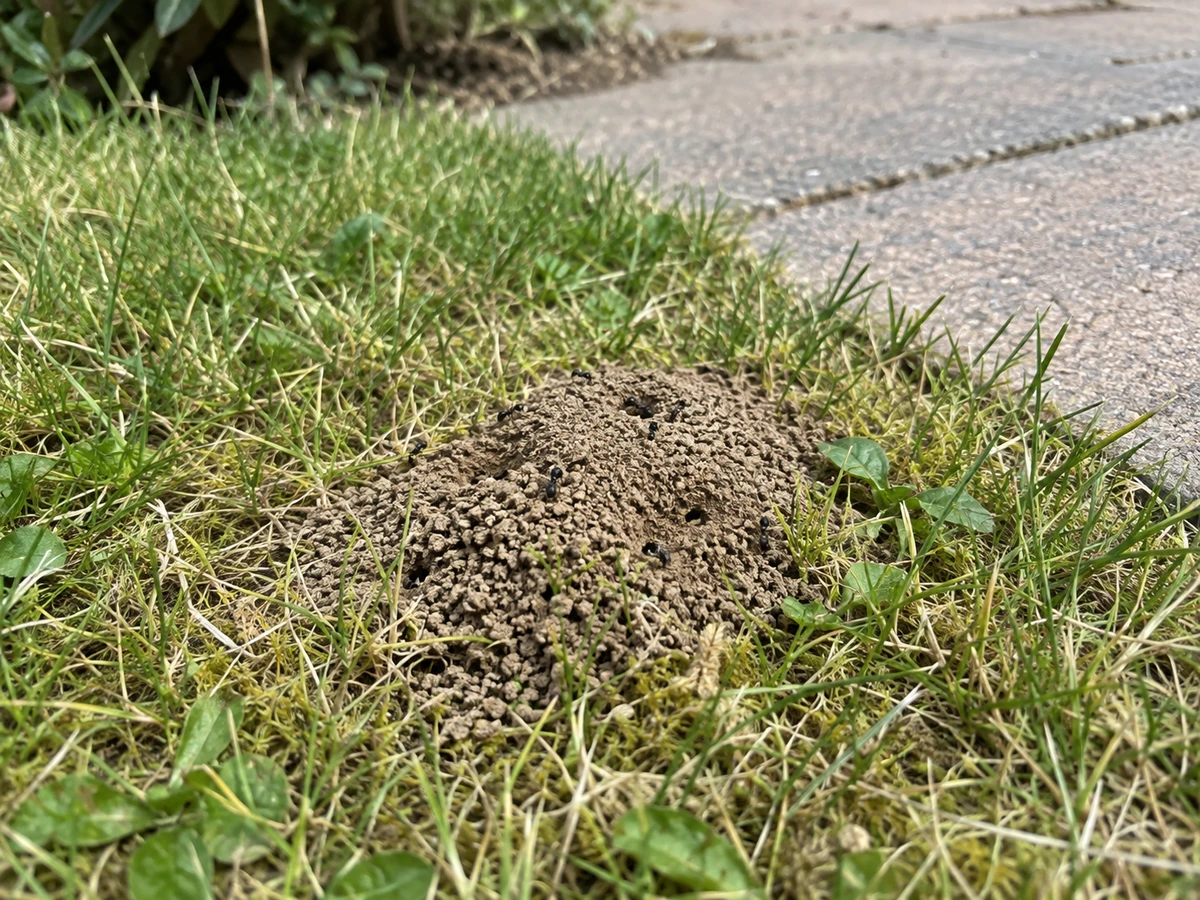
👀 What you see
A mound of fine soil in the middle of the grass, often along walkways and patio edges; around it, the grass yellows in patches.
🧭 What it means
A colony of common black lawn ants (Lasius) or pavement ants settled under short, warm, well-drained turf. Flattening it with the mower just moves the soil: the colony rebuilds within days.
✅ The proof: how to confirm
After treatment, if fresh fine soil reappears in the same spot two weeks later, the queen is still alive.
🧩 What to do next
- 1 Identify the species first: tiny reddish ants living inside walls = pharaoh; black foragers coming from outdoors = garden ants; large black ants with coarse sawdust = carpenter ants. The method depends on it.
- 2 Do not spray. Contact spray kills visible workers but never the queen, and with pharaoh ants it can split the colony (budding) and make things worse.
- 3 Wipe active trails with undiluted white vinegar to erase the pheromone highway, then place lentil-sized bait-gel drops directly on those trails, every 4–6 inches.
- 4 Leave the gel undisturbed and let workers carry it back to the nest. Replenish the drops as they are eaten (a good appetite means it is working).
- 5 For an accessible outdoor nest, puff deltamethrin dust into the openings; for carpenter ants, also find and fix the moisture source feeding them.
- 6 Once activity stops, seal entry cracks and pipe gaps with silicone caulk to stop the next generation following the same route.
🛒 Products from our guides
-
Outdoor ant bait stations
The bait kills the colony through the cascade effect, which neither the mower nor a surface granule does.
View on Amazon → -
Child- and pet-safe outdoor ant bait stations
Product enclosed and out of reach: the safe pick with a dog, cat or kids.
View on Amazon → -
Granular lawn ant killer
Knockdown in 24 to 72 hours on a big, troublesome mound; spread it, then water it in.
View on Amazon →
As an Amazon Associate we earn from qualifying purchases, at no extra cost to you.
Wasps & hornets
A small papier-mâché nest under the shed eave in spring
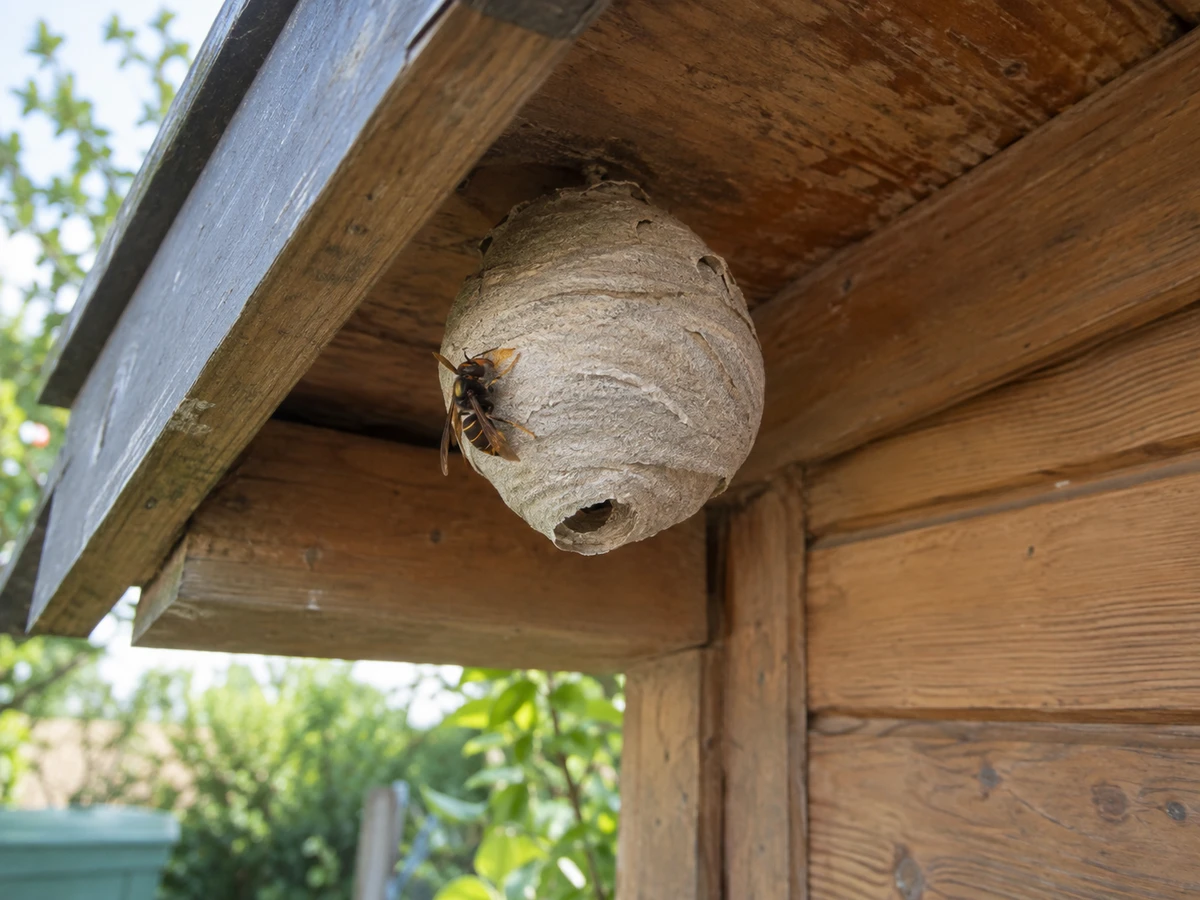
👀 What you see
In spring, a small primary nest of chewed paper, about the size of a tennis ball (4 inches), hanging under the eave of a shed, often 3 to 6 feet off the ground, with a lone founding queen.
🧭 What it means
It’s the primary nest of the Asian (yellow-legged) hornet: two months later the colony can number several thousand. The Asian hornet is 1 to 1.2 inches long, with a dark velvety thorax, a dark abdomen with a single orange band and yellow-tipped legs; the European hornet is much more yellow and reddish-brown.
✅ The proof: how to confirm
Photograph the insect without getting close to check for the yellow legs.
⚠️ Caution
Report it first — to your state department of agriculture, or on EDDMapS or iNaturalist. Only a small, low primary nest in spring can possibly be handled yourself.
🧩 What to do next
- 1 Identify first: yellow-and-black, thin-waisted = wasp; rust/brick colored = European hornet (mostly harmless, leave it); black with yellow leg tips = Asian-type/giant hornet → report to authorities and do NOT DIY. Never kill fuzzy bees.
- 2 Decide DIY vs pro: treat it yourself only if the nest is small, low (no ladder), it is a wasp, and you are not allergic. Otherwise call a professional.
- 3 Suit up fully — beekeeping suit, veil and gloves, with wrists and ankles taped — and use a red-light headlamp (wasps cannot see red).
- 4 Treat at night (10–11 PM) when all wasps are back and sluggish: empty a 20-ft spray or foam into the nest entrance, then retreat along a clear, obstacle-free path.
- 5 For a nest inside a wall cavity, puff insecticide dust into the hole — NEVER seal the opening while the colony is alive, or they will push inside the house.
- 6 Wait 48 hours before removing or sealing. Reduce patio pressure with a selective trap placed about 30 feet from where you sit.
🛒 Products from our guides
-
Selective cone trap for yellow-legged hornets
Trapping is judged on selectivity: calibrated cones let Asian hornets in and give smaller insects a way out.
View on Amazon → -
Asian hornet selective bucket trap set
Built against Vespa velutina, to limit catches of beneficial insects.
View on Amazon → -
Long-range wasp and hornet nest spray
Only for a small, low nest in spring, after reporting it: at night, from a distance, in thick clothing.
View on Amazon →
As an Amazon Associate we earn from qualifying purchases, at no extra cost to you.
Wasps & hornets
A big paper ball high in a tree when the leaves drop
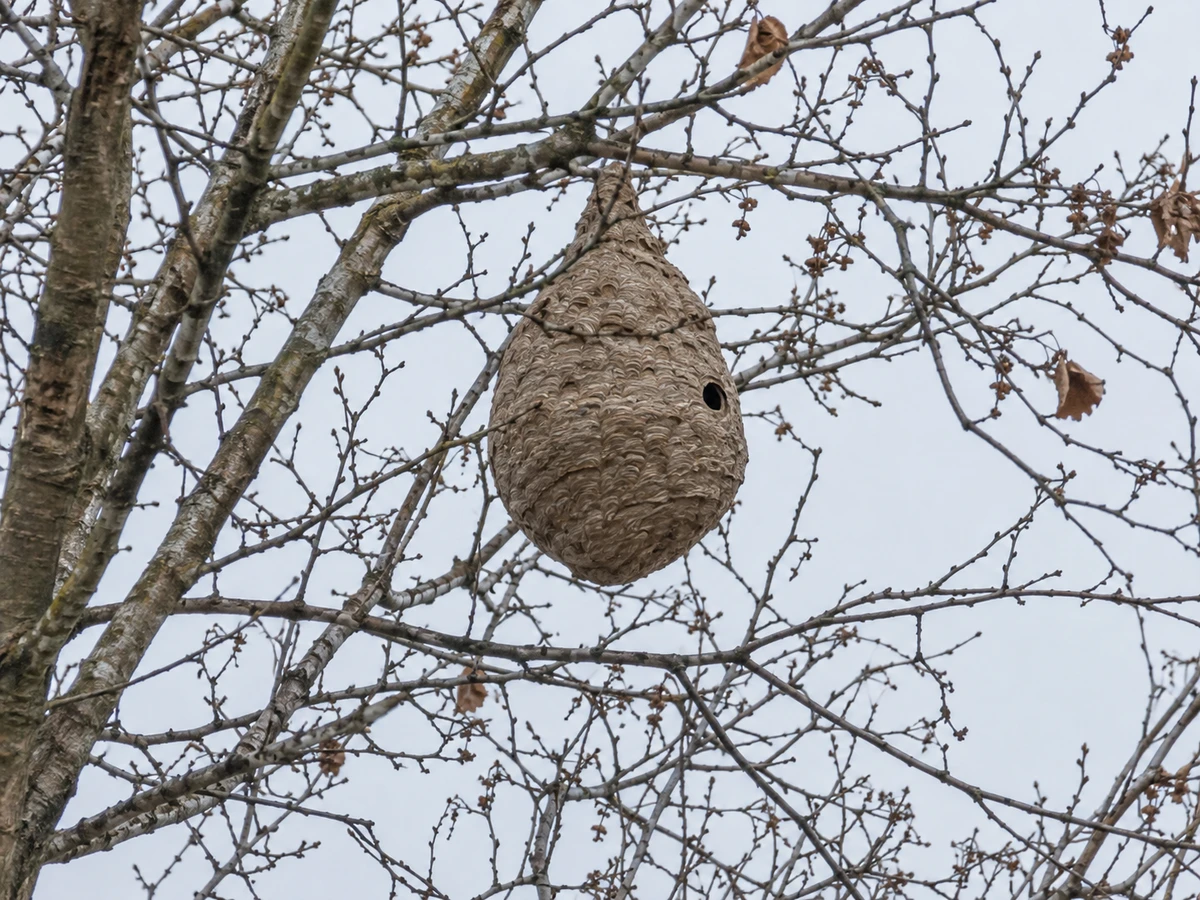
👀 What you see
A nest 20 to 31 inches across (rugby-ball size), often 25 to 50 feet (8–15 m) up in a tree, that comes into view once the leaves fall.
🧭 What it means
A secondary Asian hornet nest: 2,000 to 6,000 individuals at the September–October peak, with a defense zone that can reach 16 feet.
✅ The proof: how to confirm
From a distance, count worker traffic for one minute: over 30 passes a minute during the day means a large fall nest.
⚠️ Caution
Not a homeowner job: call a licensed pest control operator (some counties or states help with removal costs), and never approach to measure the distance to the nest.
🧩 What to do next
- 1 Identify first: yellow-and-black, thin-waisted = wasp; rust/brick colored = European hornet (mostly harmless, leave it); black with yellow leg tips = Asian-type/giant hornet → report to authorities and do NOT DIY. Never kill fuzzy bees.
- 2 Decide DIY vs pro: treat it yourself only if the nest is small, low (no ladder), it is a wasp, and you are not allergic. Otherwise call a professional.
- 3 Suit up fully — beekeeping suit, veil and gloves, with wrists and ankles taped — and use a red-light headlamp (wasps cannot see red).
- 4 Treat at night (10–11 PM) when all wasps are back and sluggish: empty a 20-ft spray or foam into the nest entrance, then retreat along a clear, obstacle-free path.
- 5 For a nest inside a wall cavity, puff insecticide dust into the hole — NEVER seal the opening while the colony is alive, or they will push inside the house.
- 6 Wait 48 hours before removing or sealing. Reduce patio pressure with a selective trap placed about 30 feet from where you sit.
🛒 Products from our guides
-
Asian hornet selective bucket trap set
This nest belongs to a pro; your lever comes next spring: trapping the founding queen before she builds.
View on Amazon → -
Asian hornet trap
A trap designed for the Asian hornet, which generic wasp traps don’t always suit.
View on Amazon → -
Wasp and hornet lure refill
Attractant refill for selective queen trapping the following spring.
View on Amazon →
As an Amazon Associate we earn from qualifying purchases, at no extra cost to you.
Mosquitoes
Larvae in the rain barrel
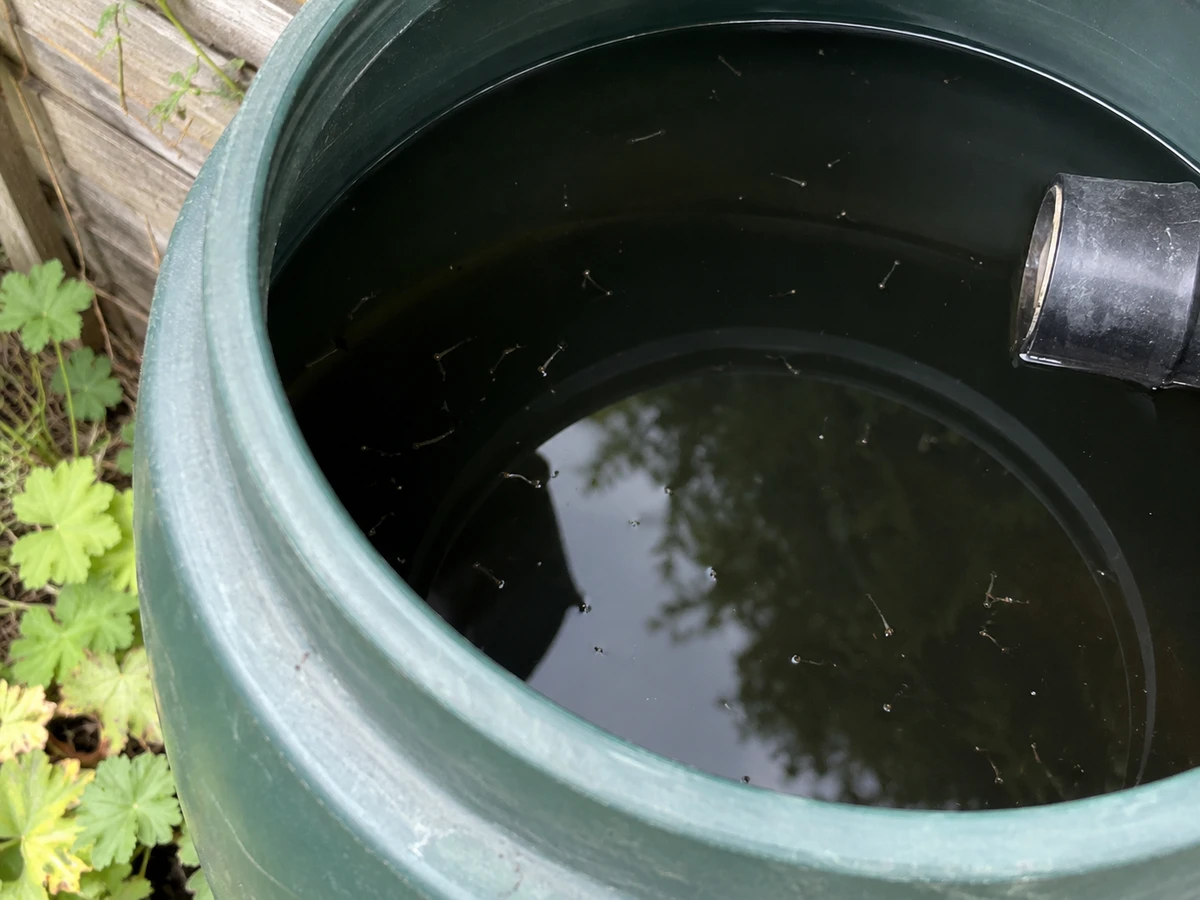
👀 What you see
A rain barrel of still water whose lid lets water in but blocks the light; the eggs are stuck to the inside wall at the waterline, and larvae swim in the water.
🧭 What it means
An ideal breeding site: a female lays 100 to 300 eggs in one clutch, and in summer the cycle completes in under a week. The tiger mosquito has a range of about 500 feet: if it bites you, it was most likely born at your place or next door.
✅ The proof: how to confirm
Walk the breeding sites: rain barrel, pond without fish, storm drains, clogged gutters — any untreated water can hold larvae.
🧩 What to do next
- 1 Identify: black with white stripes biting during the day = tiger mosquito (Aedes); dull brown buzzing at night = common mosquito (Culex).
- 2 Kill larvae at the source: empty saucers, buckets and tires weekly, clean gutters, and cover or BTI-treat rain barrels and ponds.
- 3 Protect skin with an EPA/WHO-validated repellent (Picaridin, DEET, IR3535 or OLE/PMD). Skip bracelets, ultrasound and UV lamps — proven ineffective.
- 4 For babies, use nets first; apply topical repellent only by age (IR3535 from 2 months) and never on a child’s hands.
- 5 Indoors: screen windows with mesh under 1/16 inch, run a fan, and use a plug-in diffuser at night (unscented, not in a baby’s room).
- 6 Outdoors: a Thermacell or a simple fan aimed at the table keeps the patio usable.
🛒 Products from our guides
-
Mosquito Dunks (BTI)
They float and release BTI over 4 to 6 weeks even as the level changes: built for rain barrels.
View on Amazon → -
Summit Mosquito Bits (BTI granules)
Granules that act within 24 hours on the larvae in standing water, without treating the whole yard.
View on Amazon → -
Liquid BTI concentrate
For large sites such as a pond: it spreads across the whole surface, but isn’t meant for small containers.
View on Amazon →
As an Amazon Associate we earn from qualifying purchases, at no extra cost to you.
Yard & outdoors
Mounds of fine soil with no visible hole
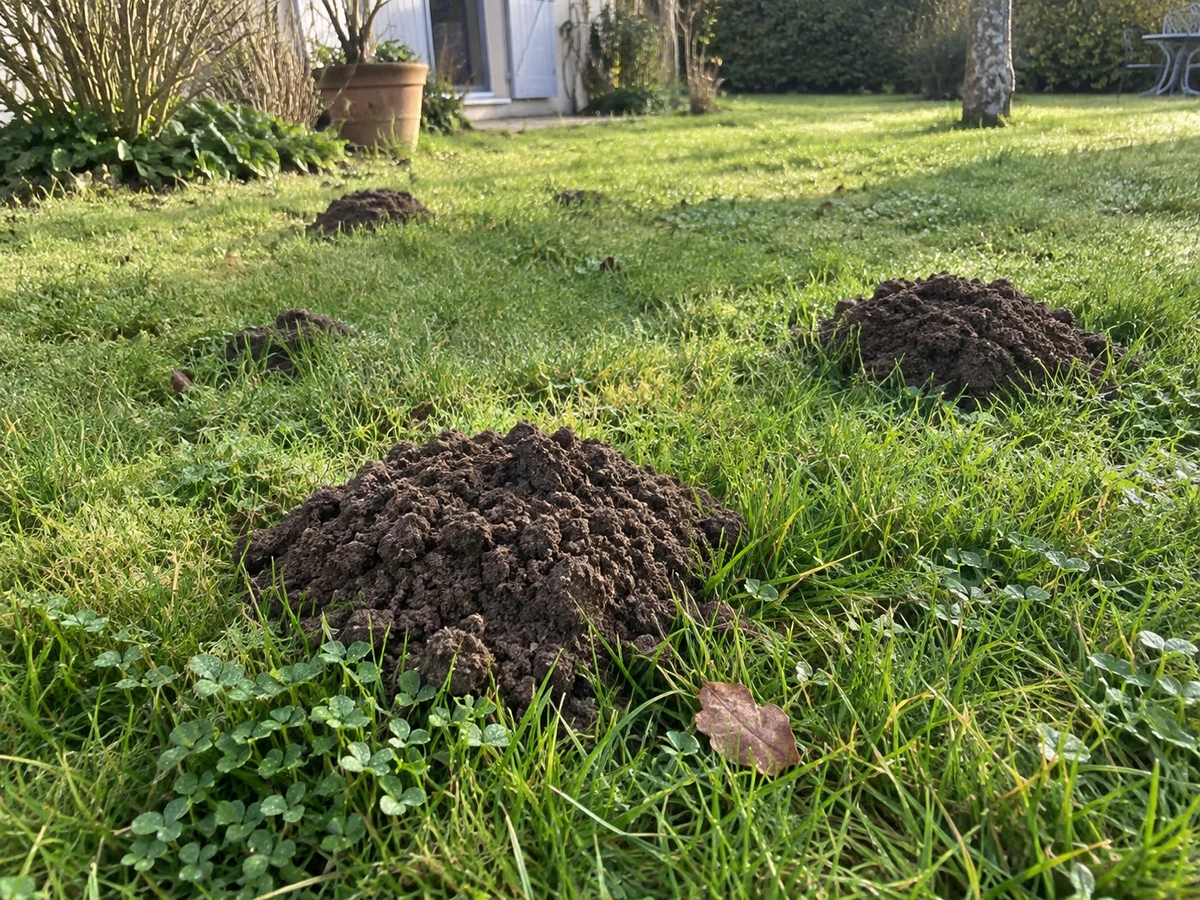
👀 What you see
Mounds of fine soil in the lawn with no visible opening, the tunnels staying deep.
🧭 What it means
It’s a mole: it eats worms and grubs, not roots — the damage is cosmetic, it never eats your plants. A vole, by contrast, leaves openings at the surface, gnaws roots and yellows plants in patches.
✅ The proof: how to confirm
Pull on a yellowed plant: if it lifts out by hand with its roots gnawed, it’s a vole, not a mole.
🛒 Products from our guides
-
Mole barrier mesh to bury
Exclusion rather than elimination: it protects one specific area (flower bed, new lawn) without touching the rest of the yard.
View on Amazon → -
Wire baskets for roots and bulbs
If the yellowed plant lifts out by hand, it’s a vole: protect the roots of your plantings, still by exclusion.
View on Amazon →
As an Amazon Associate we earn from qualifying purchases, at no extra cost to you.
Yard & outdoors
Tall grass and a woodpile at the edge of the yard

👀 What you see
A transition zone in the yard: the edge of the woods, tall grass, a woodpile, the base of a hedge — the opposite of a mowed, sunny lawn.
🧭 What it means
That’s where ticks concentrate; they are nearly absent from a mowed lawn. Targeted work on these zones beats treating the whole yard.
✅ The proof: how to confirm
Activity peaks from March to June: that’s the window to work on these zones, before the summer crowds.
🛒 Products from our guides
-
Cordless string trimmer
To cut back tall grass and edges: ticks are nearly absent from a mowed, sunny lawn.
View on Amazon → -
Tick remover tool
To cleanly remove an attached tick after time along the edge, in tall grass or near the woodpile.
View on Amazon →
As an Amazon Associate we earn from qualifying purchases, at no extra cost to you.
Wasps & hornets
Wasps flying in and out of a gap under the roof edge
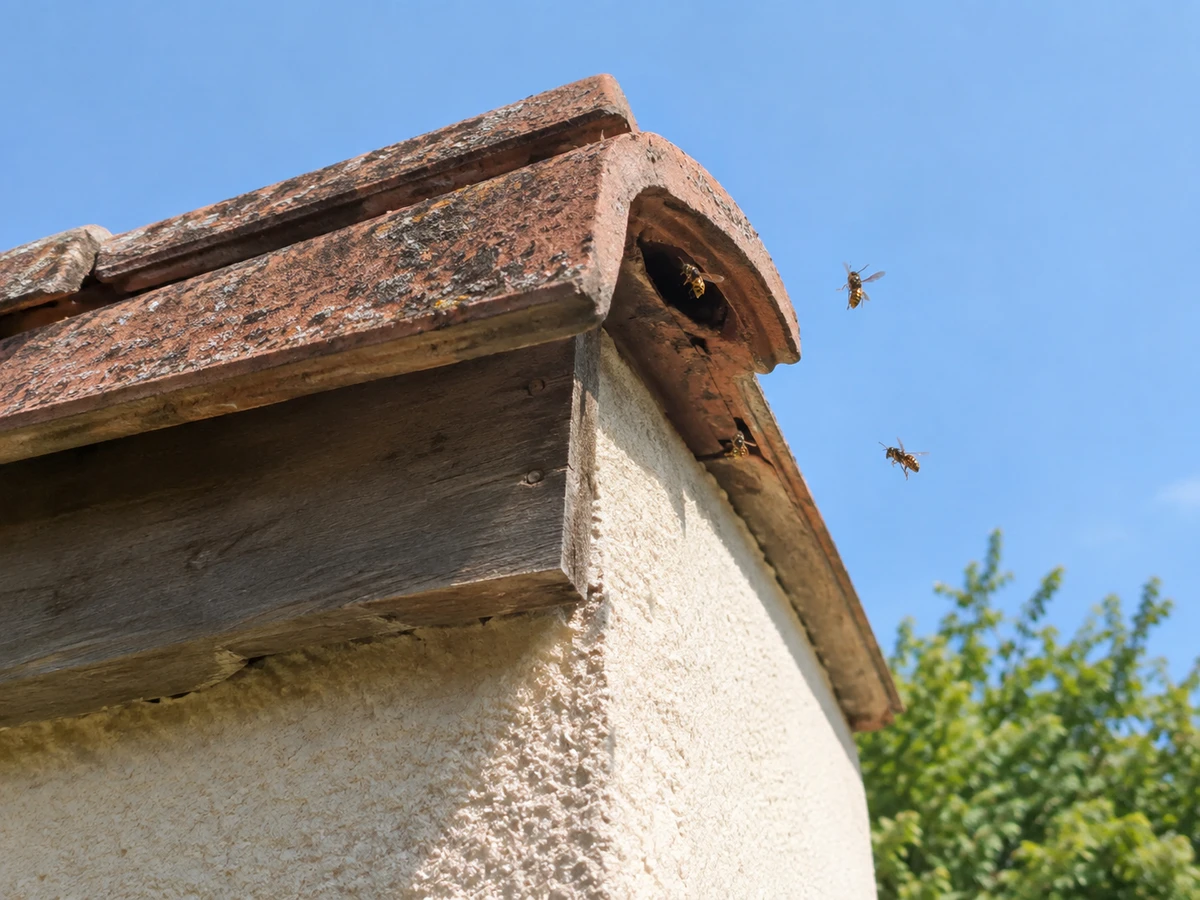
👀 What you see
A steady stream of wasps going in and out of a joint in the exterior wall or a gap under the fascia at the roof edge.
🧭 What it means
A nest has settled in the void of a wall cavity (from May–June). Plugging the hole pushes the wasps to chew through the drywall inward within 12 to 48 hours.
✅ The proof: how to confirm
Count the traffic at the entrance: over 50 wasps a minute means a massive colony; after dusting, 48 hours with no activity confirm the nest is done.
⚠️ Caution
Never plug the hole before treatment. Hole more than 10 feet up, an allergy, an Asian hornet nest or massive traffic: call a professional.
🧩 What to do next
- 1 Identify first: yellow-and-black, thin-waisted = wasp; rust/brick colored = European hornet (mostly harmless, leave it); black with yellow leg tips = Asian-type/giant hornet → report to authorities and do NOT DIY. Never kill fuzzy bees.
- 2 Decide DIY vs pro: treat it yourself only if the nest is small, low (no ladder), it is a wasp, and you are not allergic. Otherwise call a professional.
- 3 Suit up fully — beekeeping suit, veil and gloves, with wrists and ankles taped — and use a red-light headlamp (wasps cannot see red).
- 4 Treat at night (10–11 PM) when all wasps are back and sluggish: empty a 20-ft spray or foam into the nest entrance, then retreat along a clear, obstacle-free path.
- 5 For a nest inside a wall cavity, puff insecticide dust into the hole — NEVER seal the opening while the colony is alive, or they will push inside the house.
- 6 Wait 48 hours before removing or sealing. Reduce patio pressure with a selective trap placed about 30 feet from where you sit.
🛒 Products from our guides
-
Ficam D insecticide powder (bendiocarb 1%)
The powder spreads through the nest on the wasps that walk through it, where a spray can’t reach inside the wall.
View on Amazon → -
Powder duster with telescoping wand
Puffs the powder into the entry hole from a distance.
View on Amazon → -
Beekeeper suit with veil
Essential sting protection if you treat it yourself.
View on Amazon →
As an Amazon Associate we earn from qualifying purchases, at no extra cost to you.
Yard & outdoors
Pigeons settled on the window ledge, with acidic droppings
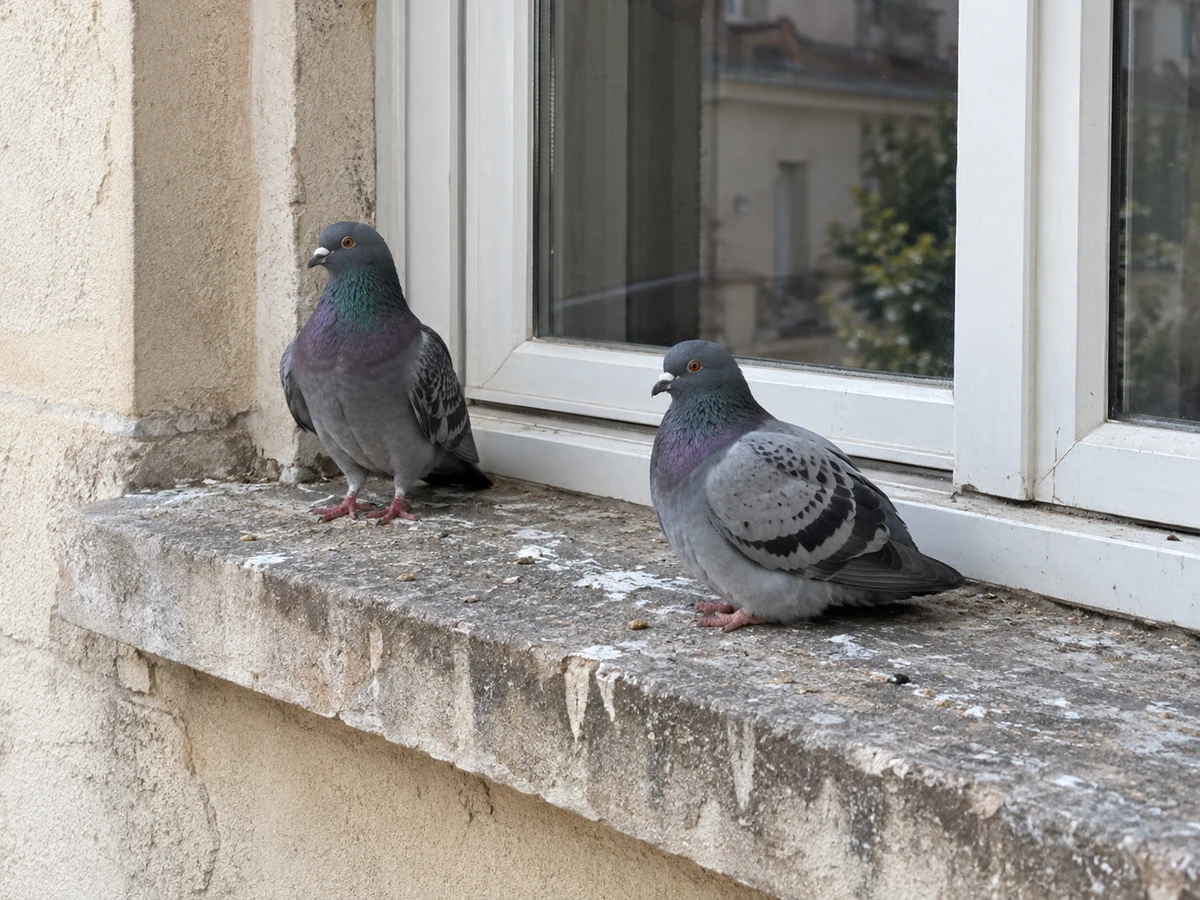
👀 What you see
Pigeons landing on a window ledge or balcony, acidic droppings eating into the surface, sometimes a nest.
🧭 What it means
A pigeon returns to its nesting site year after year: before the nest, changing the ledge is enough; after, you have an occupied nest and rules to respect.
✅ The proof: how to confirm
Act between February and June, before the nest is built; a row of spikes set too far back leaves a usable strip of ledge.
⚠️ Caution
Birds fall under separate rules and many species are protected: physical deterrents only.
🛒 Products from our guides
-
Bird spikes for ledges
A mechanical deterrent: fitted across the full width of the ledge, with no free strip behind, before the nest is built.
View on Amazon → -
Bird netting for balconies
To close off a whole balcony or recess when spikes can’t cover the entire surface.
View on Amazon → -
Bird wire deterrent kit
The ledge’s other mechanical deterrent: as with spikes, how well it works depends entirely on the installation.
View on Amazon →
As an Amazon Associate we earn from qualifying purchases, at no extra cost to you.
All 44 signs of pests, room by room
Each room has its own page, with the photo and the full card for every sign. “Show in the house” opens the card here, on the room photo.
Signs of Pests in the Kitchen: How to Identify Them see the page →
-
🪳 Cockroaches
Black “ground pepper” streaks along a cabinet edgeThese are cockroach droppings: a few scattered specks mark an occasional travel route, an ink-like smear a runway used every night, a concentrated peppered patch a daytime resting spot less than 3 feet from the harborage. Mouse droppings are distinctly larger (about 1/8 to 1/4 inch) and rice-shaped.
-
🪳 Cockroaches
Ridged brown capsules and see-through shed skins behind the toe-kickEgg cases mean active breeding at this exact spot: you are at the harborage. Shed skins mean nymphs are growing up on site; the sweet smell is the concentrated aggregation pheromone of a large harborage.
-
🪳 Cockroaches
See-through baby roaches, or a roach out in broad daylightBaby cockroaches prove the colony is breeding in your home; a roach out in daylight means the hiding spots are overcrowded (hundreds in the walls). One cockroach seen at night usually means 10 to 50 more in hiding.
-
🐜 Ants
A single-file line of ants along the edge of the sinkThey follow a pheromone trail that soaks into grout, baseboards and painted wood and resists soapy water: an active trail can persist up to 3 to 4 weeks. Cleaning doesn’t touch the colony.
-
🪰 Flies & gnats
A small cloud of tan, red-eyed flies over the fruit bowlThese are fruit flies, drawn to fermenting sugars. Egg to adult takes 8 days at 77°F: a new wave can hatch from a piece of fruit or a drain a week later.
-
🐭 Mice & rats
Rice-shaped droppings along the baseboardThe house mouse’s signature (50 to 80 droppings a day). Rat droppings are much bigger (1/2 to 3/4 inch, blunt ends, grouped); cockroach droppings look like ground pepper.
-
🕷️ Household insects
Silky threads in the bag of flourPantry moths: an infested package came into the pantry, almost always from the store. The food is lost, but there is no toxic risk.
Small Bugs in the Bathroom: Identify Them by Their Signs see the page →
-
🐜 Ants
Ants coming out of the bathtub caulkA caulk bead isn’t a nest but a damp corridor to water: the colony is elsewhere (wall, slab, outdoors). On a floor grout line, on the other hand, small piles of fine dust or sand next to the joint point to a possible nest under the tile.
-
🪰 Flies & gnats
Small fuzzy flies with heart-shaped wings resting by the sinkThese are drain flies (moth flies): their larvae live in the greasy biofilm lining the pipe, the trap or the overflow — even in a spotless bathroom. The fruit fly is tan-brown with red eyes and circles ripe fruit.
-
🕷️ Household insects
A silvery-gray insect darting toward the shower caulkA silverfish (Lepisma saccharina): it signals moisture and cellulose (wallpaper paste, cardboard). It doesn’t bite and transmits nothing; seeing one only at night after a shower is normal.
Pests in the Basement: Waterbugs, Rat Droppings and Drain Flies see the page →
-
🪳 Cockroaches
A big, glossy black roach near the floor drainThis is the oriental cockroach — the “waterbug” — drawn by water and cool shelter, coming in from outdoors or the sewer side. The German cockroach of the kitchen is about 1/2 inch, light tan, with two dark stripes behind the head, and it climbs walls.
-
🪰 Flies & gnats
A dry floor drain with flies coming up out of itWithout its water seal, the trap is an open line: sewer flies stroll right up — often the real breeding site when scrubbing the sink changes nothing. The same dry trap also lets oriental cockroaches in.
-
🐭 Mice & rats
Olive-pit droppings piled up in one cornerIt’s a rat: a mouse trap won’t hold it. Its urine can transmit leptospirosis.
Bugs in the Living Room: Identify the Pest by Its Signs see the page →
-
🪳 Cockroaches
Droppings and roaches around the warm cable boxWarmth plus food plus a tight space: a whole harborage can settle into a cable box, especially if a bag of cookies lives on the coffee table.
-
🐝 Wasps & hornets
A damp stain and buzzing inside the wallThe nest chews the drywall paper; wasp excrement and sugars produce stains within 4 to 6 weeks, and the panel can weaken in 2 to 3 months. Poured concrete, solid brick or CMU block have almost nothing to fear.
-
🪰 Flies & gnats
Black gnats lifting off the plant pot when you waterThese are fungus gnats: their larvae live in damp potting mix and eat roots and fungi. They almost always arrive with a bag of potting mix or a new plant; the vinegar trap barely works on them.
-
🛏️ Bed bugs
Black dots in the couch seamsIn a long-standing infestation, bed bugs colonize the whole room, not just the bed — and sleeping on the couch to escape the bed brings them there.
-
🕷️ Household insects
A big spider crossing the living room on a September eveningIt’s an adult male looking for a female: it already lived in the garage, basement, crawl space or attic, and it will die within a few weeks. No harm done: it doesn’t bite and it eats your gnats.
-
🕷️ Household insects
Book pages with chewed edges on the shelfLikely the gray silverfish (Ctenolepisma longicaudatum): it tolerates the ordinary humidity of a heated home, lives several years and roams every room — dehumidifying won’t fix it.
-
🕷️ Household insects
Bites on your ankles in the morning, with no pets at homeFlea cocoons stay dormant for months and hatch with the warmth and vibrations of new occupants: a previous tenant with a pet, cats in the yard, a wild animal living under the deck.
Bugs in the Bedroom: Bites, Black Dots and What They Mean see the page →
-
🐜 Ants
A windowsill black with winged antsIt’s a swarm: it lasts a few hours to two or three days, and these ants don’t sting. On the other hand, large black winged ants (5/16 in / 8 mm and up) coming out of a floorboard crack, a door frame or an interior wall point to carpenter ants.
-
🦟 Mosquitoes
A buzz at 3 a.m. and a single bump in the morningThe common house mosquito (Culex), a night biter that came in through the window. A single bump, not in a line, that fades within 24–48 hours sets it apart from bed bug bites lined up in a row.
-
🛏️ Bed bugs
Black dots ground into the mattress seamsThese are bed bug droppings: 70% of bed bugs hide in the bed (seams, box spring slats, headboard, frame joints).
-
🛏️ Bed bugs
Bites lined up in threes or fours when you wake upThe “breakfast, lunch, dinner” signature of a bed bug feeding as it moves along the skin; a single bump that fades in 24–48 hours points to a mosquito instead. But bites alone prove nothing.
-
🛏️ Bed bugs
See-through shed skins and small blood spots on the sheetsA blood spot comes from a fed bug crushed in your sleep; the shed skins (five molts before adulthood) show young bugs growing up on site.
-
🛏️ Bed bugs
A suitcase back from a trip, set down on the bedBed bugs travel passively in the seams of what you carry: they ride in what you set down, not on your skin.
-
🕷️ Household insects
Small holes in a stored wool sweaterThese are clothes moth larvae, which eat keratin (wool, cashmere, silk, felt) and never pure synthetics. They look for a textile that stays still for months.
Pests in the Garage: Chewed Wires, Webs and Mouse Entry Points see the page →
-
🐭 Mice & rats
A gap under the garage door edged with greasy marksA mouse gets through about 1/4 inch (6 mm) — a ballpoint pen — and a rat through about 3/4 inch (20 mm): if the head fits, the body follows. The greasy marks come from the oils in the fur, left by repeated passes.
-
🐭 Mice & rats
Bits of foam under the car and chewed wiresSoy-based wire insulation draws rodents. Mouse: rice-grain droppings, low harnesses chewed; rat: olive-pit droppings, clustered, hoses and thick cables; squirrel (the top US culprit, with rats): acorn shells and stashed food, damage up high, active by day.
-
🕷️ Household insects
Sheet webs and egg sacs in the garage cornerThese are the females that stayed put, laying their fall egg sacs; each sac holds several dozen eggs.
Noises and Signs in the Attic: What Is Living Up There? see the page →
-
🐜 Ants
A small pile of pale sawdust under the skylightThe carpenter ant signature: coarse sawdust and smooth galleries in damp wood it excavates without eating. Termites leave mud tubes and soft, honeycombed wood instead.
-
🐭 Mice & rats
Tunnels in the attic insulationMice love attic insulation for their nests. A very loud noise, like an animal running, points instead to a squirrel or other wildlife.
Pests on the Patio and Deck: Wasps, Flies and Mosquitoes see the page →
-
🐝 Wasps & hornets
Wasps around the dishes and drinks on the tableA food cover only protects the dishes sitting out: you need a full system (covers, selective traps 25–30 feet away, a fan over the table, clean trash cans). Lone wasps around the table call for an attractant trap, not a spray.
-
🪰 Flies & gnats
Flies around the trash can and the grill leftoversA trash can, a compost bin that’s too wet or pet waste producing larvae nonstop keeps the problem going: no trap makes up for an active source a few yards away.
-
🦟 Mosquitoes
Standing water in the plant saucersA single forgotten saucer can produce 200 mosquitoes in a week.
-
🦟 Mosquitoes
A small black mosquito with white stripes biting your ankles by dayIt’s the tiger mosquito (Aedes albopictus), a daytime biter and a vector of dengue, chikungunya and Zika, now established in 38+ US states; its bite hurts more. The common mosquito (Culex) is brown, noisy and bites at night.
Pests in the Yard: Nests, Mounds and Standing Water see the page →
-
🐜 Ants
A little volcano of fine soil in the lawnA colony of common black lawn ants (Lasius) or pavement ants settled under short, warm, well-drained turf. Flattening it with the mower just moves the soil: the colony rebuilds within days.
-
🐝 Wasps & hornets
A small papier-mâché nest under the shed eave in springIt’s the primary nest of the Asian (yellow-legged) hornet: two months later the colony can number several thousand. The Asian hornet is 1 to 1.2 inches long, with a dark velvety thorax, a dark abdomen with a single orange band and yellow-tipped legs; the European hornet is much more yellow and reddish-brown.
-
🐝 Wasps & hornets
A big paper ball high in a tree when the leaves dropA secondary Asian hornet nest: 2,000 to 6,000 individuals at the September–October peak, with a defense zone that can reach 16 feet.
-
🦟 Mosquitoes
Larvae in the rain barrelAn ideal breeding site: a female lays 100 to 300 eggs in one clutch, and in summer the cycle completes in under a week. The tiger mosquito has a range of about 500 feet: if it bites you, it was most likely born at your place or next door.
-
🌳 Yard & outdoors
Mounds of fine soil with no visible holeIt’s a mole: it eats worms and grubs, not roots — the damage is cosmetic, it never eats your plants. A vole, by contrast, leaves openings at the surface, gnaws roots and yellows plants in patches.
-
🌳 Yard & outdoors
Tall grass and a woodpile at the edge of the yardThat’s where ticks concentrate; they are nearly absent from a mowed lawn. Targeted work on these zones beats treating the whole yard.
Pests on the Exterior and Roof: Wasps Under the Roof Edge, Pigeons see the page →
-
🐝 Wasps & hornets
Wasps flying in and out of a gap under the roof edgeA nest has settled in the void of a wall cavity (from May–June). Plugging the hole pushes the wasps to chew through the drywall inward within 12 to 48 hours.
-
🌳 Yard & outdoors
Pigeons settled on the window ledge, with acidic droppingsA pigeon returns to its nesting site year after year: before the nest, changing the ledge is enough; after, you have an occupied nest and rules to respect.
What signs does each pest leave?
The same signs, sorted by pest, with a link to each complete guide.
Signs of cockroaches
- Black “ground pepper” streaks along a cabinet edge
- Ridged brown capsules and see-through shed skins behind the toe-kick
- See-through baby roaches, or a roach out in broad daylight
- A big, glossy black roach near the floor drain
- Droppings and roaches around the warm cable box
Signs of ants
- A single-file line of ants along the edge of the sink
- Ants coming out of the bathtub caulk
- A windowsill black with winged ants
- A small pile of pale sawdust under the skylight
- A little volcano of fine soil in the lawn
Signs of wasps & hornets
- A damp stain and buzzing inside the wall
- Wasps around the dishes and drinks on the table
- A small papier-mâché nest under the shed eave in spring
- A big paper ball high in a tree when the leaves drop
- Wasps flying in and out of a gap under the roof edge
Signs of flies & gnats
- A small cloud of tan, red-eyed flies over the fruit bowl
- Small fuzzy flies with heart-shaped wings resting by the sink
- A dry floor drain with flies coming up out of it
- Black gnats lifting off the plant pot when you water
- Flies around the trash can and the grill leftovers
Signs of mosquitoes
- A buzz at 3 a.m. and a single bump in the morning
- Standing water in the plant saucers
- A small black mosquito with white stripes biting your ankles by day
- Larvae in the rain barrel
Signs of bed bugs
- Black dots in the couch seams
- Black dots ground into the mattress seams
- Bites lined up in threes or fours when you wake up
- See-through shed skins and small blood spots on the sheets
- A suitcase back from a trip, set down on the bed
Signs of mice & rats
- Rice-shaped droppings along the baseboard
- Olive-pit droppings piled up in one corner
- A gap under the garage door edged with greasy marks
- Bits of foam under the car and chewed wires
- Tunnels in the attic insulation
Signs of household insects
- Silky threads in the bag of flour
- A silvery-gray insect darting toward the shower caulk
- A big spider crossing the living room on a September evening
- Book pages with chewed edges on the shelf
- Bites on your ankles in the morning, with no pets at home
- Small holes in a stored wool sweater
- Sheet webs and egg sacs in the garage corner
Droppings and black spots: cockroach, mouse, rat or bed bug?
Shape, size and how the droppings are grouped are often enough to name the culprit.
| Pest | What the droppings look like | Card |
|---|---|---|
| Cockroach | fine black specks like ground pepper, lined up in streaks along cabinet edges | See the photo |
| Mouse | black droppings 1/8 to 1/4 in (3–6 mm), pointed at both ends, scattered | See the photo |
| Rat | droppings 3/8 to 3/4 in (1–2 cm) with blunt ends, grouped in one spot | See the photo |
| Bed bug | ink-like black dots the size of a pinhead, soaked into mattress seams | See the photo |
Every room of the house
- Signs of Pests in the Kitchen: How to Identify Them 7 signs
- Small Bugs in the Bathroom: Identify Them by Their Signs 3 signs
- Pests in the Basement: Waterbugs, Rat Droppings and Drain Flies 3 signs
- Bugs in the Living Room: Identify the Pest by Its Signs 7 signs
- Bugs in the Bedroom: Bites, Black Dots and What They Mean 7 signs
- Pests in the Garage: Chewed Wires, Webs and Mouse Entry Points 3 signs
- Noises and Signs in the Attic: What Is Living Up There? 2 signs
- Pests on the Patio and Deck: Wasps, Flies and Mosquitoes 4 signs
- Pests in the Yard: Nests, Mounds and Standing Water 6 signs
- Pests on the Exterior and Roof: Wasps Under the Roof Edge, Pigeons 2 signs
Journalists, teachers, pest professionals: reuse the tool
- ✅ Quote and link freely to the tool or any card, in an article, a class, a newsletter or a post.
- 🔗 Every sign has its own URL, with its photo as the preview: use “Share this card” in any card. The 10 rooms have their own pages too.
- ✉️ To reuse a photo or a card’s content in a publication, email us at [email protected].
Suggested citation
ClearHomePests, “Identify Pests by Their Signs, Room by Room,” https://clearhomepests.com/identify-pests-by-signs/ How this tool is built. Every sign reflects what our guides describe, which are themselves a synthesis of sources (manufacturer data, verified user reviews, official sources such as the EPA, the CDC and university Cooperative Extension services). The identification photos are representative illustrations. This is an identification aid, not a diagnosis: when in doubt, when health is at stake or for a hard-to-reach nest, call a licensed pest control professional. Starting from a symptom rather than a sign? Try the pest treatment finder. See also our methodology.