
Pests on the Patio and Deck: Wasps, Flies and Mosquitoes
Table, trash can, flower pots: here are the pests that spoil time on the patio or deck, and the clues that let you act at the source.
Pests covered: wasps & hornets, flies & gnats, mosquitoes.

Wasps & hornets
1. Wasps around the dishes and drinks on the table
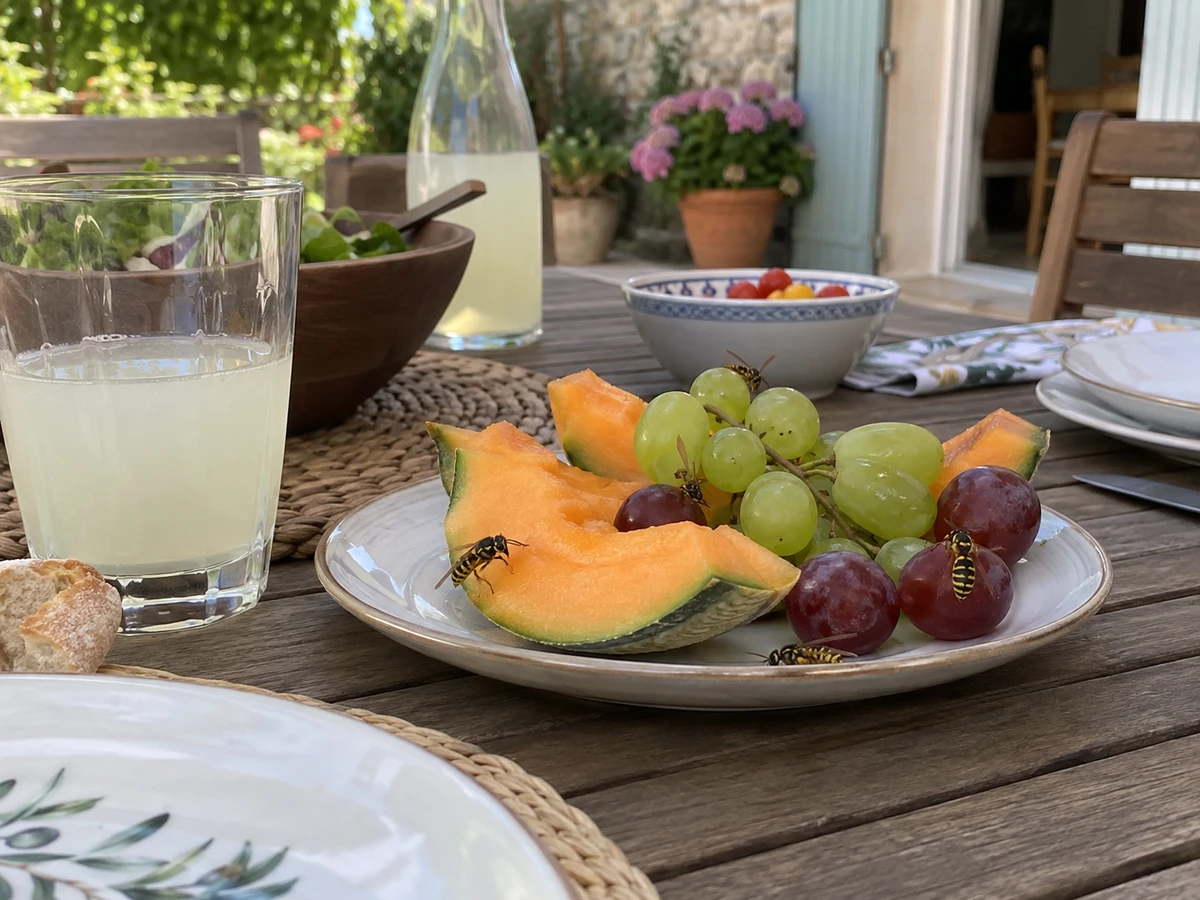
👀 What you see
Wasps circling the serving dishes, glasses and plates during a meal outdoors.
🧭 What it means
A food cover only protects the dishes sitting out: you need a full system (covers, selective traps 25–30 feet away, a fan over the table, clean trash cans). Lone wasps around the table call for an attractant trap, not a spray.
✅ The proof: how to confirm
Tell a few scattered wasps apart from a steady stream going in and out of one spot: the stream signals a nest.
🧩 What to do next
- 1 Identify first: yellow-and-black, thin-waisted = wasp; rust/brick colored = European hornet (mostly harmless, leave it); black with yellow leg tips = Asian-type/giant hornet → report to authorities and do NOT DIY. Never kill fuzzy bees.
- 2 Decide DIY vs pro: treat it yourself only if the nest is small, low (no ladder), it is a wasp, and you are not allergic. Otherwise call a professional.
- 3 Suit up fully — beekeeping suit, veil and gloves, with wrists and ankles taped — and use a red-light headlamp (wasps cannot see red).
- 4 Treat at night (10–11 PM) when all wasps are back and sluggish: empty a 20-ft spray or foam into the nest entrance, then retreat along a clear, obstacle-free path.
- 5 For a nest inside a wall cavity, puff insecticide dust into the hole — NEVER seal the opening while the colony is alive, or they will push inside the house.
- 6 Wait 48 hours before removing or sealing. Reduce patio pressure with a selective trap placed about 30 feet from where you sit.
🛒 Products from our guides
-
Fine-mesh pop-up food covers (6-pack)
A fine 1 to 2 mm (about 1/16 inch) mesh blocks all common yellow jackets and hornets.
View on Amazon → -
Selective wasp and hornet trap
Cuts the pressure from lone wasps without going near a nest.
View on Amazon → -
Bite Away heat pen
Heat neutralizes the heat-sensitive venom of a sting, with no medication.
View on Amazon →
As an Amazon Associate we earn from qualifying purchases, at no extra cost to you.
Flies & gnats
2. Flies around the trash can and the grill leftovers
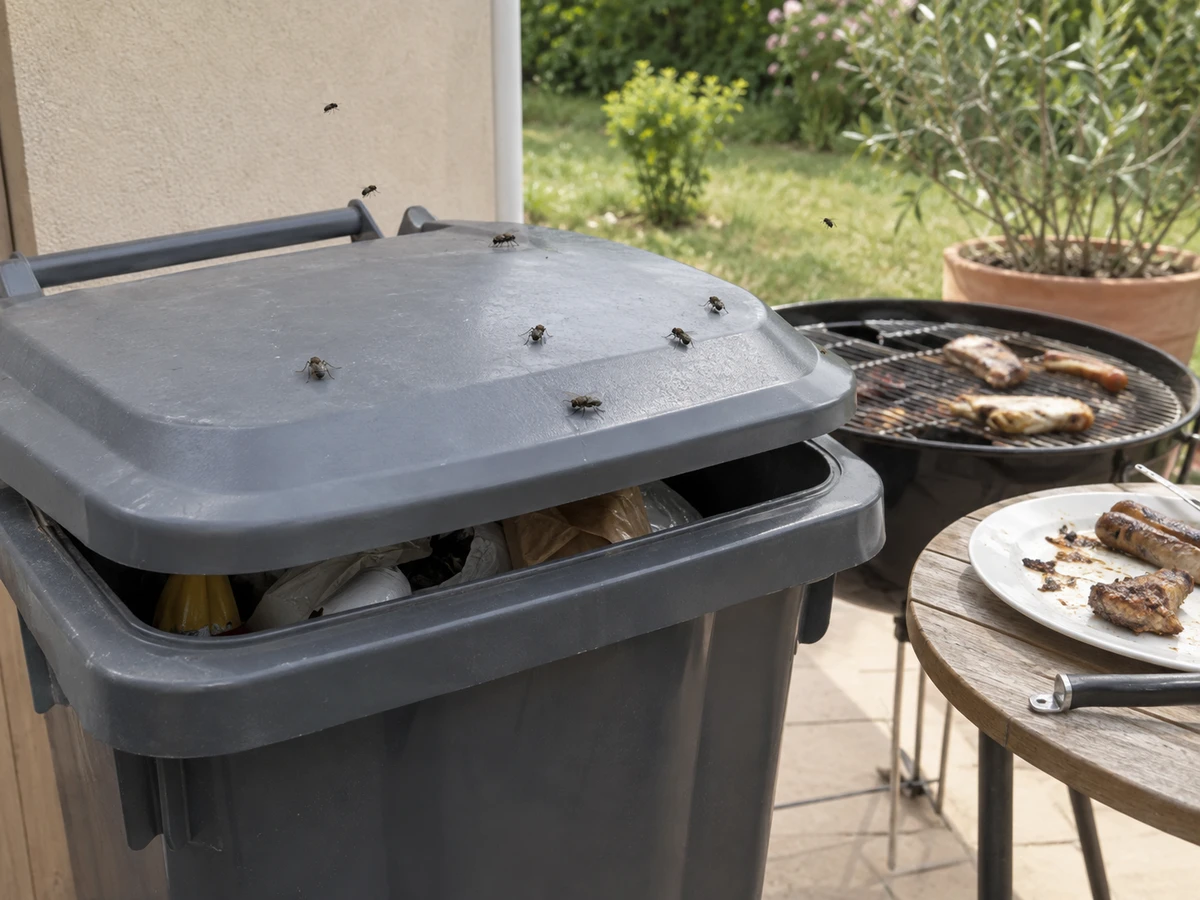
👀 What you see
House flies in numbers on the patio, circling the trash can, the compost and the grill leftovers before landing on the table.
🧭 What it means
A trash can, a compost bin that’s too wet or pet waste producing larvae nonstop keeps the problem going: no trap makes up for an active source a few yards away.
✅ The proof: how to confirm
Once the sources are fixed and the baits well placed, flies drop within 24 to 72 hours; nothing after 4 days = wrong placement or a breeding site still active.
⚠️ Caution
Fly bait granules never in open access: closed station, up high, out of reach of children, dogs, cats and chickens, 15 to 30 feet from the dining area.
🧩 What to do next
- 1 Identify the fly: small brown by the fruit bowl = fruit fly; metallic green/blue = blow fly; gray and striped on food = house fly; checkerboard pattern in the attic in autumn = cluster fly.
- 2 A sudden swarm of blow flies means a hidden carcass (mouse, bird) in a wall or attic — find and remove it first; the flies leave in 3–5 days.
- 3 For fruit flies: remove ripe fruit and coffee grounds, clean the drain biofilm, and set an apple-cider-vinegar + dish-soap trap.
- 4 For house flies: bag and wash out the trash, screen windows with mesh under 1/16 inch, and add a UV unit or a fly ribbon.
- 5 For barns and large spaces: spread cyromazine larvicide on the breeding matter (manure/bedding) and place attractant bait on resting walls.
- 6 In commercial kitchens, use glue-board units only above food prep (no electrocution) and keep a capture log for inspections.
🛒 Products from our guides
-
Hanging fly trap bag
Draws flies away from the table; hang it 15 to 30 feet out, between the source and the meal.
View on Amazon → -
QuickBayt Fly Bait (Bayer)
Granular bait for heavy pressure; in a closed station, out of reach, near trash enclosures.
View on Amazon → -
Pest-proof outdoor trash can with lid
Start with the source: a trash can without a lid 10 feet from the table defeats every trap.
View on Amazon →
As an Amazon Associate we earn from qualifying purchases, at no extra cost to you.
Mosquitoes
3. Standing water in the plant saucers
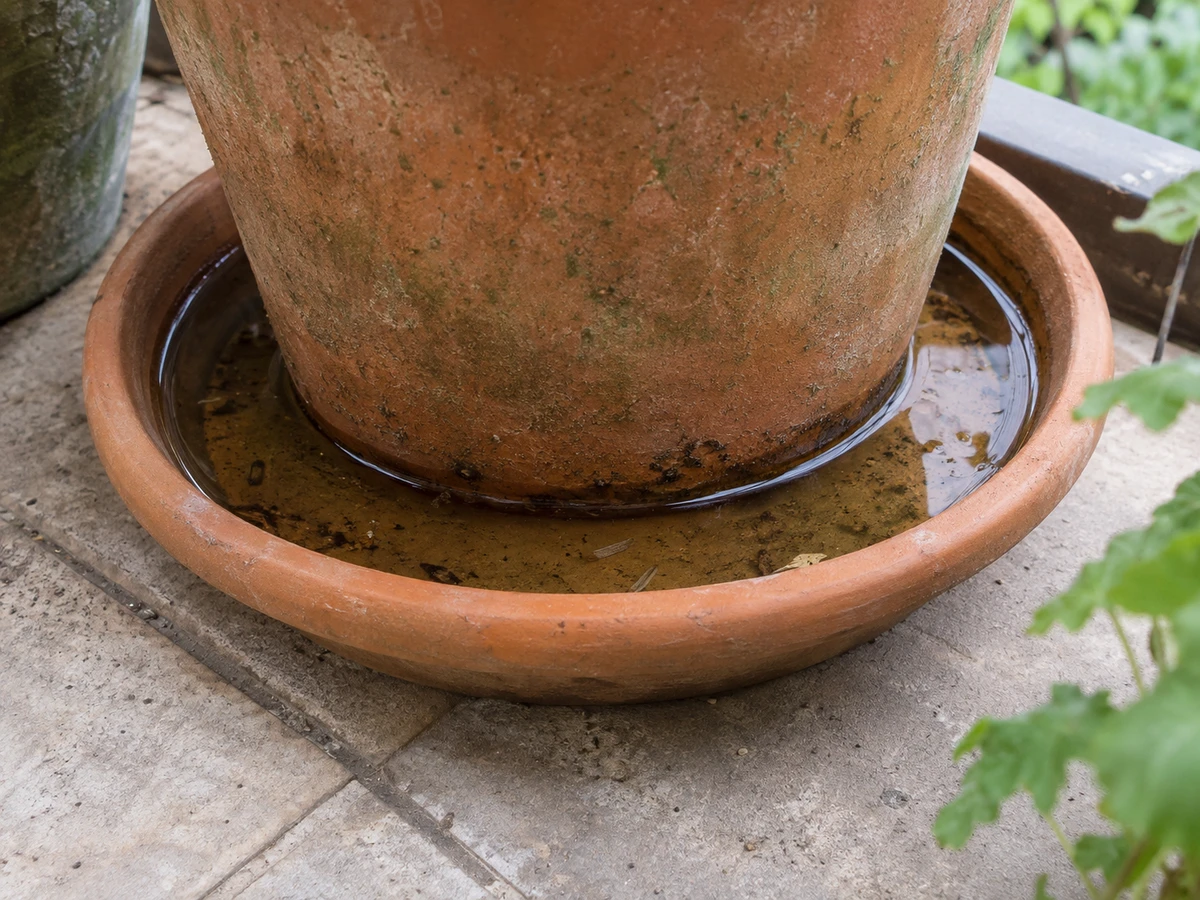
👀 What you see
Plant saucers, outdoor toys or a clogged gutter holding a little standing water.
🧭 What it means
A single forgotten saucer can produce 200 mosquitoes in a week.
✅ The proof: how to confirm
Empty or fill every small container; for saucers, coarse sand keeps water for the plant with no open surface for egg-laying.
🧩 What to do next
- 1 Identify: black with white stripes biting during the day = tiger mosquito (Aedes); dull brown buzzing at night = common mosquito (Culex).
- 2 Kill larvae at the source: empty saucers, buckets and tires weekly, clean gutters, and cover or BTI-treat rain barrels and ponds.
- 3 Protect skin with an EPA/WHO-validated repellent (Picaridin, DEET, IR3535 or OLE/PMD). Skip bracelets, ultrasound and UV lamps — proven ineffective.
- 4 For babies, use nets first; apply topical repellent only by age (IR3535 from 2 months) and never on a child’s hands.
- 5 Indoors: screen windows with mesh under 1/16 inch, run a fan, and use a plug-in diffuser at night (unscented, not in a baby’s room).
- 6 Outdoors: a Thermacell or a simple fan aimed at the table keeps the patio usable.
🛒 Products from our guides
-
Coarse horticultural sand
A saucer filled with coarse sand keeps water for the plant with no open surface to lay eggs on.
View on Amazon → -
Summit Mosquito Bits (BTI granules)
For small volumes (saucers, gutters, containers), BTI granules act within 24 hours.
View on Amazon → -
Thermacell Portable Repeller
For the patio: a protection zone of about 200 sq ft around the table, with nothing on your skin.
View on Amazon →
As an Amazon Associate we earn from qualifying purchases, at no extra cost to you.
Mosquitoes
4. A small black mosquito with white stripes biting your ankles by day
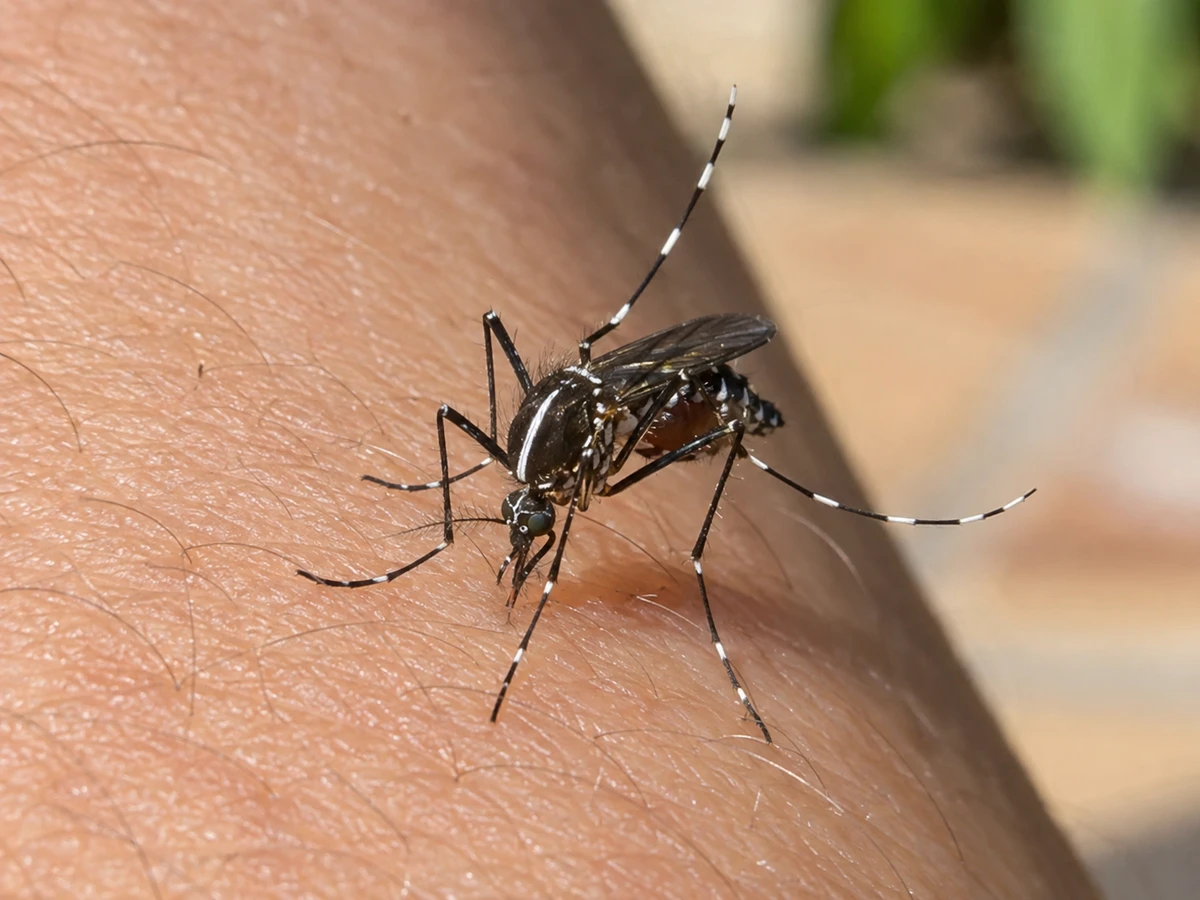
👀 What you see
A very small mosquito, black with sharp white stripes on its legs and body, silent, flying low and going after ankles and legs in the morning or early evening.
🧭 What it means
It’s the tiger mosquito (Aedes albopictus), a daytime biter and a vector of dengue, chikungunya and Zika, now established in 38+ US states; its bite hurts more. The common mosquito (Culex) is brown, noisy and bites at night.
✅ The proof: how to confirm
Black + white stripes + active by day: report it to your local health department or log it on iNaturalist.
🧩 What to do next
- 1 Identify: black with white stripes biting during the day = tiger mosquito (Aedes); dull brown buzzing at night = common mosquito (Culex).
- 2 Kill larvae at the source: empty saucers, buckets and tires weekly, clean gutters, and cover or BTI-treat rain barrels and ponds.
- 3 Protect skin with an EPA/WHO-validated repellent (Picaridin, DEET, IR3535 or OLE/PMD). Skip bracelets, ultrasound and UV lamps — proven ineffective.
- 4 For babies, use nets first; apply topical repellent only by age (IR3535 from 2 months) and never on a child’s hands.
- 5 Indoors: screen windows with mesh under 1/16 inch, run a fan, and use a plug-in diffuser at night (unscented, not in a baby’s room).
- 6 Outdoors: a Thermacell or a simple fan aimed at the table keeps the patio usable.
🛒 Products from our guides
-
Natrapel Picaridin 20% repellent
A picaridin skin repellent, the pick for skin protection against the tiger mosquito.
View on Amazon → -
Thermacell Portable Repeller
A protection zone around the table, with nothing on your skin.
View on Amazon → -
Bite Away heat pen
Soothes a bite with heat, no medication — useful once you’ve been bitten.
View on Amazon →
As an Amazon Associate we earn from qualifying purchases, at no extra cost to you.